.webp&w=384&q=75)

Loading, please wait...
Loading, please wait...

Preoperative cognitive dysfunction represents a significant risk factor for older adults undergoing major cardiac procedures. Consequently, medical teams increasingly rely on neuromonitoring to safeguard brain health during surgery. This recent study explores how baseline cognitive status, measured via the Montreal Cognitive Assessment (MoCA), influences intraoperative electroencephalogram (EEG) signals and cerebral oxygen levels. Notably, the research highlights that patients with impaired cognitive scores exhibit distinct physiological responses to anesthesia. By identifying these patterns, clinicians can better predict and potentially prevent perioperative neurocognitive disorders (PND).
Furthermore, researchers observed a strong correlation between baseline impairment and specific EEG markers like burst suppression. Specifically, burst suppression indicates a state where the brain essentially flatlines intermittently. In contrast, patients with normal preoperative cognitive status maintained more stable spectral edge frequencies. Moreover, patients exhibiting frequent burst suppression periods faced a much higher risk of postoperative delirium. Therefore, recognizing preoperative cognitive dysfunction early allows anesthesiologists to adjust medication dosages and maintain optimal brain perfusion.
In addition to EEG changes, the study examined cerebral oximetry to detect intraoperative desaturation. Consequently, the data revealed that patients with lower MoCA scores were more prone to dual cerebral events. These events involve both burst suppression and cerebral hypoxia. Furthermore, such episodes often lead to longer hospital stays and slower recovery times. Therefore, preoperative screening remains vital for optimizing surgical outcomes. Ultimately, tailored anesthetic protocols for high-risk patients may reduce the incidence of debilitating postoperative complications.
Patients with existing cognitive impairment are more likely to experience intraoperative burst suppression and cerebral hypoxia. Consequently, these physiological stressors increase the risk of postoperative delirium and long-term cognitive decline.
MoCA testing provides a reliable baseline for a patient's cognitive health. Notably, it helps identify vulnerable individuals who may require more intensive neuromonitoring and specialized anesthetic care during the procedure.
EEG monitoring allows clinicians to observe real-time brain activity. By detecting patterns like burst suppression, anesthesiologists can titrate medications more precisely to prevent over-sedation and protect brain function.
Disclaimer: This content is for informational and educational purposes only. It does not substitute for professional medical advice, diagnosis, or treatment. Always seek the advice of your physician or other qualified health provider with any questions you may have regarding a medical condition. Refer to the latest local and national guidelines for clinical practice.
References
Behera A et al. The Association of Preoperative Cognitive Dysfunction to Common Intraoperative Electroencephalographic Parameters and Cerebral Hypoxia During Cardiac Surgery. Anesth Analg. 2026 May 01. doi: 10.1213/ANE.0000000000007724. PMID: 41980267.
Sun X, et al. Electroencephalogram Burst-suppression during Cardiopulmonary Bypass in Elderly Patients Mediates Postoperative Delirium. Anesthesiology. 2020;133(3):508-520.
Slater JP, et al. Cerebral oxygen desaturation predicts cognitive decline and longer hospital stay after cardiac surgery. Ann Thorac Surg. 2009;87(1):36-44.

Read summarized clinical updates, watch expert medical content, and earn CME certifications right from your smartphone.
Open your smartphone camera to scan and install.





Research indicates that preoperative cognitive dysfunction correlates with intraoperative burst suppression and cerebral hypoxia during cardiac surgery....
6 months ago
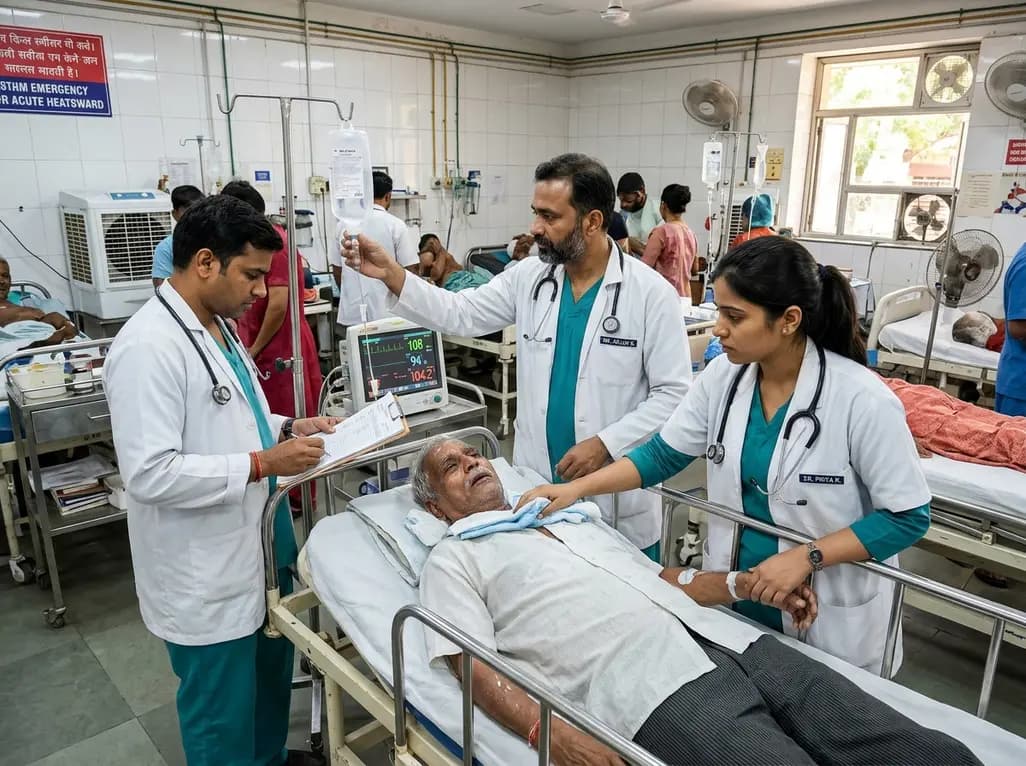
Recent epidemiological data reveals a dramatic surge in summer heat mortality driven by human-induced climate warming. This analysis explores the pathophysiological impacts on cardiac and renal systems, diagnostic dilemmas in death certification, and essential emergency cooling protocols for acute clinical care.
Today

Odisha has established India's first state-level clinical protocol specifically tailored for pregnant women with sickle cell disease. Developed with NHM and UNICEF, the framework provides structured antenatal screening, crisis mitigation, standardized referral pathways, and specialized interdisciplinary care.
Today

India is advancing preventive healthcare by integrating genomics, artificial intelligence, and quantum technologies. With the SANGAM programme sequencing one million Indian genomes, clinicians can unlock personalized therapies, detect cardiometabolic risks early, and curb the burden of diabetes and heart disease.
Today

A randomized controlled trial demonstrates that an eight-week dual-task training intervention significantly improves static and dynamic postural control over standard balance exercises in individuals with chronic ankle instability, addressing critical neurocognitive deficits during athletic and daily activities.
Today

A retrospective cohort study of 7,716 ICU patients from the MIMIC-IV database demonstrates that Gradient Boosting Decision Trees significantly outperform traditional SOFA scores in predicting in-hospital mortality among patients with sepsis and diabetes, with SHAP analysis providing clinical interpretability.
Today
