.webp&w=384&q=75)

Loading, please wait...
Loading, please wait...

The relationship between pre-pregnancy BMI and PTB serves as a vital marker for maternal health. Recently, a retrospective study analyzed 72,827 singleton pregnancies to explore this association. Researchers categorized participants into four groups: underweight, normal weight, overweight, and obese. Moreover, the study focused on how initial body mass index influences the likelihood of delivering before 37 weeks. Consequently, the results provide significant insights for clinical practice in maternal care.
The findings specifically highlight that both low and high BMI levels correlate with adverse outcomes. Specifically, underweight women faced an increased risk of preterm delivery compared to the normal-weight group. Furthermore, overweight and obesity also showed varying degrees of association with preterm birth. These results suggest that maintaining a healthy weight before conception is essential. Therefore, clinicians should incorporate BMI assessment as a standard part of preconception counseling to mitigate risks.
In the context of women’s health in India, these findings are particularly relevant due to the high prevalence of maternal malnutrition. However, urban populations also face a rising tide of obesity-related pregnancy complications. Additionally, identifying women at either extreme of the BMI scale allows for targeted nutritional interventions. Therefore, early screening and personalized care plans could potentially reduce the global burden of prematurity. In summary, pre-pregnancy weight management remains a cornerstone of preventive obstetrics.
Maternal underweight status often leads to nutritional deficiencies and reduced plasma volume. These factors can trigger early labor or necessitate medical intervention due to fetal growth restriction.
Yes, achieving a normal BMI before conception significantly lowers the risk of both spontaneous and medically indicated preterm births. Balanced nutrition and lifestyle changes are key strategies.
Disclaimer: This content is for informational and educational purposes only. It does not constitute medical advice or a substitute for professional healthcare. Always consult with a qualified health professional for diagnosis and treatment. Refer to the latest local and national guidelines for clinical practice.
References
Li Q et al. Association between pre-pregnancy BMI and preterm birth in Chinese women: a retrospective study. Ann Med. 2026 Dec undefined. doi: 10.1080/07853890.2026.2639163. PMID: 41813620.
Singh S, et al. Impact of maternal body mass index on pregnancy outcomes among Indian women. Cureus. 2024;16(3):e56312.
World Health Organization. Maternal Obesity and Pregnancy Outcomes: A Global Perspective. 2023.

Read summarized clinical updates, watch expert medical content, and earn CME certifications right from your smartphone.
Open your smartphone camera to scan and install.





A retrospective study of 72,827 pregnancies highlights the significant association between pre-pregnancy BMI and the risk of preterm birth....
7 months ago
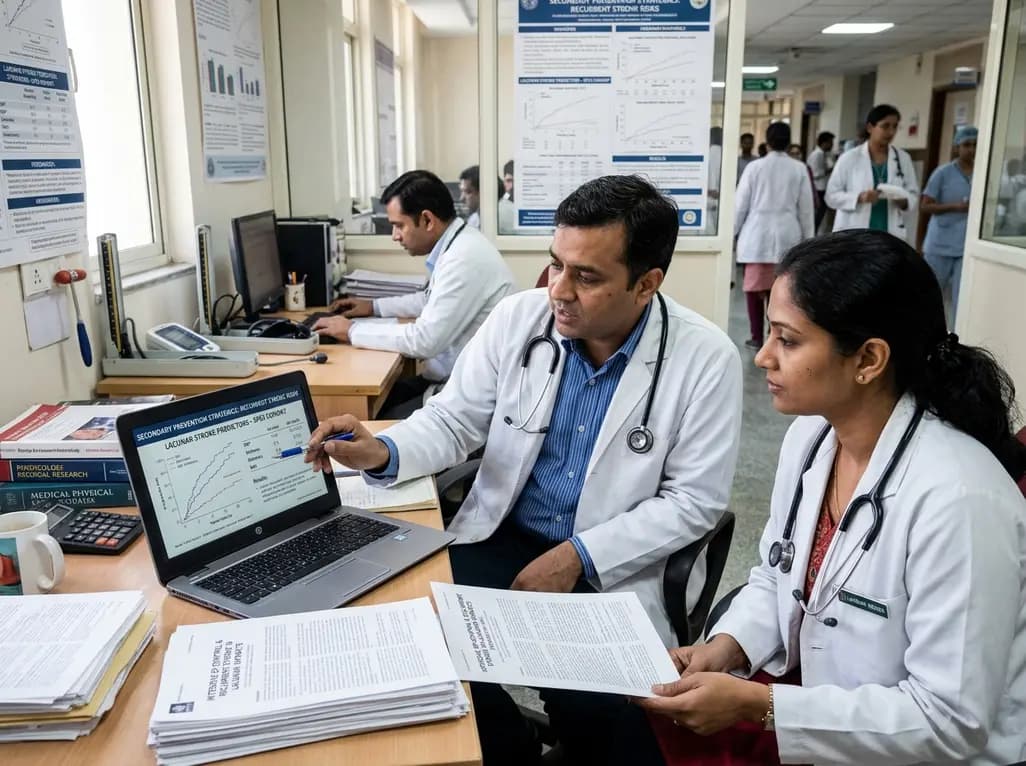
Explore vital recurrent stroke predictors in lacunar stroke patients managed with intensive blood pressure lowering. This analysis examines trial findings from SPS3 to uncover residual vascular risks, metabolic factors, and targeted secondary prevention strategies for high-risk neurological patients.
Today

Odisha has established India's first state-level clinical protocol specifically tailored for pregnant women with sickle cell disease. Developed with NHM and UNICEF, the framework provides structured antenatal screening, crisis mitigation, standardized referral pathways, and specialized interdisciplinary care.
Today

The Directorate General of Health Services directs Indian states to halt the hazardous reuse and reprocessing of single-use medical devices. Discover regulatory implications under the Drugs and Cosmetics Act, critical infection risks, legal liabilities, and operational changes required across clinical specialties.
Today

Mitochondria-targeted nanoparticles self-assembled from EGCG and L-glutamic acid effectively restore mitochondrial homeostasis, suppress synovial inflammation, and attenuate chondrocyte senescence in osteoarthritis, offering a promising disease-modifying nanotherapy.
Today

India is advancing preventive healthcare by integrating genomics, artificial intelligence, and quantum technologies. With the SANGAM programme sequencing one million Indian genomes, clinicians can unlock personalized therapies, detect cardiometabolic risks early, and curb the burden of diabetes and heart disease.
Today
