.webp&w=384&q=75)

Loading, please wait...
Loading, please wait...

Cardiovascular disease (CVD) remains the primary cause of death for individuals living with kidney failure. Fortunately, kidney transplantation significantly enhances long-term survival rates and improves cardiovascular-specific outcomes. To ensure patient safety, clinical teams must perform a thorough pre-kidney transplant cardiovascular evaluation to mitigate perioperative risks. However, substantial heterogeneity exists among transplant centers regarding the most effective testing protocols. Furthermore, the evidence supporting specific screening strategies in this high-risk population remains sparse.
Most current scientific statements and consensus documents recommend asymptomatic testing for the majority of transplant candidates. Nevertheless, emerging retrospective evidence suggests that routine screening of asymptomatic individuals may provide limited short-term benefits. In fact, recent studies have sparked debates about the necessity of repetitive testing for waitlisted patients. Therefore, ongoing randomized trials are currently investigating more efficient strategies to refine the pre-kidney transplant cardiovascular evaluation process for those awaiting an organ.
Noninvasive cardiovascular testing faces significant diagnostic limitations in the context of advanced kidney failure. Consequently, traditional stress tests and imaging may not always provide accurate prognostic information. Moreover, contemporary data indicates a lack of clear clinical benefit from prophylactic coronary revascularization in the pre-transplant setting. Clinicians must also consider the negative consequences of untimely testing. Specifically, unnecessary or delayed evaluations can prevent eligible candidates from reaching the transplant list in a timely manner. Thus, medical teams should balance rigorous safety checks with the urgent need for transplantation.
Current guidelines often recommend it, but recent evidence suggests limited benefits for asymptomatic patients. Ongoing research aims to clarify if routine screening truly improves outcomes.
Excessive testing can lead to significant delays in transplant listing. It may also result in unnecessary invasive procedures that carry their own set of clinical risks without a proven survival benefit.
Yes, successful kidney transplantation has been consistently shown to improve overall survival and specifically reduce cardiovascular-related mortality compared to remaining on dialysis.
Disclaimer: This content is for informational and educational purposes only and does not constitute medical advice. Always seek the advice of a qualified healthcare provider regarding any medical condition. Refer to the latest local and national guidelines for clinical practice.
References
1. Michaud JB et al. The Pre-Kidney Transplant Cardiovascular Evaluation: A Narrative Review of Current Scientific Statements and Consensus Documents. Cardiol Ther. 2026 Apr 24. doi: 10.1007/s40119-026-00448-6. PMID: 42030027.
2. Cardiological Society of India and Indian Society of Nephrology. Cardiac evaluation in patients awaiting kidney transplant-position statement. 2025.
3. American Heart Association. Emerging Evidence on Coronary Heart Disease Screening in Kidney and Liver Transplantation Candidates: A Scientific Statement From the AHA. Circulation. 2022;146:e311–e324.
"
Read summarized clinical updates, watch expert medical content, and earn CME certifications right from your smartphone.
Open your smartphone camera to scan and install.





A review of current scientific statements on cardiovascular screening for kidney transplant candidates, highlighting the risks of unnecessary testing....
6 months ago

Failing to account for competing events like mortality in longitudinal geriatric studies produces biased risk estimates and misleading inferences. This review highlights key methodological principles, insights from the Precipitating Events Project, and practical approaches for clinical research appraisal.
Today

A study in JAMIA Open shows lightweight open-source reasoning LLMs achieve up to 95% sensitivity and accelerate evidence synthesis screening by nearly twentyfold, presenting a cost-effective, scalable AI solution for biomedical research and systematic reviews.
Today
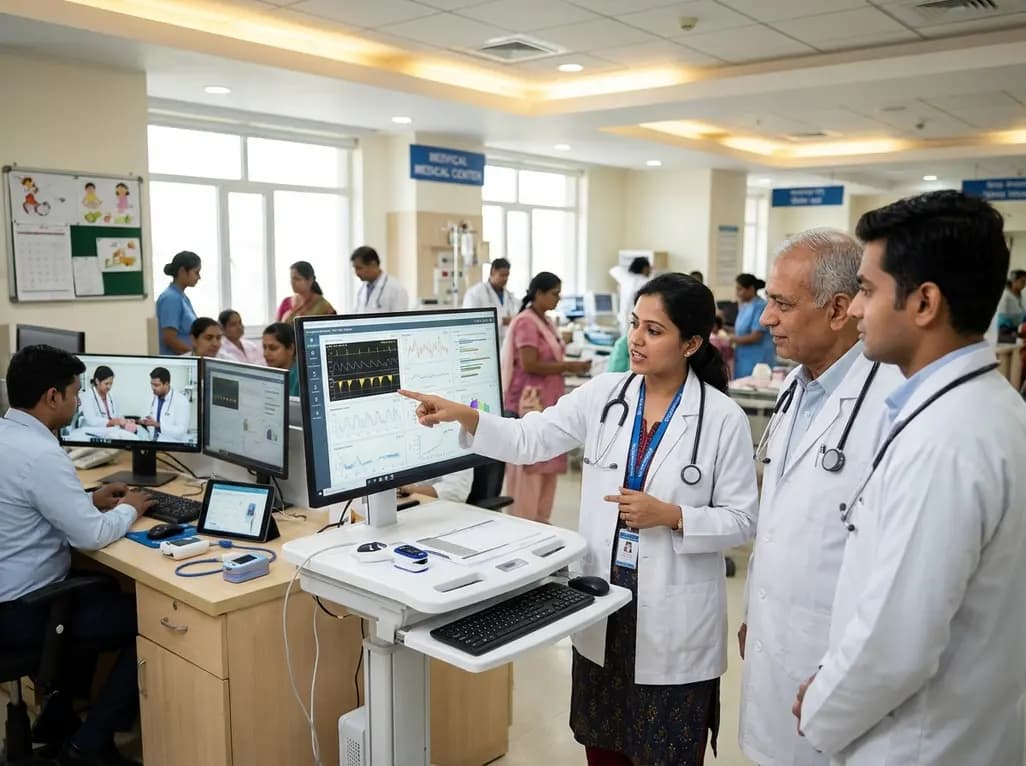
A landmark study details how an enterprise pediatric remote patient management model expanded from a single cardiology pilot to 16 diverse specialty programs by combining centralized digital operations with specialty clinical leadership.
Today

A comparative review of tension band wiring and intramedullary screw fixation in thumb metacarpophalangeal arthrodesis, evaluating union rates, hardware complications, and clinical outcomes.
Yesterday
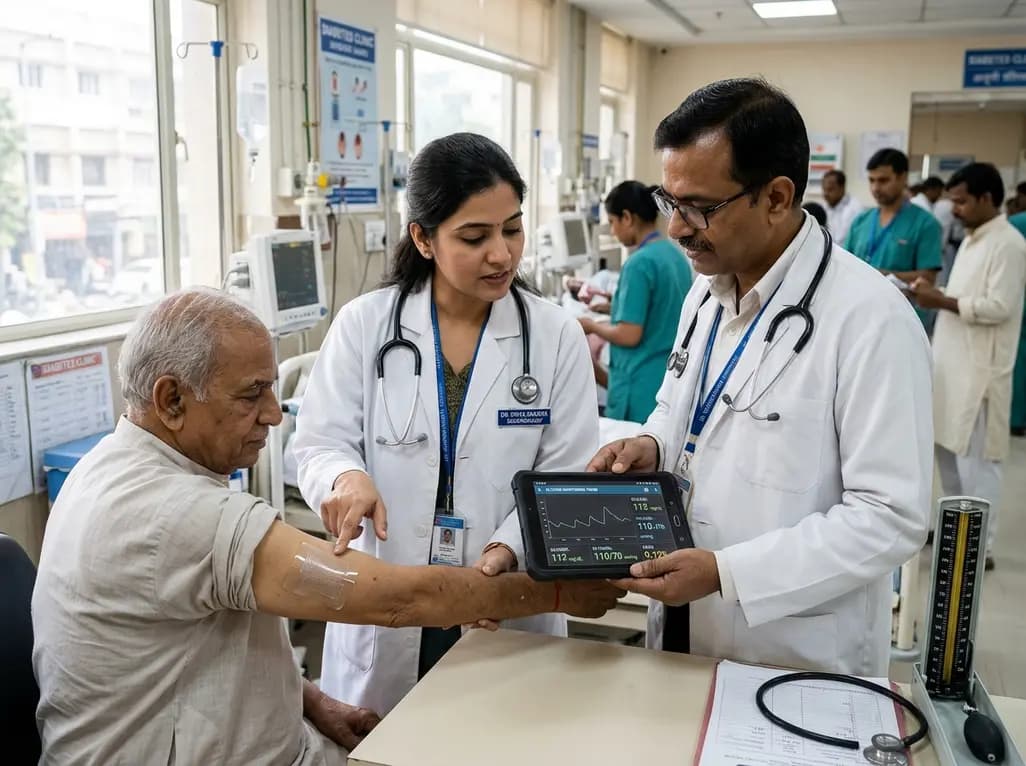
A breakthrough ultrathin multimodal sensor decouples physical hemodynamic monitoring from disposable electrochemical calibration, achieving long-term wearable glucose prediction with 81.36% accuracy and a 9.12% MARD. This offers a robust, drift-free solution for outpatient metabolic surveillance.
Today
