.webp&w=384&q=75)

Loading, please wait...
Loading, please wait...

Postoperative urinary retention (POUR) is a common clinical hurdle following elective lumbar spine surgery. This complication often leads to prolonged hospital stays, increased risks of urinary tract infections (UTIs), and significant patient discomfort. Traditionally, many surgeons have prescribed prophylactic α1-antagonist therapy, such as tamsulosin, to reduce the incidence of this issue. However, new evidence from a large-scale analysis suggests that this routine practice might not provide the expected benefits.
A recent retrospective review analyzed 2,326 patients who underwent lumbar procedures. By using a propensity score-matched model, researchers compared 506 patients to determine if prophylactic α1-antagonists truly helped. The study found that the overall incidence of postoperative urinary retention was 8.8%. Surprisingly, the results indicated that patients who received prophylaxis immediately after surgery were actually at a higher risk of retention (RR 1.94). This suggests that immediate postoperative administration of these drugs may not effectively counteract the complex physiological triggers of POUR in the spine surgery population.
The study identified several critical factors that influence the likelihood of voiding difficulties. Female sex was associated with a higher incidence of postoperative urinary retention (RR 1.83). Additionally, the use of patient-controlled anesthesia (PCA) significantly increased the risk (RR 2.63), likely due to the systemic effects of opioids on bladder function. Postoperative UTIs also showed a strong correlation with increased retention risk (RR 3.52). Conversely, the use of an intraoperative Foley catheter (RR 0.25) and longer operative durations (RR 0.42) appeared to reduce the risk. These findings suggest that addressing modifiable factors, such as anesthesia protocols and infection control, might be more effective than drug prophylaxis.
Surgeons and anesthesiologists should carefully re-evaluate the routine use of alpha-blockers in the immediate postoperative period. While these agents are effective in urological settings, their role in spinal surgery appears limited or even potentially harmful regarding retention risk. Consequently, clinicians should prioritize early ambulation, opioid-sparing analgesia, and the judicious use of catheters to manage bladder health effectively. Monitoring high-risk groups, specifically females and those using PCA, is essential for improving surgical outcomes and reducing morbidity.
No. While they are often used for this purpose, this large-scale analysis found that prophylactic α1-antagonists did not reduce retention after lumbar spine surgery and were associated with a higher risk of the complication when given postoperatively.
Based on the study, females, patients using patient-controlled anesthesia (PCA), and those who develop a postoperative urinary tract infection (UTI) are at significantly higher risk.
In this analysis, the use of an intraoperative Foley catheter was a protective factor, associated with a reduced risk of developing urinary retention after surgery.
Disclaimer: This content is for informational and educational purposes only. It does not constitute medical advice or establish a doctor-patient relationship. Always seek the advice of a qualified healthcare provider for any medical condition or treatment. Refer to the latest local and national guidelines for clinical practice.
References
Atchley TJ et al. Role of α1-antagonists in postoperative urinary retention following lumbar spine surgery: a propensity score-matched analysis. J Neurosurg Spine. 2026 May 15. doi: 10.3171/2026.1.SPINE25406. PMID: 42139734.
Huang J et al. Impact of perioperative α1-antagonists on postoperative urinary retention in orthopaedic surgery: meta-analysis. BJS Open. 2023;7(1). doi: 10.1093/bjsopen/zrac154.
Rughani A et al. Prophylactic tamsulosin for the prevention of postoperative urinary retention in patients undergoing spine surgery: a systematic review and meta-analysis. Frontiers in Medicine. 2022;9:1012345.
"
Read summarized clinical updates, watch expert medical content, and earn CME certifications right from your smartphone.
Open your smartphone camera to scan and install.





A propensity score-matched analysis shows prophylactic α1-antagonists do not reduce urinary retention after lumbar spine surgery and may increase risk....
5 months ago

A retrospective cohort study reveals that frailty quadruples the odds of pressure injuries in hospitalized older adults. Integrating the Clinical Frailty Scale with comprehensive geriatric care is crucial for identifying vulnerability early and implementing targeted multidisciplinary prevention.
Today

Occult maternal malignancy accounts for 3.82% of persistent unreportable NIPT results with genomic noise. Multiple chromosomal aberrations, notably on chromosome 18, warrant thorough oncological evaluation and whole-body MRI to ensure timely maternal diagnosis while preserving fetal care.
Today

This article reviews the forensic and clinical complexities of acute myocarditis arising on left ventricular hypertrophy in children, highlighting early diagnostic red flags and multidisciplinary postmortem autopsy protocols.
Today
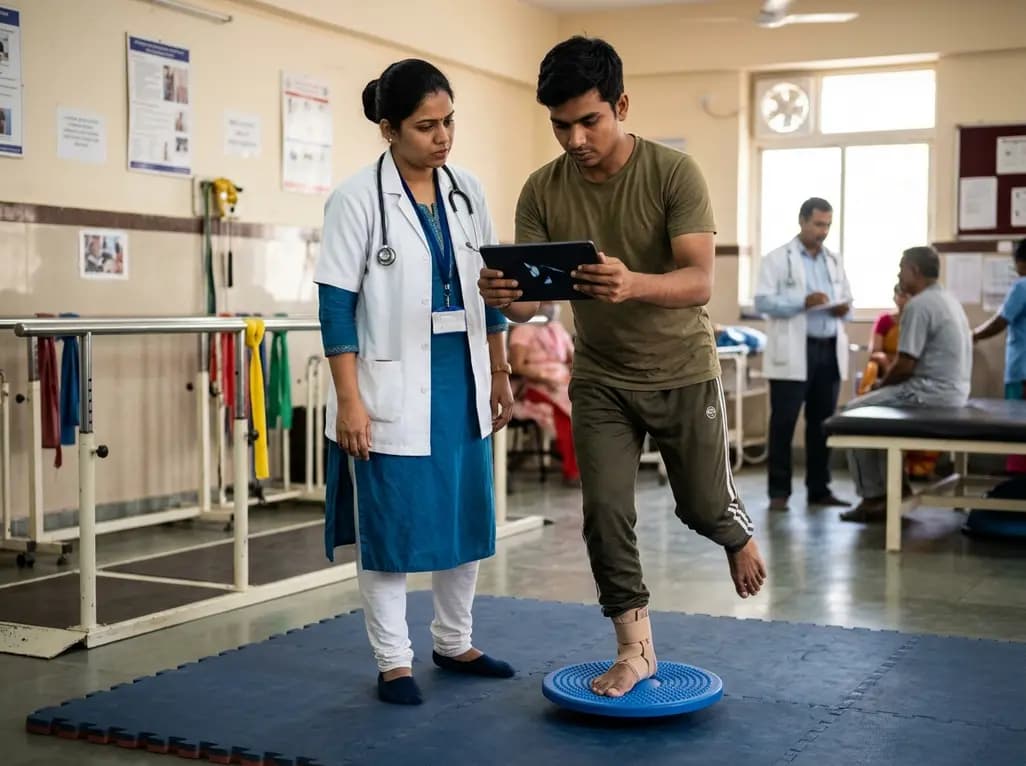
A randomized controlled trial demonstrates that an eight-week dual-task training intervention significantly improves static and dynamic postural control over standard balance exercises in individuals with chronic ankle instability, addressing critical neurocognitive deficits during athletic and daily activities.
Today

A retrospective cohort study of 7,716 ICU patients from the MIMIC-IV database demonstrates that Gradient Boosting Decision Trees significantly outperform traditional SOFA scores in predicting in-hospital mortality among patients with sepsis and diabetes, with SHAP analysis providing clinical interpretability.
Today
