.webp&w=384&q=75)

Loading, please wait...
Loading, please wait...

Surgeons often worry that posterior approach ptosis repair, which involves shortening the conjunctiva, might compromise the success of future glaucoma filtering surgeries. Glaucoma procedures, such as trabeculectomy, rely heavily on healthy, mobile conjunctival tissue to create a functioning bleb. Consequently, many clinicians have traditionally favored anterior approaches to preserve the conjunctiva. However, recent data suggests that these concerns may not be as critical as previously thought.
Cleveland Clinic researchers conducted a retrospective cohort study to analyze whether the surgical approach to ptosis repair affects subsequent glaucoma outcomes. They compared patients undergoing conjunctiva-shortening posterior procedures, like Müllerectomy, against those receiving conjunctiva-sparing anterior levator advancement. By monitoring intraoperative and postoperative complications, the team aimed to establish a safety profile for these sequential surgeries.
The study included 35 eyes from 34 patients, divided almost equally between the two surgical techniques. Results showed that intraoperative complications occurred in only one eye per group, indicating no significant immediate surgical risk. More importantly, postoperative bleb-related complications were rare across the cohort. Specifically, only two eyes in the anterior group and one eye in the posterior group experienced such issues.
Furthermore, the rates of bleb complications did not differ statistically between the groups. This finding is significant because it suggests that the conjunctival manipulation inherent in posterior approach ptosis repair does not lead to higher failure rates in filtering surgery. Interestingly, the study noted that patients in the anterior group were more likely to have a history of previous glaucoma surgery and required repeat ptosis repairs more frequently.
For ophthalmic surgeons, these findings provide reassurance when planning eyelid surgery for patients with progressive glaucoma. Because the posterior approach offers a scarless, minimally invasive alternative with a reliable recovery profile, it remains a viable option. Clinicians can choose the best ptosis correction method based on the patient's anatomy and levator function without fearing for the integrity of future filtration sites. Therefore, the choice of ptosis repair should be individualized rather than restricted by theoretical concerns about conjunctival shortening.
The posterior approach involves an internal incision through the conjunctiva to target the Müller muscle, whereas the anterior approach uses an external eyelid crease incision to reach the levator aponeurosis.
According to this study, prior ptosis repair, even those involving conjunctival shortening, does not significantly increase the risk of intraoperative or postoperative bleb-related complications in later glaucoma filtering surgery.
Patients with mild to moderate ptosis who show a positive response to phenylephrine testing are typically ideal candidates for the posterior approach.
Disclaimer: This content is for informational and educational purposes only and does not constitute medical advice. Always consult with a qualified healthcare professional regarding any medical condition or treatment. Refer to the latest local and national guidelines for clinical practice.
References
1. Engelmann AR et al. Impact of prior posterior-approach ptosis repair on conjunctiva-related glaucoma surgery complications. Orbit. 2026 Apr 15. doi: 10.1080/01676830.2026.2654185. PMID: 41984516.
2. Putthirangsiwong B, Yang M, Rootman DB. Surgical outcomes following Muller Muscle-Conjunctival Resection in patients with glaucoma filtering surgery. Orbit. 2020;39(5):331-335.
3. Catti C, et al. Ocular movement abnormalities and ptosis after glaucoma surgery: A retrospective decade long analysis. PLoS One. 2025;20(10):e0335074.
"
Read summarized clinical updates, watch expert medical content, and earn CME certifications right from your smartphone.
Open your smartphone camera to scan and install.





A retrospective study confirms that posterior approach ptosis repair does not increase complication risks for subsequent glaucoma filtering surgeries....
6 months ago

A prospective study using wireless sensors reveals that smaller physician workrooms significantly increase contact density and respiratory virus transmission risks despite lower average occupancy, underscoring the urgent need for better architectural design and infection control in healthcare duty rooms.
Today

A KGMU study reveals over half of women with breast abnormalities fail to undergo diagnostic confirmation, leading to advanced-stage detection. Discover the socio-cultural barriers, clinical risks of incomplete resection, and community-level solutions needed to bridge the critical screening-to-diagnosis gap in India.
Today
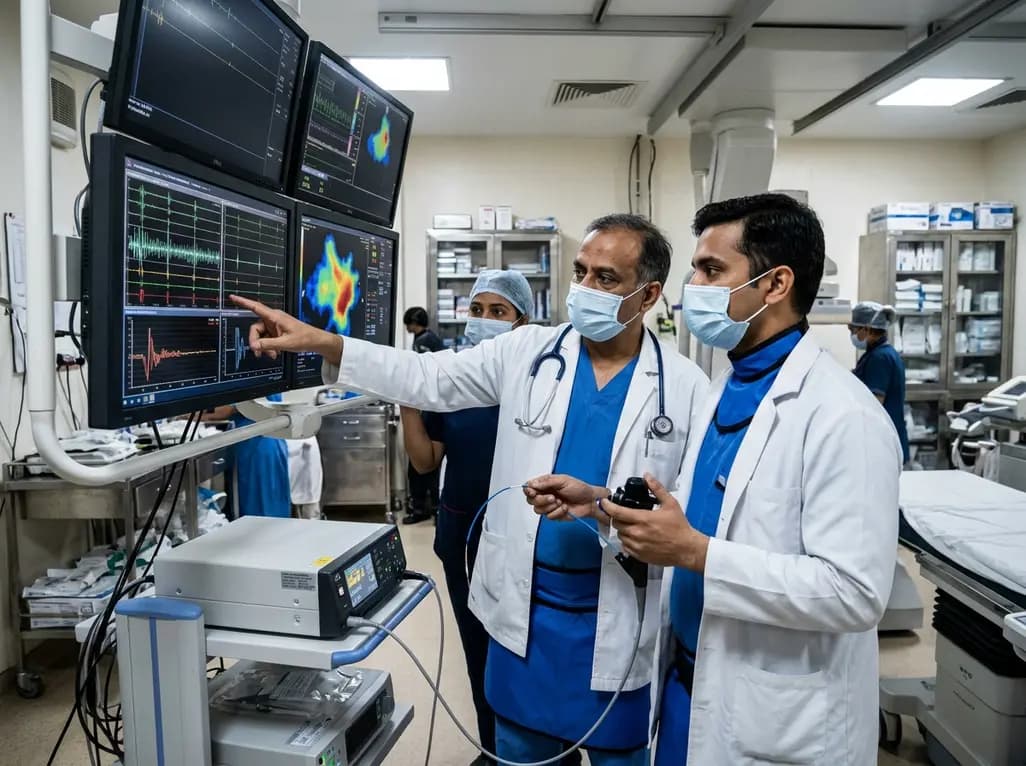
A comparative non-contact study reveals that high-power radiofrequency delivery with the QDOT MICRO catheter induces an artifactual contact force rise. Electrophysiologists must understand this power-dependent thermal and electrical phenomenon to avoid inadvertent catheter withdrawal and ineffective ablation.
Today
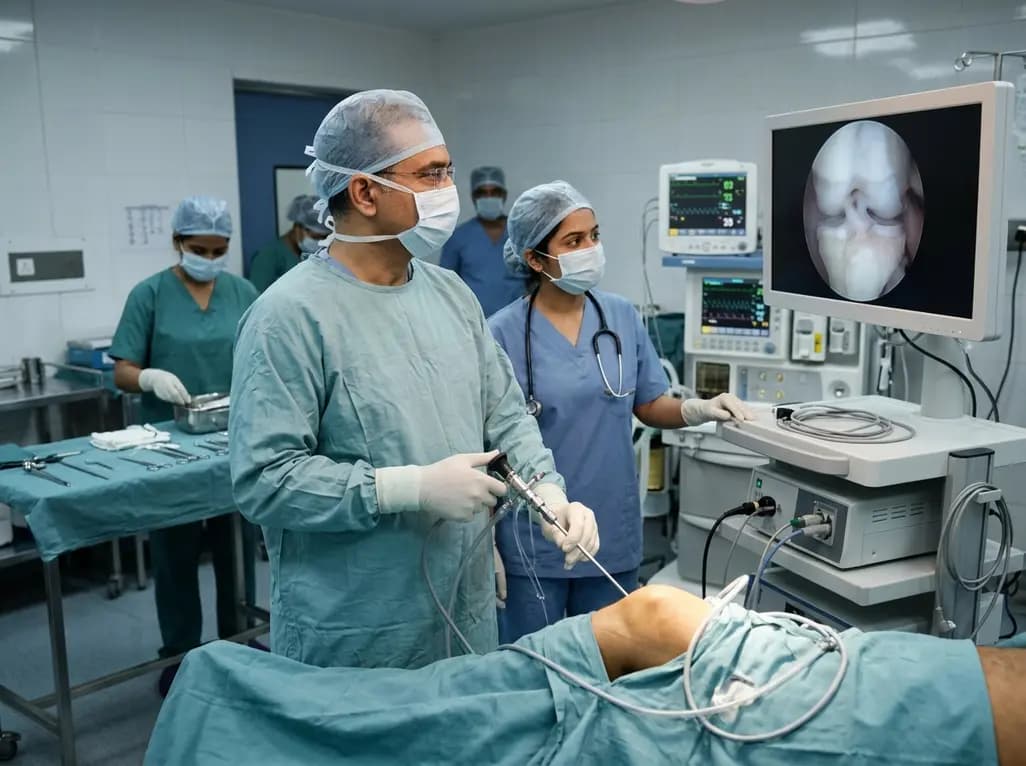
Healthium Medtech has transitioned its arthroscopy vertical into SIRONIX Orthopedics, aiming to capture key segments of the global joint care market. The strategic shift introduces dedicated portfolios in sports medicine, joint regeneration, surgical reconstruction, and digital operating technologies.
Today

Preclinical research demonstrates that BMI1 overexpression alleviates metabolic syndrome-related liver injury. By triggering ubiquitin-mediated METTL3 degradation, BMI1 prevents AHNAK m6A methylation and suppresses fibrogenic TGF-β/SMAD signaling, significantly improving hepatic steatosis and insulin resistance.
Today
