.webp&w=384&q=75)

Loading, please wait...
Loading, please wait...

Peri-implant mucositis (PiM) represents a reversible inflammatory response in the tissues surrounding dental implants. Effective peri-implant mucositis treatment is essential to prevent this condition from progressing into irreversible peri-implantitis. While professional mechanical plaque removal (PMPR) serves as the primary intervention, dental professionals often evaluate various chemical or pharmaceutical adjunctive therapies to improve patient outcomes.
A recent narrative review assessed several adjunctive therapies, including chlorhexidine, local antibiotics, and probiotics. Although these agents demonstrated some intra-group clinical improvements, they provided limited additional benefits over PMPR alone. Most findings lacked statistical significance when researchers compared them directly to mechanical cleaning. Furthermore, significant heterogeneity in diagnostic criteria and treatment protocols among studies makes a definitive recommendation challenging. Consequently, clinicians should prioritize thorough mechanical debridement for most standard cases.
Clinicians must maintain a high standard of professional hygiene to ensure long-term implant success. Regular monitoring of bleeding on probing and probing depths helps identify early signs of inflammation. If a patient shows resistance to standard mechanical therapy, specific adjunctive agents might offer a marginal advantage. However, practitioners should view these tools as supplementary rather than essential for every patient. Ultimately, personalized maintenance schedules remain the most effective strategy for preventing disease recurrence.
Professional mechanical plaque removal (PMPR) remains the gold standard for managing peri-implant mucositis. It effectively reduces inflammation and bleeding on probing in most patients.
No, antibiotics are generally not necessary for every case. Evidence suggests that mechanical cleaning alone is often sufficient, and adjunctive antibiotics show inconsistent benefits.
Disclaimer: This content is for informational and educational purposes only. It does not constitute professional medical advice, diagnosis, or treatment. Always seek the advice of your physician or other qualified healthcare provider with any questions you may have regarding a medical condition. Refer to the latest local and national guidelines for clinical practice.
References
Mauriello L et al. The use of chemical and pharmaceutical adjunctive therapies in the treatment of peri-implant mucositis (PiM): a narrative review. Quintessence Int. 2026 May 19. doi: 10.3290/j.qi.b7011446. PMID: 42154501.
Heitz-Mayfield LJA, Salvi GE. Peri-implant mucositis. J Periodontol. 2018;89 Suppl 1:S257-S266. doi: 10.1002/JPER.16-0488.
Jepsen S et al. Primary prevention of peri-implantitis: Managing peri-implant mucositis. J Clin Periodontol. 2015;42 Suppl 16:S152-7. doi: 10.1111/jcpe.12369.

Read summarized clinical updates, watch expert medical content, and earn CME certifications right from your smartphone.
Open your smartphone camera to scan and install.





A review of adjunctive therapies like chlorhexidine and antibiotics in managing peri-implant mucositis compared to mechanical plaque removal....
5 months ago
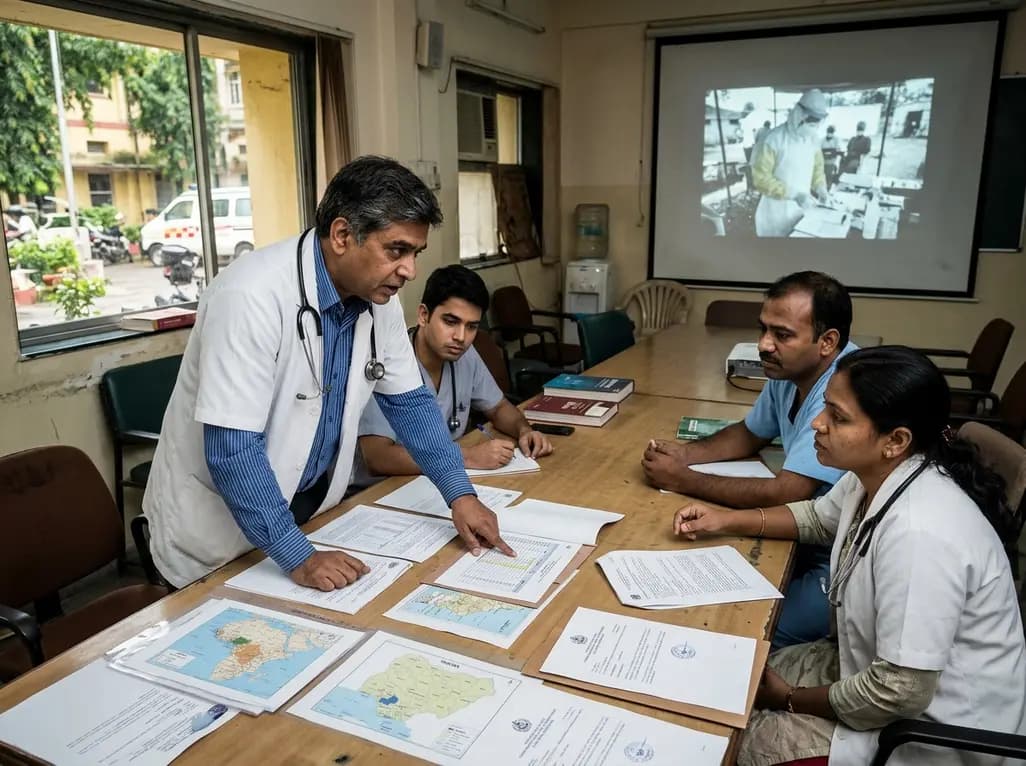
Following Nigeria's first recorded Ebola case linked to regional travel, the Africa CDC has convened an emergency ministerial summit. This alert underscores critical clinical priorities for healthcare professionals, including differentiating early viral infection from malaria, implementing barrier nursing, and triage.
Today

Leucine Rich Bio has introduced South Asia's first comprehensive vaginal microbiome test, BugSpeaks. By profiling microbial dysbiosis, pathogens, and antimicrobial resistance, this next-generation diagnostic platform provides clinicians with deeper insights into recurrent infections, fertility, and reproductive health.
Today

Review how tailored exercise programs benefit frail older patients with heart failure. Explore pathophysiological mechanisms, individualized training prescriptions, and strategies to overcome adherence barriers in clinical practice.
Today

This comparative study evaluates posterior labral tears with and without glenohumeral instability, highlighting distinct demographic patterns, MRI underestimation in stable shoulders, and successful arthroscopic repair outcomes.
Today

A clinical study demonstrates that early intervention with tocilizumab, either as monotherapy or bridged with corticosteroids, achieves significant proptosis reduction and resolves active inflammation in treatment-naive thyroid eye disease.
Today
