.webp&w=384&q=75)

Loading, please wait...
Loading, please wait...

Modern prosthodontics often utilizes PEEK removable partial dentures to provide patients with aesthetic and biocompatible solutions. Traditional cobalt-chromium remains a staple material, yet researchers now explore high-performance polymers like PEEK to minimize metal-related complications. A recent finite element analysis investigated how major connector designs and framework materials influence biomechanical behavior. Specifically, the study compared lingual bars and lingual plates made from both polyetheretherketone and cobalt-chromium.
Furthermore, the results showed that PEEK frameworks exhibit higher deformation levels due to their lower elastic modulus. For PEEK-based designs, a lingual bar reduced mucosal deformation compared to a lingual plate. However, this bar design simultaneously increased periodontal ligament stress by 58%. Consequently, dentists must carefully evaluate the health of abutment teeth before selecting a PEEK bar. In contrast, cobalt-chromium frameworks performed differently under the same mechanical loads. The cobalt-chromium bar design significantly reduced von Mises stress across all dental structures by up to 57%.
Additionally, the plate design for cobalt-chromium is typically reserved for cases requiring maximum ridge support. Practitioners should consider the PEEK bar design for patients with metal sensitivity who possess strong abutment teeth. Conversely, a plate design remains more suitable for patients with periodontally compromised teeth and healthy residual ridges. Because PEEK is more flexible than metal, it protects abutments by absorbing some masticatory forces. Therefore, selecting the optimal major connector design is highly material-specific.
PEEK is more flexible than cobalt-chromium, which allows it to absorb functional stresses. This flexibility generally protects abutment teeth, though a bar design may increase periodontal ligament stress compared to a plate design.
A lingual plate is often indicated for patients with periodontally compromised abutments. This design helps distribute loads more effectively to the residual ridges, reducing the strain on weaker teeth.
Disclaimer: This content is for informational and educational purposes only and does not constitute medical advice. Always consult a qualified dental professional for specific patient concerns. Refer to the latest local and national guidelines for clinical practice.
References
Hamid NFA et al. Framework material and design influence on biomechanical behavior of removable partial dentures: A finite element comparison of polyetheretherketone and cobalt-chromium. J Prosthodont. 2026 Feb 14. doi: 10.1111/jopr.70108. PMID: 41689845.
Al-Hourani ZA et al. Comparable retentive clasp design of Removable partial denture made of PEEK or Co-Cr alloy; A Finite Element Analysis. F1000Research. 2026;15:172.
Jantaban N et al. Biomechanical Comparison of Cobalt-Chromium and PEEK Frameworks in Distal-Extension Removable Partial Dentures Using FEA. J Int Dent Med Res. 2025;18(2).

Read summarized clinical updates, watch expert medical content, and earn CME certifications right from your smartphone.
Open your smartphone camera to scan and install.





Biomechanical study reveals that RPD design must be material-specific, with PEEK bars better for strong teeth and plates better for compromised abutments....
6 months ago

Explore the emerging role of Brixadi, an extended-release buprenorphine injection, for managing stimulant use disorder through kappa opioid receptor antagonism and steady plasma levels.
Today

A premature neonate developed upper limb compartment syndrome after uterine rupture extruded the arm through a scar defect. Conservative management with continuous monitoring yielded complete functional recovery and normal limb growth at 10-year follow-up, highlighting non-operative safety in selected cases.
Today
Dendritic cells bridge innate and adaptive immunity in myocardial infarction. This review explores their pathological roles, circulating dynamics, novel tolerogenic interventions, and how standard cardiovascular medications modulate dendritic cells to improve post-infarction myocardial repair and patient outcomes.
Today
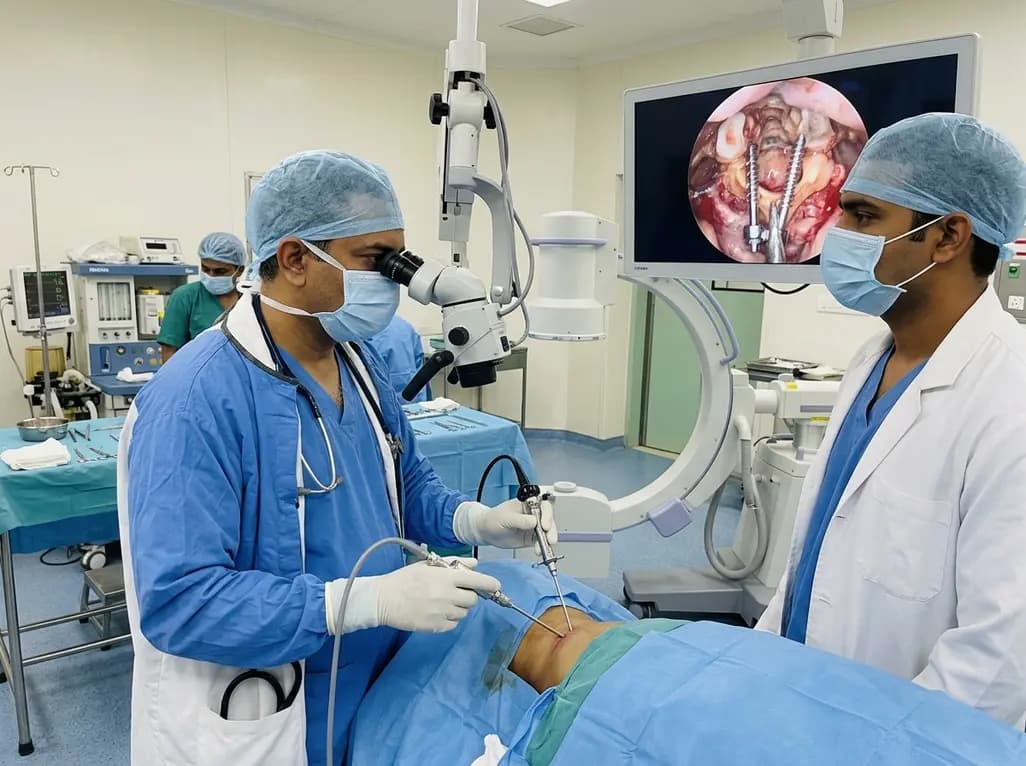
Endoscopic posterior cervical fusion combines minimally invasive decompression, joint preparation, and rigid screw-rod fixation for atlantoaxial pathologies. Early clinical findings demonstrate solid bony union, excellent symptom relief, and minimal soft-tissue morbidity without significant vascular compromise.
Yesterday
Atherosclerosis involves extensive glycometabolic reprogramming across immune and vascular cells. This review examines how glycolysis, the pentose phosphate pathway, and lactate-driven epigenetic shifts fuel plaque vulnerability, while highlighting novel therapeutic targets like PFKFB3 and LDHA.
Today
