.webp&w=384&q=75)

Loading, please wait...
Loading, please wait...

Pediatric tracheostomy simulation training offers a robust method to prepare family caregivers for the complexities of home management. Recently, a scoping review by Van Orne J et al. (2026) examined eleven studies regarding this educational strategy. The results indicate that high-fidelity simulation effectively improves caregiver confidence. Therefore, integrating these programs into discharge planning is essential for patient safety. This approach ensures that families can manage routine care and sudden emergencies effectively.
Simulation sessions provide a safe environment for practicing critical skills. For instance, caregivers learn to manage airway obstructions and accidental decannulation through hands-on practice. Consequently, this training reduces caregiver anxiety and enhances technical proficiency. Furthermore, research demonstrates that simulation participation correlates with significantly lower mortality rates in the home setting. Indeed, the hands-on nature of simulation builds essential muscle memory for emergency response. This preparation is vital for families transitioning from intensive care to the home environment.
However, the scoping review also identifies significant gaps in the existing literature. Specifically, most studies fail to assess long-term competency or use validated evaluation tools. Additionally, there is a lack of focus on demographic diversity and equitable access to training. Thus, future programs should adopt theory-informed curricula that cater to diverse family needs. Moreover, standardized guidelines are necessary to ensure consistent quality across different healthcare institutions. Finally, researchers must explore sustained post-discharge education to maintain caregiver skills over time.
Simulation training increases confidence, improves technical skills for managing emergencies like obstructions, and has been linked to significantly lower mortality rates in home settings.
Programs need standardized curricula, validated outcome measures for long-term competency, and a stronger focus on demographic diversity to ensure equitable access to care.
Disclaimer: This content is for informational and educational purposes only. It does not constitute medical advice or establish a doctor-patient relationship. Refer to the latest local and national guidelines for clinical practice.
References

Read summarized clinical updates, watch expert medical content, and earn CME certifications right from your smartphone.
Open your smartphone camera to scan and install.





Simulation training for pediatric tracheostomy caregivers improves confidence and reduces mortality, but gaps in long-term data and equity remain....
6 months ago
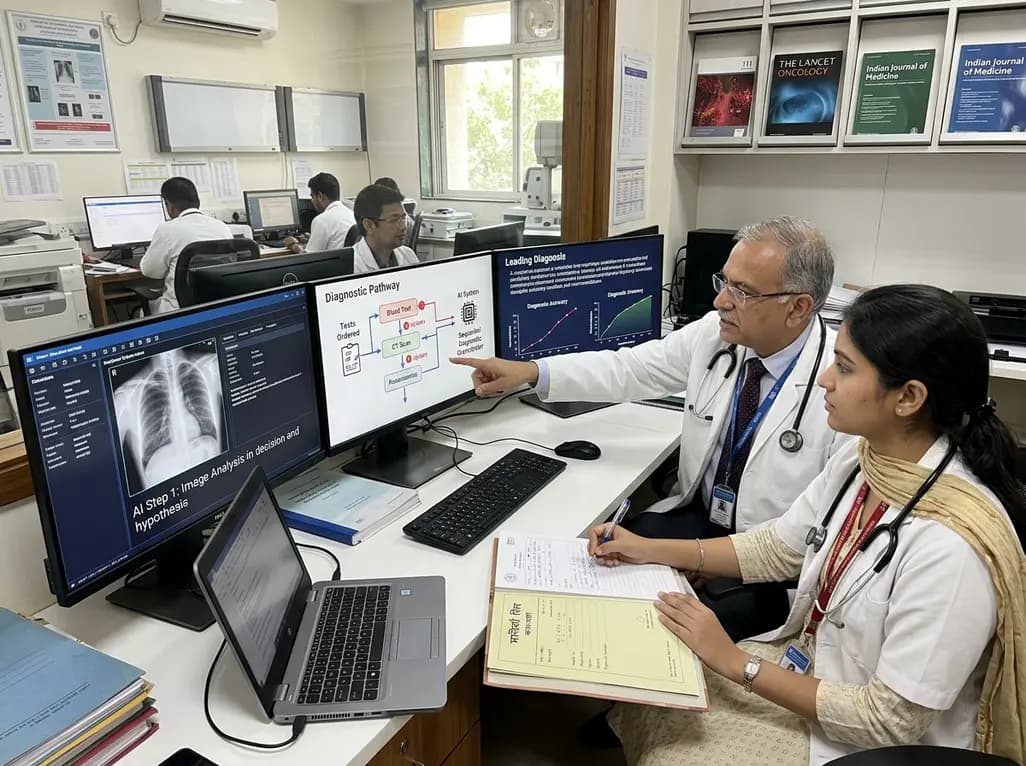
A breakthrough peer-reviewed study demonstrates that a sequential AI diagnosis system can mirror real-world clinical reasoning. By ordering stepwise tests and updating hypotheses dynamically, this multi-agent orchestrator achieved superior diagnostic accuracy while reducing investigative costs.
Today

A prenatal case highlights severe glutaric acidemia type II presenting as bilateral hyperechoic cystic kidneys at 18 weeks. Whole-exome sequencing revealed a novel homozygous ETFDH frameshift variant, demonstrating the power of rapid genetic testing in fetal renal anomalies.
Today

Review how tailored exercise programs benefit frail older patients with heart failure. Explore pathophysiological mechanisms, individualized training prescriptions, and strategies to overcome adherence barriers in clinical practice.
Yesterday

This comparative study evaluates posterior labral tears with and without glenohumeral instability, highlighting distinct demographic patterns, MRI underestimation in stable shoulders, and successful arthroscopic repair outcomes.
Yesterday

A clinical study demonstrates that early intervention with tocilizumab, either as monotherapy or bridged with corticosteroids, achieves significant proptosis reduction and resolves active inflammation in treatment-naive thyroid eye disease.
Yesterday
