.webp&w=384&q=75)

Loading, please wait...
Loading, please wait...

Chronic total occlusion (CTO) appears in approximately 25% of patients undergoing coronary angiography. Among these, the ostial left anterior descending (LAD) artery occlusion represents a rare but high-risk subset. Specifically, clinicians encounter significant technical hurdles when performing ostial LAD CTO revascularization due to the large myocardial territory at risk. Anatomical complexities often include heavy calcification and ambiguous lesion morphology. Consequently, these cases demand meticulous procedural planning and specialized expertise. Identifying a clear entry point remains one of the greatest challenges for interventionalists. Therefore, understanding the latest evidence-based strategies is vital for improving patient outcomes.
Physicians generally prefer the antegrade approach for less complex lesions where the proximal cap is visible. However, stumpless or heavily calcified occlusions often require more advanced techniques. Operators frequently reserve retrograde strategies for these anatomically complex cases. Additionally, the hybrid approach allows clinicians to switch between techniques to maximize success rates. Furthermore, the use of intravascular ultrasound (IVUS) provides essential guidance during the procedure. It helps identify the occlusion's exact location and ensures proper stent placement. Moreover, successful recanalization significantly improves anginal symptoms and left ventricular function. Notably, procedural success rates have improved with better equipment and operator experience.
Deciding between percutaneous coronary intervention (PCI) and coronary artery bypass grafting (CABG) remains a complex task. Currently, limited comparative evidence exists for these two strategies in the ostial LAD CTO population. While PCI offers a less invasive option, CABG might provide more complete revascularization in multivessel disease. Most data come from retrospective studies rather than randomized controlled trials. Resultantly, clinical teams must individualize the choice based on patient comorbidities and coronary anatomy. Future large-scale research must define standardized treatment algorithms. In the meantime, the heart team approach remains the gold standard for decision-making. These collaborations ensure that patients receive the most appropriate care for their specific condition.
The main difficulties include the lack of a visible stump for wire entry, heavy calcification at the ostium, and the large amount of heart muscle dependent on the LAD artery.
Operators typically use the retrograde approach for stumpless occlusions, failed previous antegrade attempts, or when the lesion is exceptionally long and calcified.
Current evidence is scarce. While PCI is less invasive, CABG may be more effective for complex multi-vessel disease. Clinicians usually decide based on a Heart Team discussion.
Disclaimer: This content is for informational and educational purposes only and does not constitute medical advice or a professional relationship. It is not intended to be a substitute for professional medical advice, diagnosis, or treatment. Always seek the advice of your physician or other qualified health provider with any questions you may have regarding a medical condition. Refer to the latest local and national guidelines for clinical practice.
References
Refaat MM et al. Revascularization Strategies for Ostial Left Anterior Descending Artery Chronic Total Occlusion: A Comprehensive Review. Cardiol Rev. 2026 Mar 25. doi: 10.1097/CRD.0000000000001225. PMID: 41879808.
Galassi AR, et al. Technical and procedural outcomes of the retrograde approach to chronic total occlusion interventions. EuroIntervention. 2022;17(14):1150-1160.
Tajti P, et al. Management of Ostial Chronic Total Occlusions: Insights From the PROGRESS-CTO Registry. JACC Cardiovasc Interv. 2018;11(10):1000-1008.

Read summarized clinical updates, watch expert medical content, and earn CME certifications right from your smartphone.
Open your smartphone camera to scan and install.





This review examines revascularization for ostial LAD CTO, discussing PCI approaches, anatomical challenges, and the need for standardized treatment algorit...
7 months ago

An ICMR study reveals that nearly 25% of tribal adults in Odisha suffer from renal decline. Driven by untreated hypertension, diabetes, and lifestyle risks, this hidden burden highlights the critical need for point-of-care diagnostics, proactive screening, and targeted non-communicable disease interventions.
Today

A study in Ultrasound in Obstetrics & Gynecology shows that quantitative vascularization of the anterior fornix/cervix with transvaginal ultrasound reliably identifies placenta accreta spectrum and predicts severe intraoperative hemorrhage, offering vital objective risk stratification.
Today
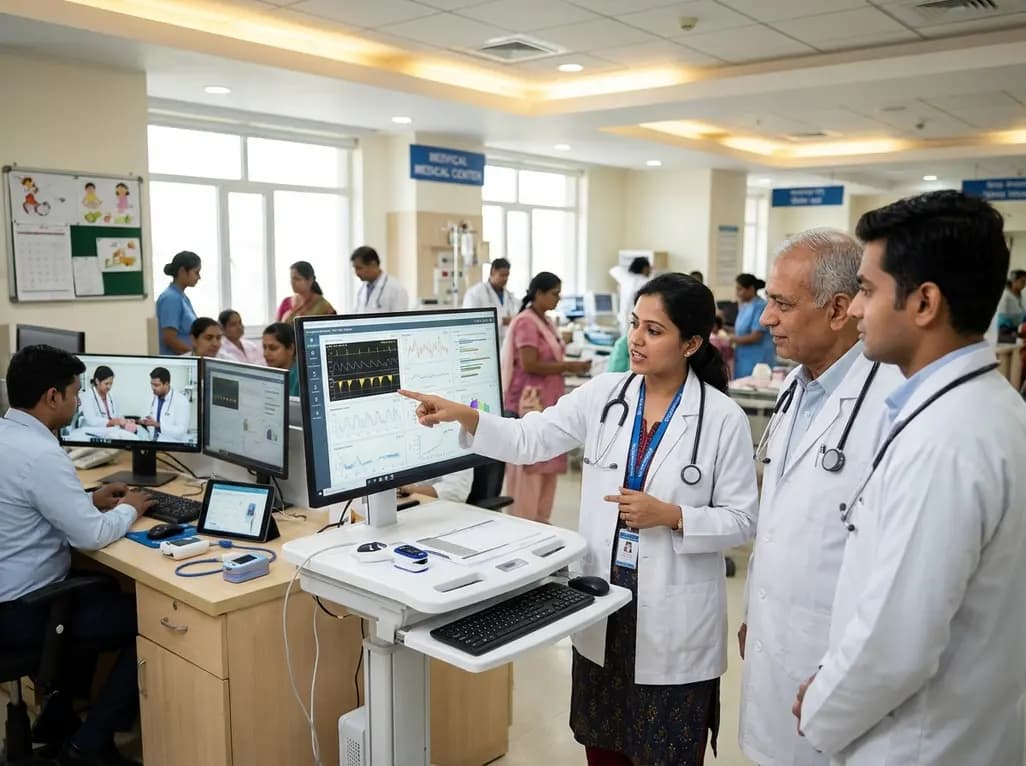
A landmark study details how an enterprise pediatric remote patient management model expanded from a single cardiology pilot to 16 diverse specialty programs by combining centralized digital operations with specialty clinical leadership.
Yesterday

Peripheral nerve injuries present clinical challenges due to regenerative mismatches between sensory and motor neurons. This review explores cutting-edge tissue-engineered nerve grafts designed as central-peripheral signal relays to overcome denervation atrophy and restore functional motor-sensory recovery.
Today
Protein O-GlcNAcylation couples cellular nutrient status to vital neuronal functions. This review explores how disrupted O-GlcNAc cycling drives both neurodevelopmental delays and neurodegenerative cascades, positioning metabolic post-translational modifications as therapeutic targets in clinical neurology.
Today
