.webp&w=384&q=75)

Loading, please wait...
Loading, please wait...

Eosinophilic granuloma (EG) represents a localized, often benign form of Langerhans cell histiocytosis (LCH). While this condition typically affects the pediatric population, it can occasionally manifest in adults. In the orbit, these lesions often present as osteolytic defects with associated soft tissue masses. Notably, eosinophilic granuloma regression has been documented following minimal surgical interventions like biopsy or curettage. However, true spontaneous regression without any surgical or medical interference remains an extremely rare clinical phenomenon, especially in the adult demographic.
A recent illustrative case highlighted a unique occurrence of orbitocranial EG in an adult that resolved entirely on its own. Over a four-month observation period, the presumed mass disappeared without the need for curettage or intralesional corticosteroids. Subsequent biopsy of the residual tissue revealed only reactive changes and no evidence of active neoplasia. This finding confirms that the natural history of LCH can involve self-limiting pathways, even when lesions involve complex areas like the orbital roof and cranial base.
Consequently, this case suggests that an expectant management approach may be viable for certain adult patients. Although standard therapy often includes surgical excision or low-dose radiation, clinicians should consider the potential for spontaneous resolution. Specifically, in cases where the lesion is stable and not causing immediate neurological or visual compromise, a brief period of observation might prevent unnecessary surgical morbidity. Nevertheless, long-term surveillance is vital to monitor for potential recurrences or multisystem involvement.
Diagnosis typically relies on radiological imaging showing characteristic "punched-out" bone lesions and histopathological confirmation of Langerhans cell proliferation. Management strategies vary significantly based on the disease's extent. For instance, single-system unifocal bone disease often responds well to local measures. In contrast, multisystem LCH requires systemic chemotherapy or targeted therapies like BRAF inhibitors. This adult case adds a layer of complexity to current guidelines, emphasizing the need for personalized treatment plans that account for the possibility of spontaneous healing.
While regression after biopsy is well-known, true spontaneous regression without any intervention is considered rare. Most documented cases occur in children, making adult cases particularly unique.
Patients typically present with proptosis, eyelid swelling, and localized pain. Imaging usually reveals an osteolytic lesion, often in the superotemporal quadrant of the orbit.
Not always. While curettage is the standard local treatment, some cases may resolve spontaneously or with minimal intervention. Conservative management with close imaging follow-up is an option for select stable patients.
Disclaimer: This content is for informational and educational purposes only and does not constitute medical advice or a professional relationship. Always seek the advice of a physician or other qualified health provider with any questions regarding a medical condition. Refer to the latest local and national guidelines for clinical practice.
References
1. Lin LY et al. Spontaneous regression of a presumed orbitocranial eosinophilic granuloma in an adult patient: illustrative case. J Neurosurg Case Lessons. 2026 Apr 13. doi: undefined. PMID: 41974063.
2. Garcia-Gallo C et al. Spontaneous regression of an orbital Langerhans cell histiocytosis after biopsy. Arch Soc Esp Oftalmol. 2022. doi: 10.1016/j.oftale.2022.06.010.
3. Morra F et al. Eosinophilic granuloma: Case-report of spontaneous resolution. Radiol Case Rep. 2024. doi: 10.1016/j.radcr.2024.01.045.
"
Read summarized clinical updates, watch expert medical content, and earn CME certifications right from your smartphone.
Open your smartphone camera to scan and install.





A rare case study documenting the true spontaneous regression of an orbitocranial eosinophilic granuloma in an adult patient over a four-month period....
6 months ago
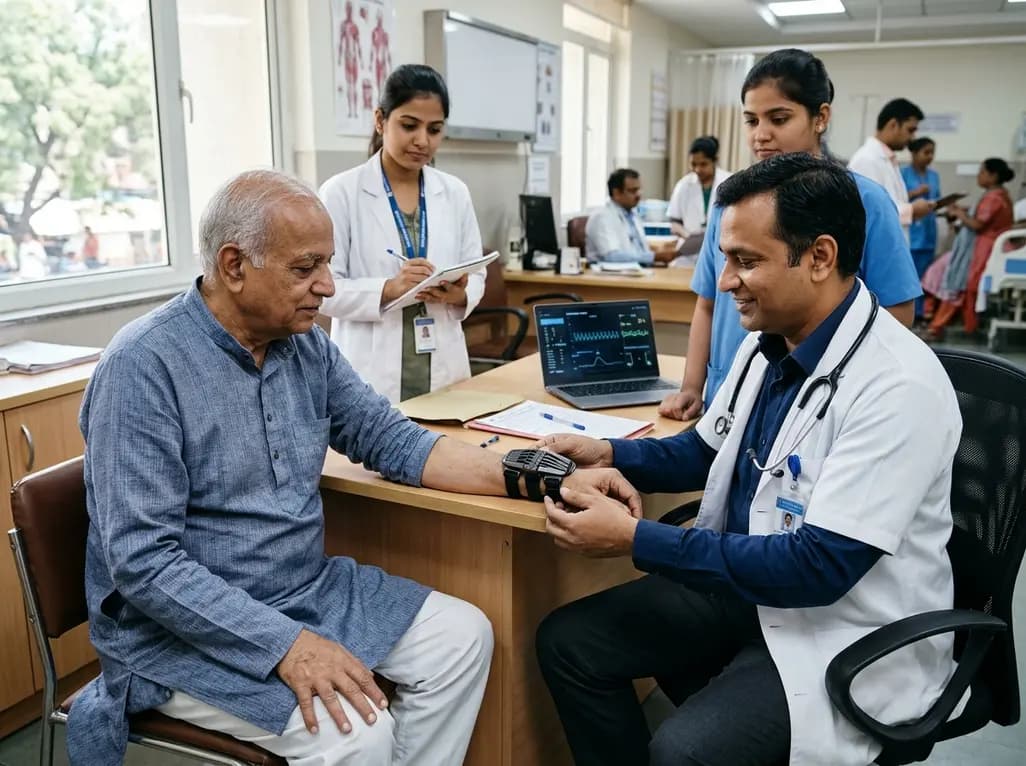
The TREM-AB open-label pilot study evaluated a wearable passive nonlinear vibration absorber for essential tremor. The Nonlinear Energy Sink bracelet reduced clinical Fahn-Tolosa-Marin tremor scores by 32.1% and electrophysiological tremor power by 49.2% with no adverse effects reported.
Today

A study in JAMIA Open shows lightweight open-source reasoning LLMs achieve up to 95% sensitivity and accelerate evidence synthesis screening by nearly twentyfold, presenting a cost-effective, scalable AI solution for biomedical research and systematic reviews.
Today
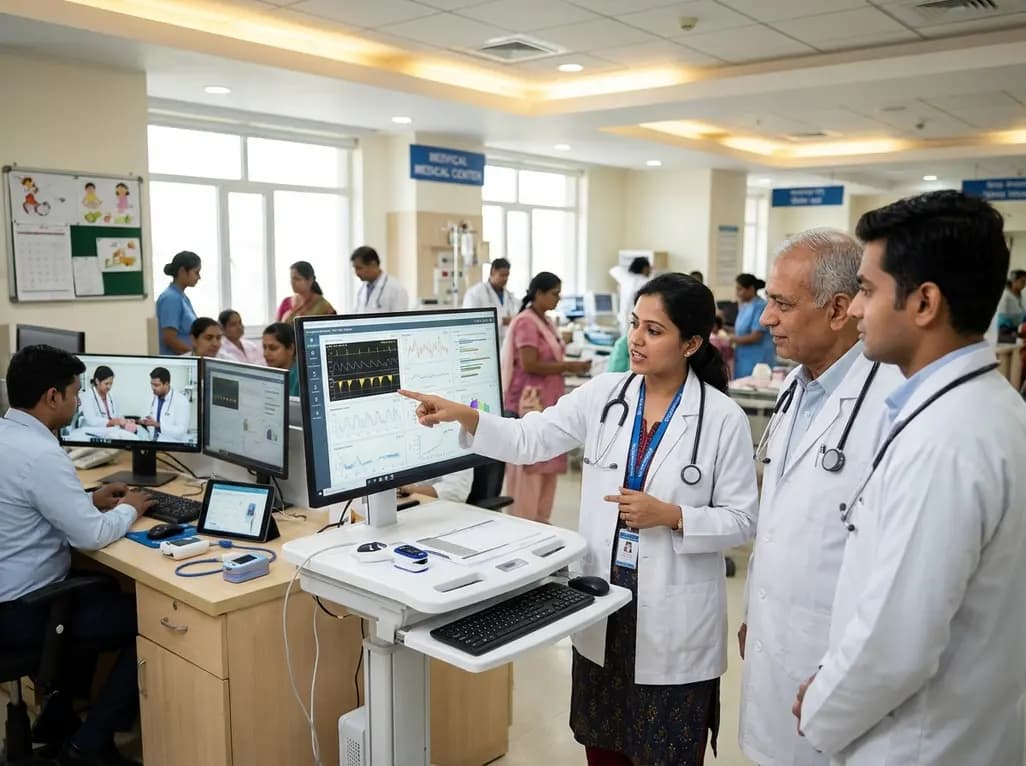
A landmark study details how an enterprise pediatric remote patient management model expanded from a single cardiology pilot to 16 diverse specialty programs by combining centralized digital operations with specialty clinical leadership.
Today

A comparative review of tension band wiring and intramedullary screw fixation in thumb metacarpophalangeal arthrodesis, evaluating union rates, hardware complications, and clinical outcomes.
Today
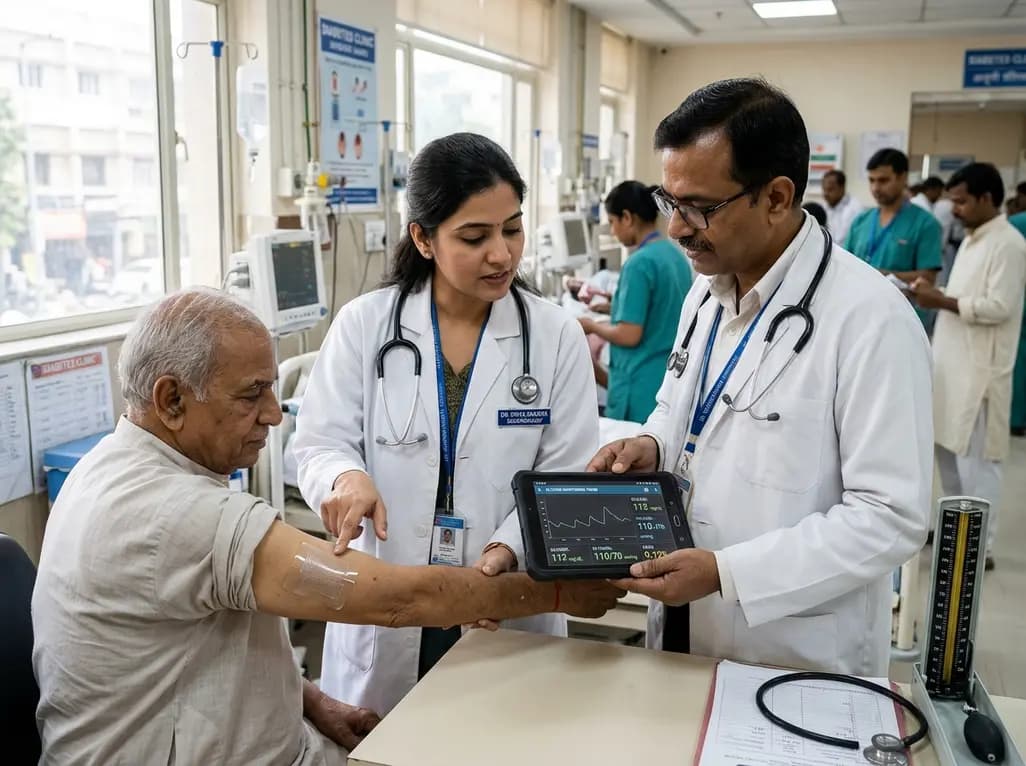
A breakthrough ultrathin multimodal sensor decouples physical hemodynamic monitoring from disposable electrochemical calibration, achieving long-term wearable glucose prediction with 81.36% accuracy and a 9.12% MARD. This offers a robust, drift-free solution for outpatient metabolic surveillance.
Today
