.webp&w=384&q=75)

Loading, please wait...
Loading, please wait...

Predicting Oral Cancer Prognosis remains a critical challenge for clinicians managing oral squamous cell carcinoma (OSCC). Endoplasmic Reticulum Stress (ERS) serves as a vital cellular response to protein homeostasis imbalances. It plays a dual role in both tumor suppression and progression. Recent research has focused on how ERS-associated genes (ERSAGs) regulate the tumor microenvironment. By analyzing these genetic networks, researchers aim to develop more precise tools for risk stratification and therapeutic targeting.
Researchers utilized data from the TCGA and GEO databases to screen for differentially expressed ERSAGs. From an initial pool of 43 genes, they identified nine with significant prognostic value. Furthermore, Lasso regression analysis narrowed this list down to a robust six-gene signature. These genes include KLHL14, SLC25A4, STC2, TRIB3, ALG3, and CCNA2. This model allows for a specialized risk score that helps clinicians categorize patients based on their potential clinical outcomes.
Among the identified genes, CCNA2 stands out due to its significant role in tumor growth. Experimental validation confirmed that the overexpression of CCNA2 directly promotes the proliferation of OSCC cells in vitro. Consequently, high levels of this gene are often associated with a poorer Oral Cancer Prognosis. Understanding this mechanism offers a potential target for future pharmacological interventions aimed at slowing disease progression.
The study also highlighted the importance of KLHL14 in modulating the immune landscape of OSCC. Analysis suggests that KLHL14 may suppress tumor progression by influencing tumor-infiltrating immune cells. Specifically, it appears to interact with activated B cells and mast cells within the tumor microenvironment. This finding suggests that genetic signatures do not just reflect tumor cell behavior but also the body’s immune response to the malignancy.
This prognostic risk model is the first of its kind to be based specifically on ERSAGs for OSCC. It provides a foundational framework for personalized medicine in oncology and dentistry. Moreover, the identified genes may lead to the development of novel therapeutic strategies. Clinicians can use these genetic markers to better predict patient survival and tailor treatment intensity accordingly.
ERS-associated genes regulate how cells respond to stress. In OSCC, certain genes like CCNA2 can accelerate tumor cell division, while others like KLHL14 may help the immune system fight the cancer.
While the model shows high reliability in validation datasets, it currently serves as a powerful research tool to assist in predicting prognosis and developing new therapies. Further clinical trials may bring it into routine use.
CCNA2 (Cyclin A2) is a key regulator of the cell cycle. In oral cancer, its overexpression leads to rapid cell proliferation, which is a major factor in determining a poor prognosis.
Disclaimer: This content is for informational and educational purposes only. It is not intended to provide medical advice or to be a substitute for professional medical advice, diagnosis, or treatment. Refer to the latest local and national guidelines for clinical practice.
References
1. Li S et al. EXPRESS: Predicting Prognosis of Oral Squamous Cell Carcinoma Based on Endoplasmic Reticulum Stress Associated Genes Signatures. J Investig Med. 2026 Mar 10. doi: 10.1177/10815589261433998. PMID: 41805257.
2. Zhang L, et al. Identification of an endoplasmic reticulum stress-related prognostic risk model with excellent prognostic and clinical value in oral squamous cell carcinoma. Aging (Albany NY). 2023;15(19):10010-10030.
3. Gumedag C, et al. Integrated analysis identifies CCNA2 as a candidate diagnostic and prognostic biomarker in oral tongue squamous cell carcinoma. SciELO. 2026.

Read summarized clinical updates, watch expert medical content, and earn CME certifications right from your smartphone.
Open your smartphone camera to scan and install.





A new 6-gene prognostic model based on endoplasmic reticulum stress (ERS) helps predict outcomes in oral squamous cell carcinoma (OSCC) patients....
7 months ago
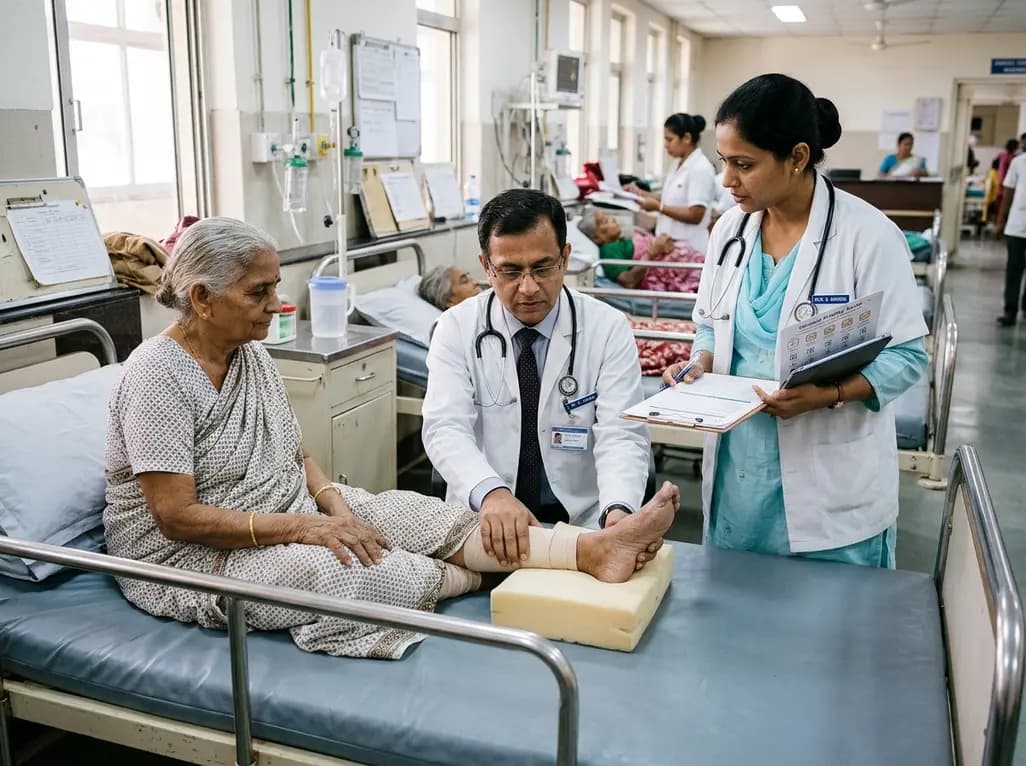
A retrospective cohort study reveals that frailty quadruples the odds of pressure injuries in hospitalized older adults. Integrating the Clinical Frailty Scale with comprehensive geriatric care is crucial for identifying vulnerability early and implementing targeted multidisciplinary prevention.
Today

Occult maternal malignancy accounts for 3.82% of persistent unreportable NIPT results with genomic noise. Multiple chromosomal aberrations, notably on chromosome 18, warrant thorough oncological evaluation and whole-body MRI to ensure timely maternal diagnosis while preserving fetal care.
Today

This article reviews the forensic and clinical complexities of acute myocarditis arising on left ventricular hypertrophy in children, highlighting early diagnostic red flags and multidisciplinary postmortem autopsy protocols.
Today

A randomized controlled trial demonstrates that an eight-week dual-task training intervention significantly improves static and dynamic postural control over standard balance exercises in individuals with chronic ankle instability, addressing critical neurocognitive deficits during athletic and daily activities.
Today

A retrospective cohort study of 7,716 ICU patients from the MIMIC-IV database demonstrates that Gradient Boosting Decision Trees significantly outperform traditional SOFA scores in predicting in-hospital mortality among patients with sepsis and diabetes, with SHAP analysis providing clinical interpretability.
Today
