.webp&w=384&q=75)

Loading, please wait...
Loading, please wait...

Social media platforms have evolved into critical digital spaces for the expression of psychological distress. Recent research highlights significant gaps in how peers and professionals identify these signals. Improving online suicidal threat recognition is essential for healthcare providers who monitor the mental well-being of their patients. Specifically, while peers accurately identify 77% of suicidal posts, they miss nearly a quarter of high-risk messages, especially when cues remain subtle or indirect.
The study emphasizes that specific post features significantly increase the likelihood of accurate threat appraisal. For instance, posts containing photos of lethal means or those using explicit language generate the highest levels of concern. Furthermore, temporal immediacy—language indicating an imminent plan—drives a faster recognition of risk. Clinicians should educate families and caregivers to look for these multimodal indicators when monitoring the social media activity of vulnerable individuals. Moreover, the presence of visual evidence often serves as the strongest trigger for a bystander to perceive a genuine threat.
Despite the high recognition rates for explicit threats, most social media users prefer indirect responses over direct intervention. This \"digital bystander\" effect suggests a significant barrier in moving from recognition to life-saving action. In the Indian context, the National Suicide Prevention Strategy (NSPS) 2022 advocates for early identification and sensible media reporting to mitigate these risks. Consequently, healthcare professionals must bridge the gap between identifying a digital threat and facilitating a direct clinical referral. Additionally, training programs should focus on empowering peers to move beyond passive support toward active crisis reporting.
Integrating social media history into routine psychiatric assessments can reveal behavioral patterns that standard clinical interviews might miss. Using tools like the WHO's \"Live Life\" framework, doctors can better manage early identification and surveillance. In contrast to traditional assessments, digital cues offer a real-time window into a patient's mindset. Therefore, understanding the nuances of the digital landscape has become a core competency for modern mental health nursing, emergency medicine, and general practice. Nevertheless, practitioners must remain vigilant about the 23% of cases where suicidal intent is present but not explicitly stated.
Families should prioritize identifying multimodal cues such as images of lethal means, explicit mentions of self-harm, and posts indicating a sense of urgency or a lack of a future orientation.
Clinicians can educate patients' social circles on the importance of direct intervention and provide clear instructions on how to use platform-specific reporting tools for high-risk content.
Observers often miss threats that lack explicit language or visual cues. Subtle changes in posting frequency or the absence of typical emotional expressions can also be overlooked without specific training in risk detection.
Disclaimer: This content is for informational and educational purposes only. It does not constitute professional medical advice, diagnosis, or treatment. Always seek the advice of your physician or other qualified health provider with any questions you may have regarding a medical condition. Refer to the latest local and national guidelines for clinical practice.
References
Hendley T et al. Suicidal ideation and social media: How content of suicide-related threat affects recognition, threat appraisal, and willingness to intervene with suicidal users. Death Stud. 2026 Mar 23. doi: 10.1080/07481187.2026.2646869. PMID: 41871385.
Ministry of Health and Family Welfare. National Suicide Prevention Strategy (NSPS). Government of India; 2022.
World Health Organization. LIVE LIFE: An implementation guide for suicide prevention in countries. Geneva: WHO; 2021.
"
Read summarized clinical updates, watch expert medical content, and earn CME certifications right from your smartphone.
Open your smartphone camera to scan and install.





Study analyzes how multimodal cues like photos and language affect the recognition of suicidal ideation on social media and peer willingness to intervene....
7 months ago

Explore vital recurrent stroke predictors in lacunar stroke patients managed with intensive blood pressure lowering. This analysis examines trial findings from SPS3 to uncover residual vascular risks, metabolic factors, and targeted secondary prevention strategies for high-risk neurological patients.
Today
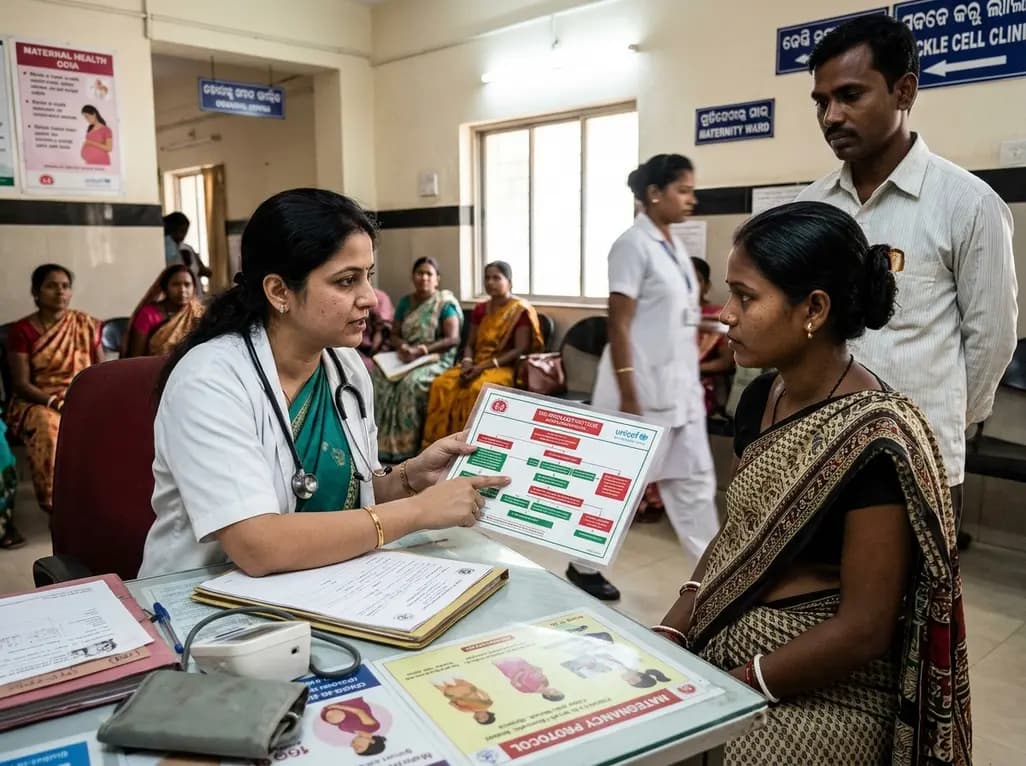
Odisha has established India's first state-level clinical protocol specifically tailored for pregnant women with sickle cell disease. Developed with NHM and UNICEF, the framework provides structured antenatal screening, crisis mitigation, standardized referral pathways, and specialized interdisciplinary care.
Today

India is advancing preventive healthcare by integrating genomics, artificial intelligence, and quantum technologies. With the SANGAM programme sequencing one million Indian genomes, clinicians can unlock personalized therapies, detect cardiometabolic risks early, and curb the burden of diabetes and heart disease.
Today
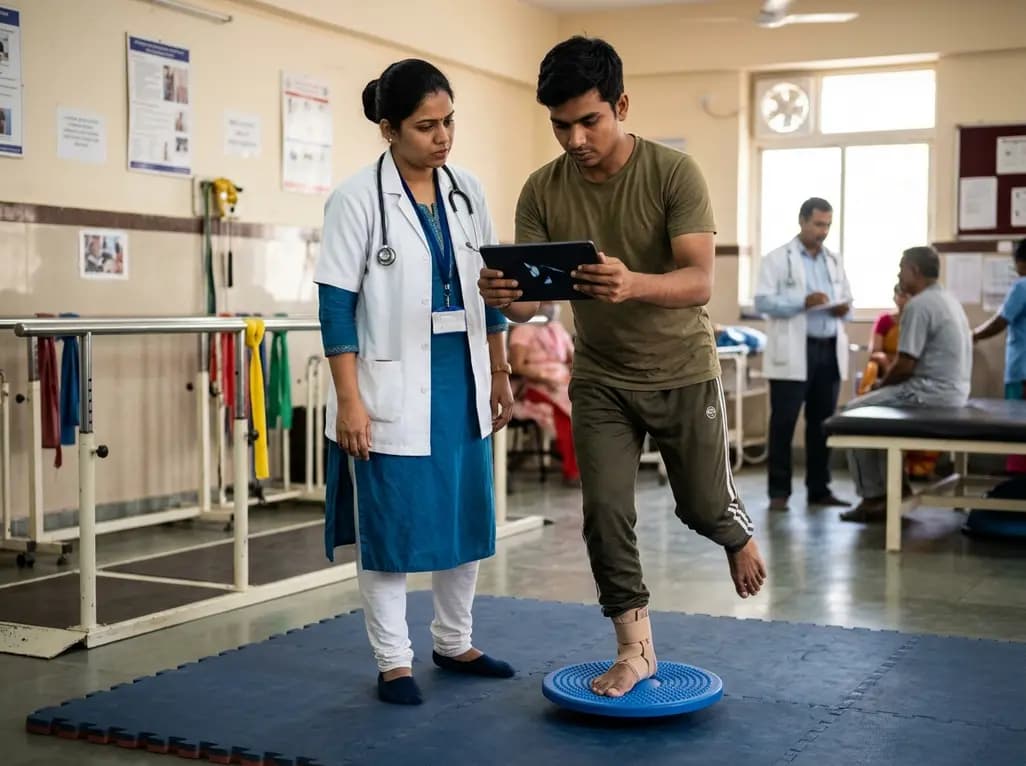
A randomized controlled trial demonstrates that an eight-week dual-task training intervention significantly improves static and dynamic postural control over standard balance exercises in individuals with chronic ankle instability, addressing critical neurocognitive deficits during athletic and daily activities.
Today

A retrospective cohort study of 7,716 ICU patients from the MIMIC-IV database demonstrates that Gradient Boosting Decision Trees significantly outperform traditional SOFA scores in predicting in-hospital mortality among patients with sepsis and diabetes, with SHAP analysis providing clinical interpretability.
Today
