.webp&w=384&q=75)

Loading, please wait...
Loading, please wait...

The COVID-19 pandemic necessitated robust occupational health communication strategies to protect the global workforce. Employers faced the daunting task of translating rapidly evolving scientific data into actionable workplace policies. Specifically, according to a recent study published in the Journal of Occupational and Environmental Medicine, most US companies viewed government agencies as their primary source of truth. Consequently, they leaned heavily on the Centers for Disease Control and Prevention (CDC) to guide their decision-making processes.
While national guidelines provided a foundation, many organizations found that generic advice was insufficient. As a result, nearly half of the surveyed employers engaged additional experts to interpret these broad directives. This highlights a significant gap in the public health response. Moreover, broad communications often fail to address the specific nuances of different industries, such as manufacturing versus retail. Therefore, tailoring information remains a critical challenge for health agencies during emergencies.
In addition, audience segmentation is a vital component of effective health messaging. However, researchers discovered that traditional occupational research categories were not always effective for this purpose. Instead, an employer\'s confidence in information sources was often influenced by their perception of worksite transmission risks. Furthermore, organizations that felt more vulnerable tended to seek out more diverse and professional sources to bolster their safety protocols.
To bridge the gap, many companies modified official materials before sharing them with their employees. This customization ensured that the messaging resonated with their specific workforce demographics. Furthermore, maintaining trust through transparent and frequent updates helped reduce anxiety among staff. As we look toward future public health emergencies, the integration of industry-specific expertise into national guidance will be essential.
Employers viewed government agencies as the ultimate authority for policy decisions and workforce communication. They needed credible, evidence-based data to justify high-stakes safety measures and mitigate potential liabilities.
The primary challenge was the lack of industry-specific information. Many employers had to hire external consultants to interpret broad national guidelines and modify these materials to fit their unique operational environments.
Disclaimer: This content is for informational and educational purposes only. It does not constitute medical or legal advice. Refer to the latest local and national guidelines for clinical practice.
References
Parvanta C et al. Trusted Sources: How Some US Employers Used Government Information during the COVID-19 Pandemic. J Occup Environ Med. 2026 Mar 09. doi: 10.1097/JOM.0000000000003705. PMID: 41801244.
Holland & Hart LLP. Best Practices for Safe and Healthy Workplaces During COVID-19. 2020.
Marlon J et al. Who do Americans trust most for information about COVID-19? Yale Program on Climate Change Communication. 2020.

Read summarized clinical updates, watch expert medical content, and earn CME certifications right from your smartphone.
Open your smartphone camera to scan and install.





A study analysis of how US companies used CDC and OSHA data during the pandemic, highlighting the need for industry-specific workplace health guidance....
7 months ago

Explore vital recurrent stroke predictors in lacunar stroke patients managed with intensive blood pressure lowering. This analysis examines trial findings from SPS3 to uncover residual vascular risks, metabolic factors, and targeted secondary prevention strategies for high-risk neurological patients.
Today
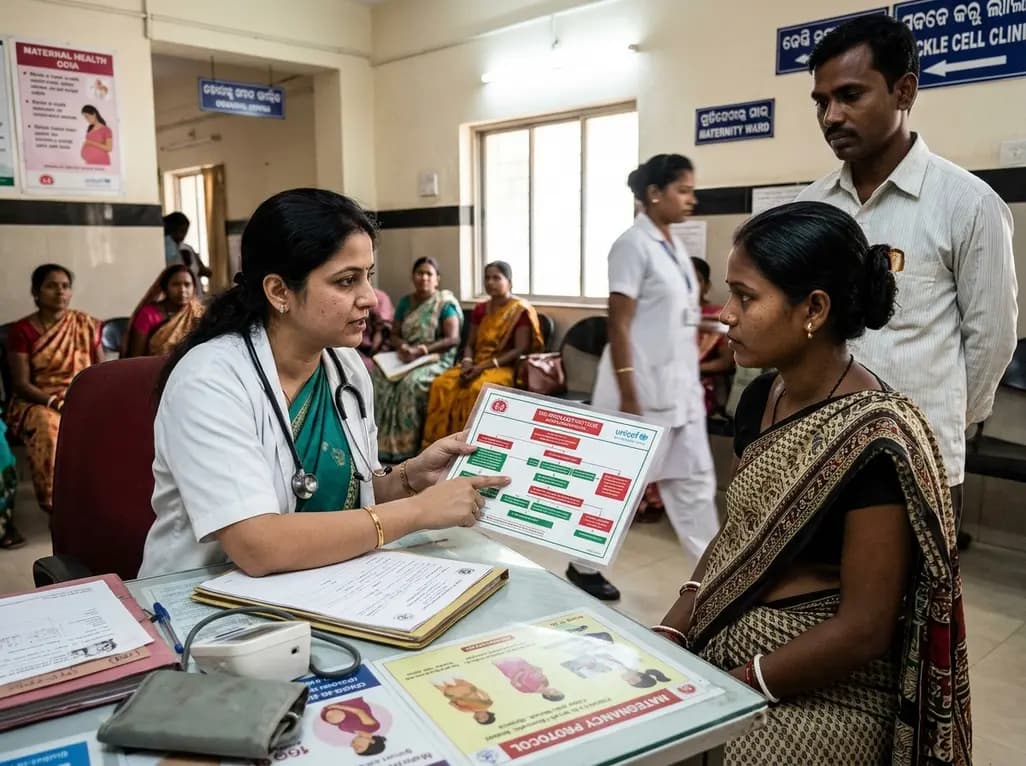
Odisha has established India's first state-level clinical protocol specifically tailored for pregnant women with sickle cell disease. Developed with NHM and UNICEF, the framework provides structured antenatal screening, crisis mitigation, standardized referral pathways, and specialized interdisciplinary care.
Today

India is advancing preventive healthcare by integrating genomics, artificial intelligence, and quantum technologies. With the SANGAM programme sequencing one million Indian genomes, clinicians can unlock personalized therapies, detect cardiometabolic risks early, and curb the burden of diabetes and heart disease.
Today

A randomized controlled trial demonstrates that an eight-week dual-task training intervention significantly improves static and dynamic postural control over standard balance exercises in individuals with chronic ankle instability, addressing critical neurocognitive deficits during athletic and daily activities.
Today

A retrospective cohort study of 7,716 ICU patients from the MIMIC-IV database demonstrates that Gradient Boosting Decision Trees significantly outperform traditional SOFA scores in predicting in-hospital mortality among patients with sepsis and diabetes, with SHAP analysis providing clinical interpretability.
Today
