.webp&w=384&q=75)

Loading, please wait...
Loading, please wait...

The National Medical Commission (NMC) has issued an urgent NMC Foreign Medical Advisory, specifically warning Indian students about pursuing undergraduate medical courses in foreign institutes, particularly in Uzbekistan. This advisory, dated April 1, 2026, reiterates the critical need for students and parents to adhere strictly to the Foreign Medical Graduate Licentiate (FMGL) Regulations, 2021, to avoid future disqualification from practicing medicine in India.
The NMC's alert stems from serious concerns raised by the Embassy of India in Tashkent, highlighting significant discrepancies and alleged malpractices in medical education within Uzbekistan. Specifically, the advisory names several institutions where Indian students are seeking admission, cautioning against potential non-compliance issues.
The NMC has specifically flagged the following medical institutions in Uzbekistan:
Concerns include reports of student admissions beyond sanctioned intake capacities, compromising educational quality. Additionally, many students reportedly do not receive adequate hands-on training, and the medium of instruction is often not English, which significantly challenges Indian students.
The NMC's Foreign Medical Graduate Licentiate (FMGL) Regulations, 2021, clearly outline the mandatory standards for foreign medical education to ensure eligibility for practice in India. Therefore, students must ensure their chosen institution fully complies with these regulations.
Failure to meet these stringent requirements can result in ineligibility for medical registration in India, even after course completion.
Prospective students and their parents must exercise utmost caution and conduct thorough due diligence before committing to any foreign medical institution. Therefore, heed the following advice:
The NMC continuously updates its advisories. For instance, recent clarifications have addressed compensatory training for foreign medical graduates who completed parts of their studies online due to disruptions. Therefore, staying updated with NMC guidelines is paramount.
Disclaimer: This content is for informational and educational purposes only. Always consult official NMC notifications and seek professional advice for specific admission and regulatory queries. Refer to the latest local and national guidelines for clinical practice.
References

Read summarized clinical updates, watch expert medical content, and earn CME certifications right from your smartphone.
Open your smartphone camera to scan and install.





The National Medical Commission (NMC) issues a crucial advisory regarding MBBS admissions in Uzbekistan, warning Indian students about compliance issues and...
6 months ago
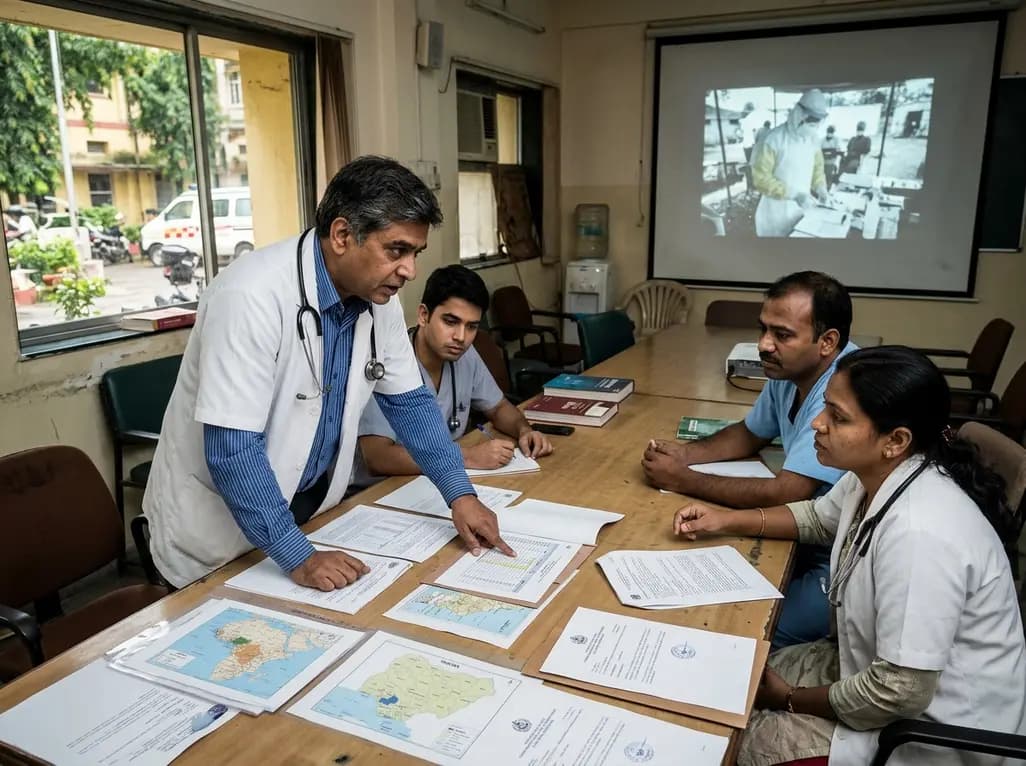
Following Nigeria's first recorded Ebola case linked to regional travel, the Africa CDC has convened an emergency ministerial summit. This alert underscores critical clinical priorities for healthcare professionals, including differentiating early viral infection from malaria, implementing barrier nursing, and triage.
Today

Leucine Rich Bio has introduced South Asia's first comprehensive vaginal microbiome test, BugSpeaks. By profiling microbial dysbiosis, pathogens, and antimicrobial resistance, this next-generation diagnostic platform provides clinicians with deeper insights into recurrent infections, fertility, and reproductive health.
Today

Review how tailored exercise programs benefit frail older patients with heart failure. Explore pathophysiological mechanisms, individualized training prescriptions, and strategies to overcome adherence barriers in clinical practice.
Today

This comparative study evaluates posterior labral tears with and without glenohumeral instability, highlighting distinct demographic patterns, MRI underestimation in stable shoulders, and successful arthroscopic repair outcomes.
Today

A clinical study demonstrates that early intervention with tocilizumab, either as monotherapy or bridged with corticosteroids, achieves significant proptosis reduction and resolves active inflammation in treatment-naive thyroid eye disease.
Today
