.webp&w=384&q=75)

Loading, please wait...
Loading, please wait...

Recent clinical data from New Zealand reveals a concerning trend regarding blood transfusion safety. Specifically, the night-time TACO risk is significantly higher compared to daytime procedures. Transfusion-associated circulatory overload (TACO) remains a leading cause of transfusion-related morbidity. However, clinicians have largely overlooked the influence of circadian rhythms on this complication until now. Researchers found that while only a quarter of transfusions occur at night, the incidence of TACO doubles during these hours.
Several factors contribute to this increased danger during nocturnal hours. For instance, night-time staffing levels are often lower, which often leads to less frequent patient monitoring. Furthermore, non-urgent transfusions administered at night can disrupt essential patient rest. Consequently, bedside staff might miss subtle signs of respiratory distress or fluid overload until they become severe. Interestingly, other reactions like allergic responses and transfusion-associated hypotension do not show this same circadian variation. This suggests that the pathophysiology of TACO is uniquely sensitive to the time of day.
Therefore, clinicians should carefully evaluate the necessity of non-urgent night-time transfusions. If a transfusion is required, healthcare providers must implement enhanced monitoring protocols. Additionally, identifying high-risk patients, such as the elderly or those with renal impairment, is vital before starting the infusion. Moreover, adjusting the rate of administration based on the patient's fluid status can mitigate potential complications. In conclusion, timing plays a critical role in the safety profile of blood products.
According to the latest research, the night-time TACO risk is approximately twice as high as the risk during the daytime, despite fewer transfusions being performed at night.
No, urgent transfusions should proceed regardless of the time. However, clinicians are encouraged to defer non-urgent transfusions to daytime hours when monitoring is more robust and circadian risks are lower.
The study specifically found that allergic reactions and transfusion-associated hypotension do not exhibit the same night-time spike seen with TACO.
Disclaimer: This content is for informational and educational purposes only. It does not constitute medical advice or a substitute for professional clinical judgment. Refer to the latest local and national guidelines for clinical practice.
References
Badami KG et al. Circadian patterns in transfusion-associated circulatory overload. Transfus Med. 2026 Mar 09. doi: 10.1111/tme.70074. PMID: 41803025.
Australian Red Cross Lifeblood. Transfusion-associated circulatory overload (TACO). Available at: https://www.lifeblood.com.au
AABB. Transfusion-Associated Circulatory Overload (TACO) (Revised). Available at: https://www.aabb.org

Read summarized clinical updates, watch expert medical content, and earn CME certifications right from your smartphone.
Open your smartphone camera to scan and install.





Research indicates that night-time transfusions double the risk of TACO. This summary explores the need for better monitoring and timing of blood products....
7 months ago
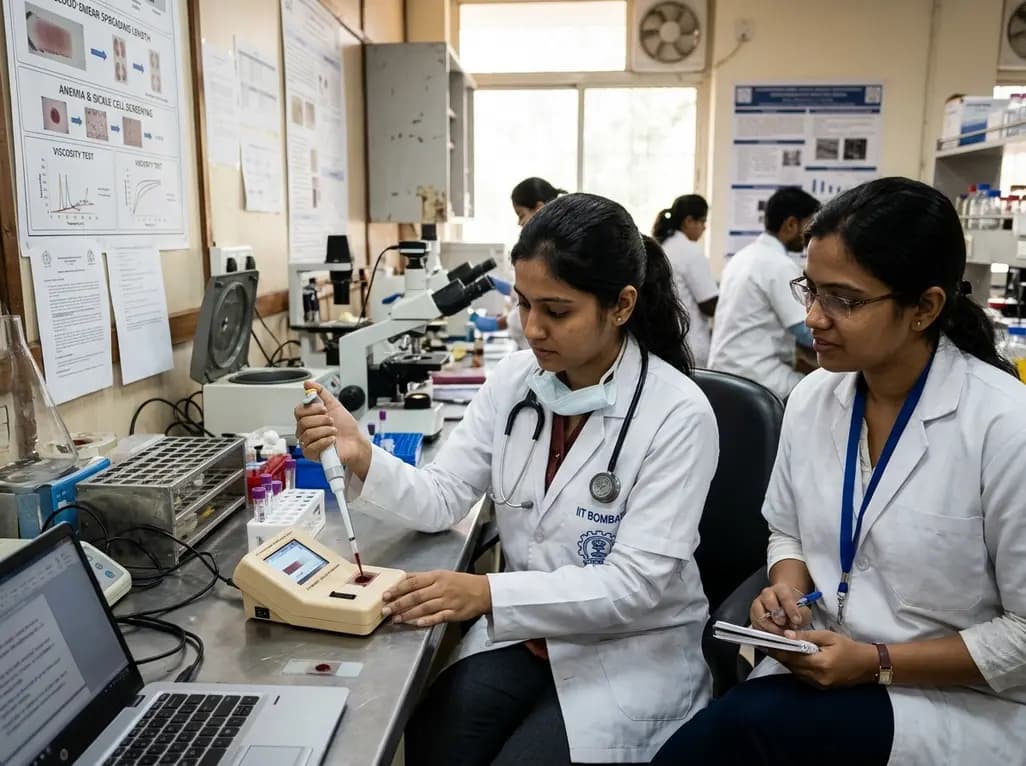
Researchers at IIT Bombay have engineered an automated, cost-effective point-of-care device that diagnoses anaemia and sickle cell disease from a single drop of blood. By measuring blood smear spreading length, this portable tool assesses blood viscosity to offer rapid screening in resource-limited healthcare centers.
Today
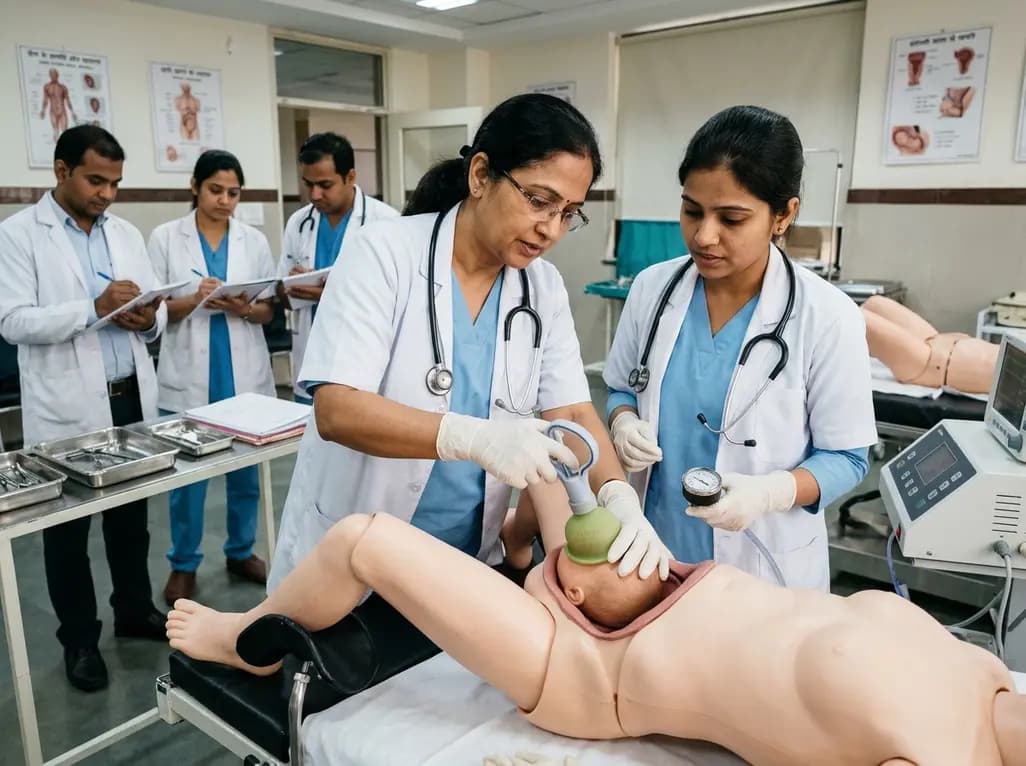
A multicenter study evaluates whether standardized simulation training reduces cup detachment during vacuum-assisted vaginal birth. Evidence-based simulation equips obstetricians to improve cup placement, reduce maternal-fetal trauma, and optimize clinical decision-making during operative deliveries.
Today
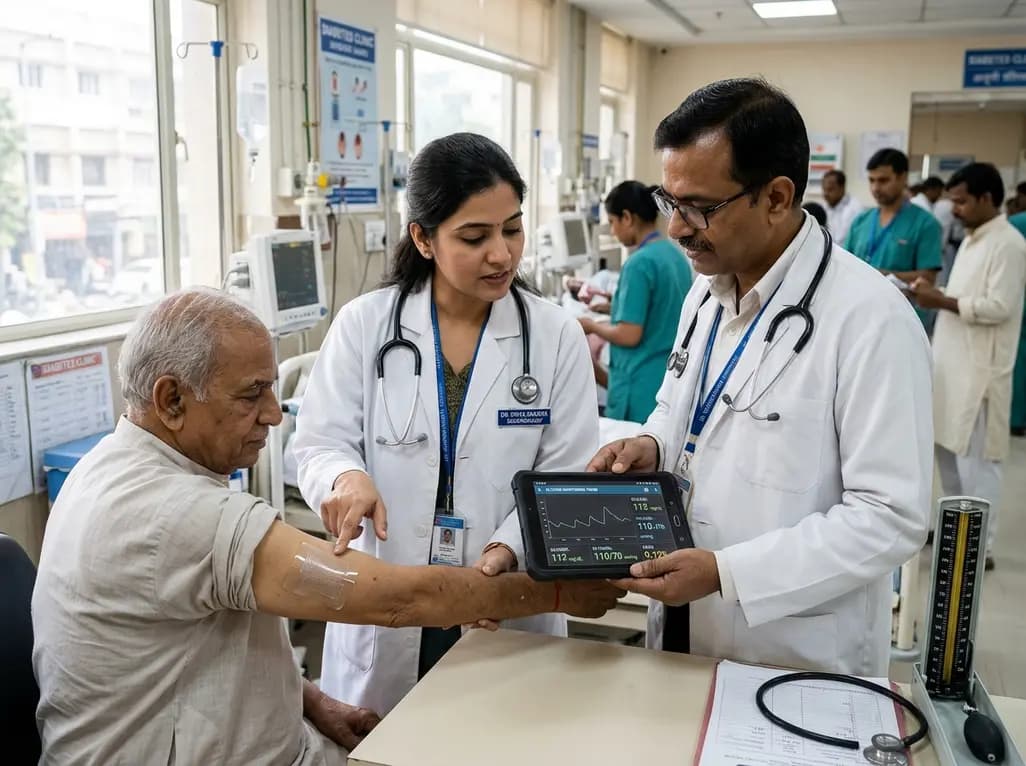
A breakthrough ultrathin multimodal sensor decouples physical hemodynamic monitoring from disposable electrochemical calibration, achieving long-term wearable glucose prediction with 81.36% accuracy and a 9.12% MARD. This offers a robust, drift-free solution for outpatient metabolic surveillance.
Today

A comparative review of tension band wiring and intramedullary screw fixation in thumb metacarpophalangeal arthrodesis, evaluating union rates, hardware complications, and clinical outcomes.
Today

Following regulatory scrutiny from FSSAI regarding promotional representations and lean muscle preservation claims, Dr. Reddy's Laboratories and Nestlé Health Science are currently reviewing the branding and marketing strategy for their joint nutritional supplement Celevida GLP+.
Today
