.webp&w=384&q=75)

Loading, please wait...
Loading, please wait...

Recent research published in NPJ Science of Learning reveals how neural learning patterns emerge during the early stages of conceptual grasp. As students engage with complex STEM topics, their brains undergo rapid reorganization. This study specifically investigated how these changes manifest after only a single introductory lesson and lab activity.
Researchers used functional MRI (fMRI) to scan students after they completed a physics lesson. By employing a machine-learning classifier, the team identified specific patterns in the parietal and temporal lobes. These regions effectively tracked how well students had embedded new scientific categories into their mental frameworks. Consequently, the study shows that comprehension is not just a behavioral outcome but a visible neural state.
Furthermore, a regression analysis confirmed a significant link between brain activity and test scores. Specifically, students with more organized neural learning patterns performed better on conceptual assessments. This discovery suggests that even brief educational exposure can produce measurable shifts in brain organization. Therefore, teachers might one day use neuroimaging to gauge student readiness or identify learning gaps early.
Moreover, these findings offer deep insights for medical educators. While the research focused on physics, the underlying mechanism of neuroplasticity applies to all abstract learning environments. Medical students must grasp complex pathophysiology through similar cognitive pathways. As a result, educational strategies that reinforce these structural brain changes could improve long-term retention in medical schools. However, clinicians should note that these results are preliminary and require further validation in diverse educational settings.
fMRI measures blood flow changes in the brain to detect activity. In this study, machine-learning algorithms analyzed these signals to find patterns that match specific conceptual categories. This allows researchers to see what a student understands objectively.
The study highlighted several parietal and temporal regions. These areas are typically associated with processing complex relationships and semantic information. Therefore, they are essential for mastering new scientific concepts.
Disclaimer: This content is for informational and educational purposes only. It does not constitute medical advice or establish a doctor-patient relationship. Refer to the latest local and national guidelines for clinical practice.
References
Cetron JS et al. Neural patterns reflect conceptual grasp of novice students following first class learning in physics. NPJ Sci Learn. 2026 Feb 22. doi: 10.1038/s41539-025-00394-3. PMID: 41723168.
Smith DD et al. Dynamic reconfiguration of brain coactivation states associated with active and lecture-based learning of university physics. ResearchGate. 2025 Aug.
Li Y et al. Knowledge concept recognition in the learning brain via fMRI classification. Frontiers in Neuroscience. 2025 Mar 20. doi: 10.3389/fnins.2025.123456.
"
Read summarized clinical updates, watch expert medical content, and earn CME certifications right from your smartphone.
Open your smartphone camera to scan and install.





New fMRI research identifies neural patterns that track how students learn physics concepts, linking brain organization to assessment performance....
8 months ago
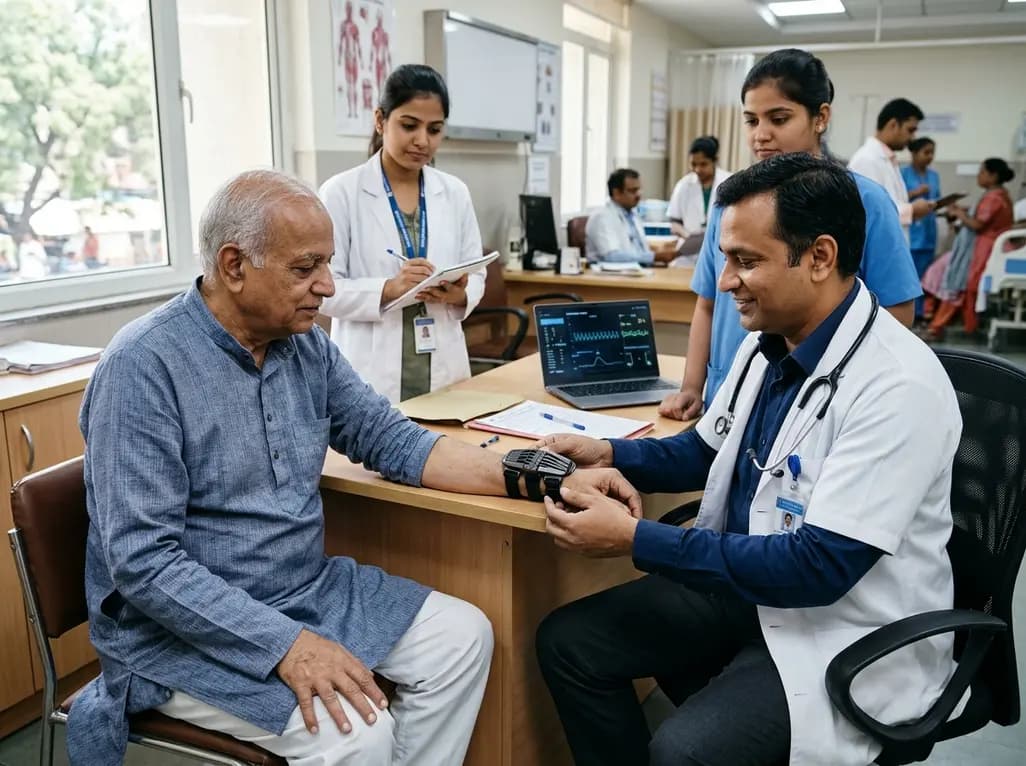
The TREM-AB open-label pilot study evaluated a wearable passive nonlinear vibration absorber for essential tremor. The Nonlinear Energy Sink bracelet reduced clinical Fahn-Tolosa-Marin tremor scores by 32.1% and electrophysiological tremor power by 49.2% with no adverse effects reported.
Today

A population-based study of 20,928 children reveals that small vulnerable newborns face sex-divergent mental capital outcomes at ages 6-7: term SGA girls show higher behavioral difficulties and lower resilience, while preterm non-SGA boys experience increased behavioral problems.
Today
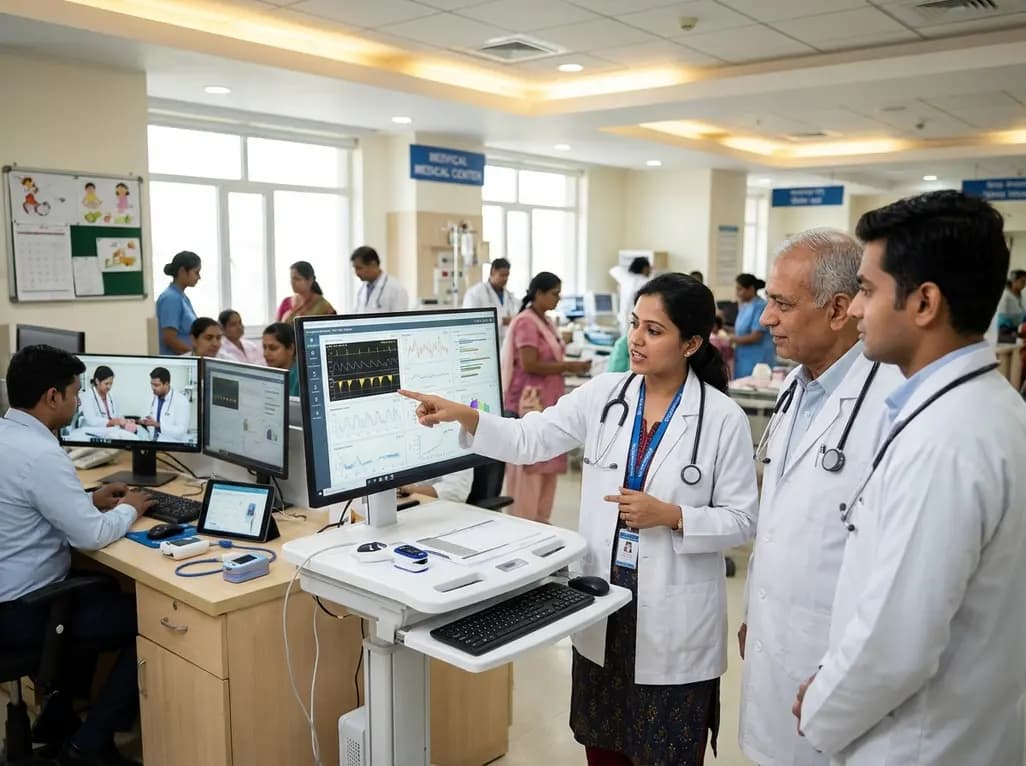
A landmark study details how an enterprise pediatric remote patient management model expanded from a single cardiology pilot to 16 diverse specialty programs by combining centralized digital operations with specialty clinical leadership.
Today
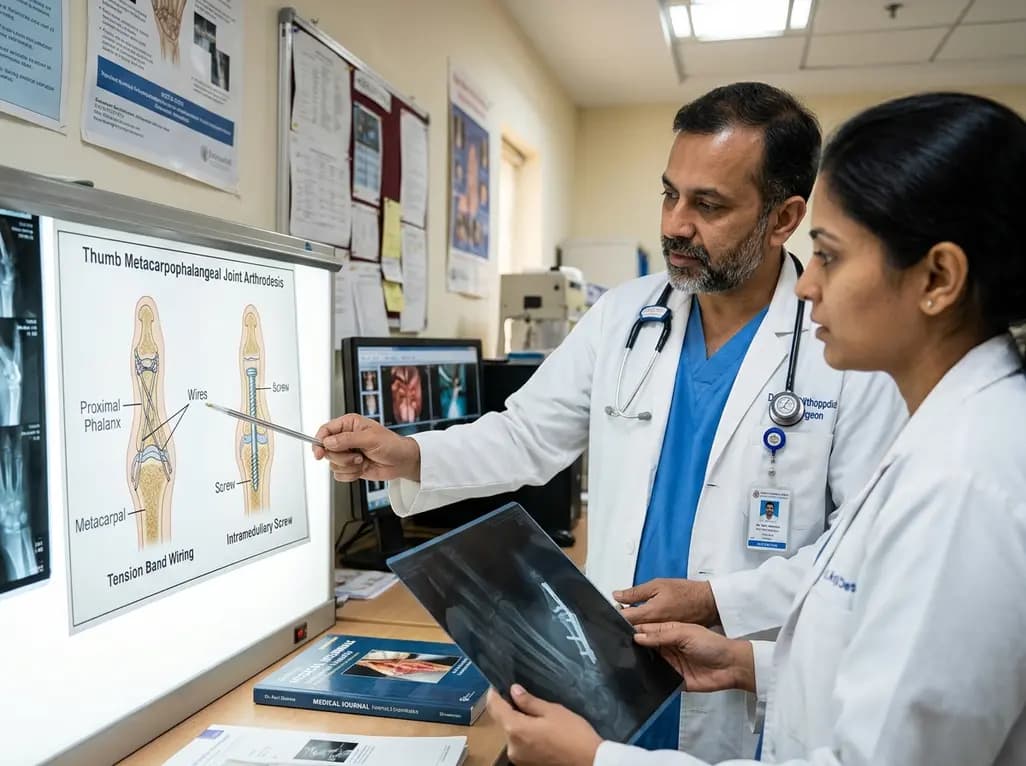
A comparative review of tension band wiring and intramedullary screw fixation in thumb metacarpophalangeal arthrodesis, evaluating union rates, hardware complications, and clinical outcomes.
Today
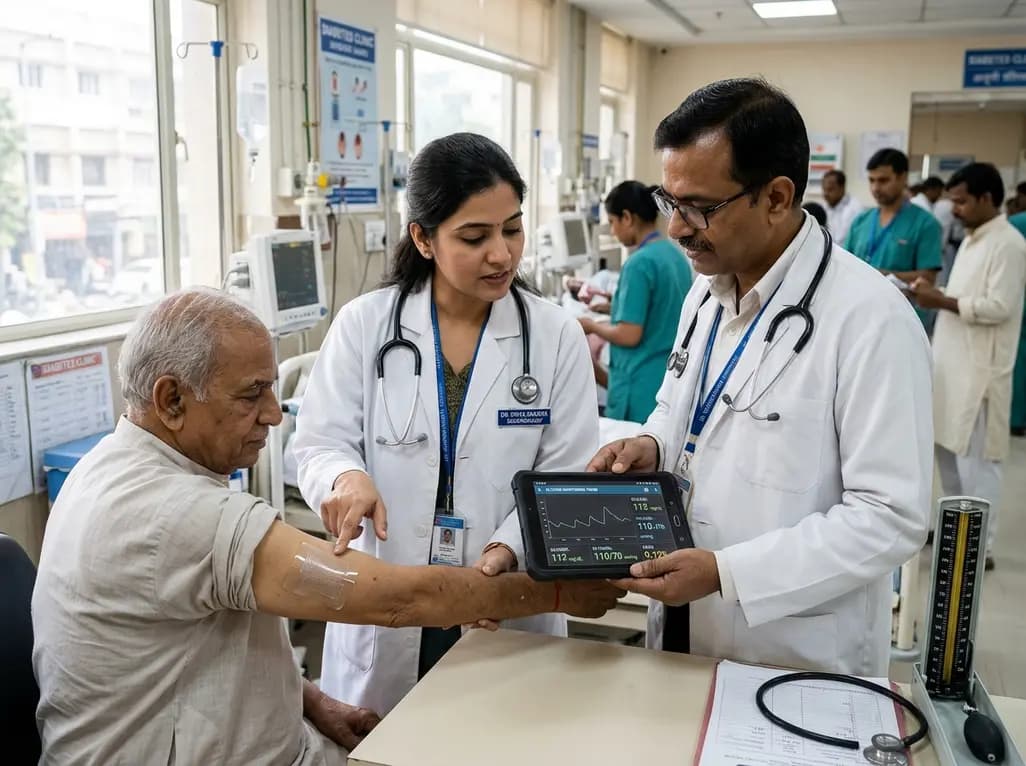
A breakthrough ultrathin multimodal sensor decouples physical hemodynamic monitoring from disposable electrochemical calibration, achieving long-term wearable glucose prediction with 81.36% accuracy and a 9.12% MARD. This offers a robust, drift-free solution for outpatient metabolic surveillance.
Today
