.webp&w=384&q=75)

Loading, please wait...
Loading, please wait...

The NEET-PG cut-off reduction has raised critical questions about medical education standards in India. On Monday, the Supreme Court of India declared it would examine if the lower qualifying marks for 2025-26 impact postgraduate quality. A bench comprising Justice PS Narasimha and Justice Alok Aradhe noted that the issue requires careful reflection. Although candidates are already licensed doctors, the court remains concerned about the drastic nature of the percentile drop. Consequently, the matter is scheduled for a further hearing on March 24.
The Union health ministry defended the NEET-PG cut-off reduction in a detailed affidavit. According to the Centre, the decision addresses the massive number of vacant seats in government and private colleges. Specifically, over 9,000 seats remained unfilled after the second round of counselling. The government argued that the entrance exam is a filtering tool, not a certification of basic clinical competence. Furthermore, they pointed out that percentile reductions have occurred previously, including a drop to zero in 2023. Therefore, the current move aligns with existing administrative practices to prevent public resource wastage.
Petitioners argue that lowering the bar to the 7th percentile for general candidates and zero for others violates constitutional articles. They claim that such a NEET-PG cut-off reduction might dilute the merit-based system of postgraduate specialization. Additionally, the NBEMS informed the court that nearly 96,000 additional candidates became eligible following the January 13 notice. The court will now determine if the policy justification of preventing seat wastage outweighs the need to maintain academic rigour. This decision will significantly influence the future of medical residency entries in India.
Q1: Why was the NEET-PG cut-off reduction implemented?
The reduction was aimed at preventing large-scale seat vacancies in both government and private medical institutions after initial counselling rounds.
Q2: What are the new qualifying scores for the 2025-26 session?
The general category cut-off dropped to the 7th percentile (103 marks), while the SC/ST/OBC category was reduced to the 0th percentile (-40 marks).
Disclaimer: This content is for informational and educational purposes only. It does not constitute medical advice or replace professional judgment. Refer to the latest local and national guidelines for clinical practice.
References

Read summarized clinical updates, watch expert medical content, and earn CME certifications right from your smartphone.
Open your smartphone camera to scan and install.





The Supreme Court evaluates the impact of the drastic NEET-PG 2025-26 cut-off reduction on medical education quality and seat vacancy management in India....
7 months ago

A retrospective cohort study of 7,716 ICU patients from the MIMIC-IV database demonstrates that Gradient Boosting Decision Trees significantly outperform traditional SOFA scores in predicting in-hospital mortality among patients with sepsis and diabetes, with SHAP analysis providing clinical interpretability.
Today
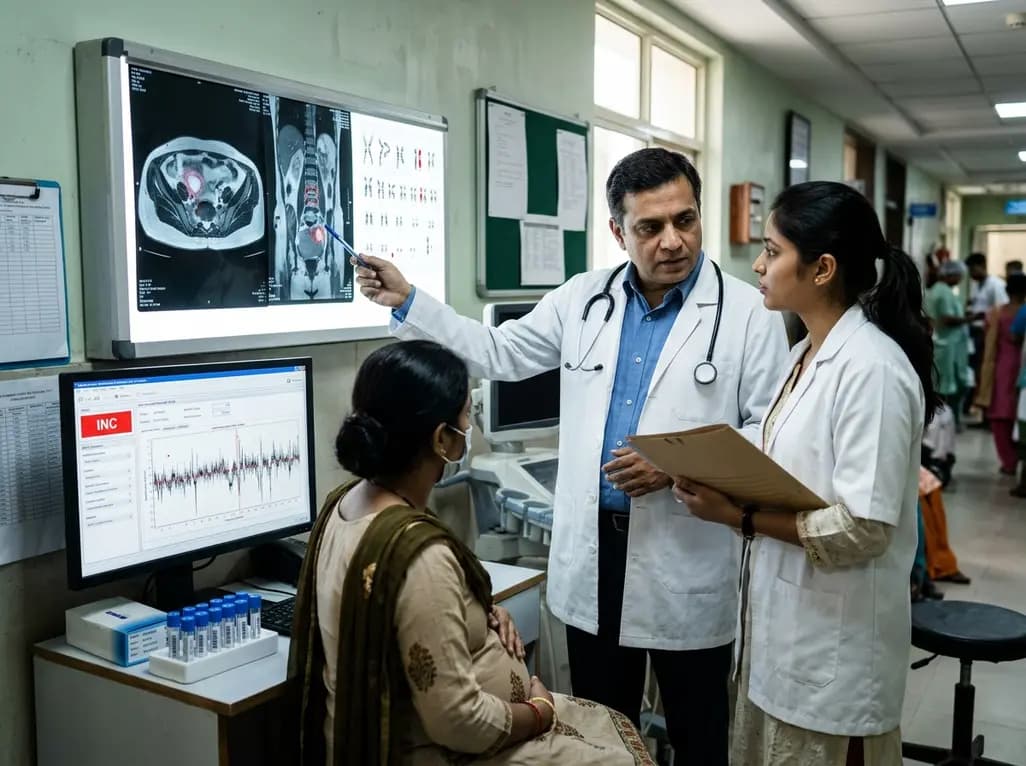
Occult maternal malignancy accounts for 3.82% of persistent unreportable NIPT results with genomic noise. Multiple chromosomal aberrations, notably on chromosome 18, warrant thorough oncological evaluation and whole-body MRI to ensure timely maternal diagnosis while preserving fetal care.
Today
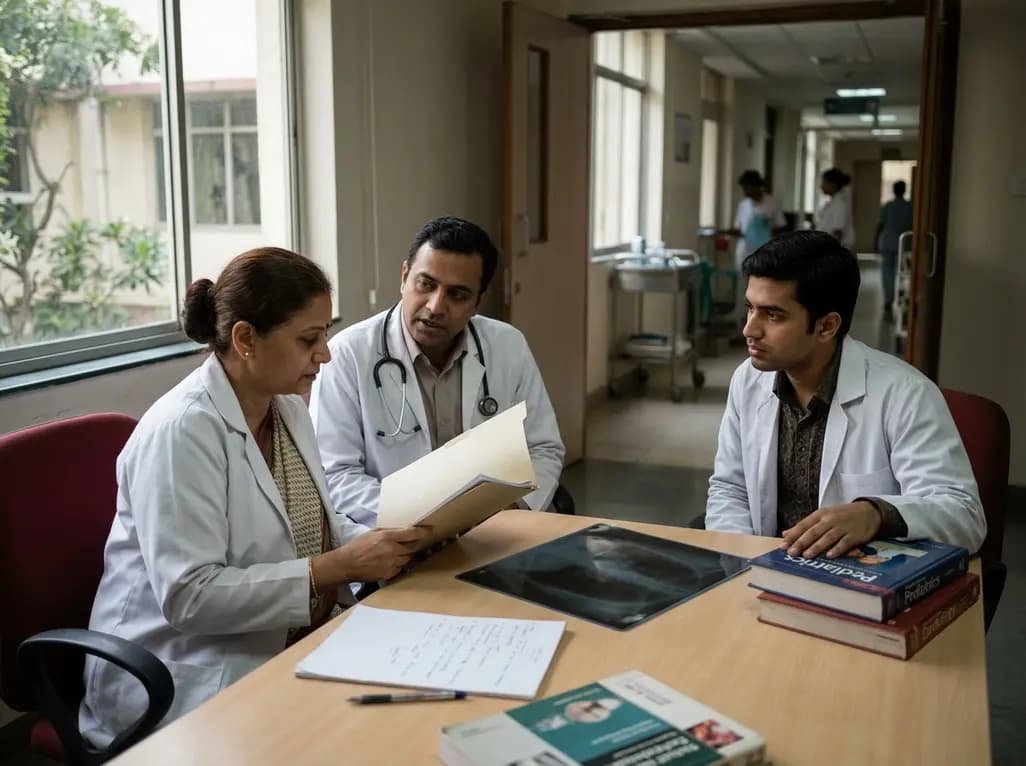
This article reviews the forensic and clinical complexities of acute myocarditis arising on left ventricular hypertrophy in children, highlighting early diagnostic red flags and multidisciplinary postmortem autopsy protocols.
Today

This comparative study evaluates posterior labral tears with and without glenohumeral instability, highlighting distinct demographic patterns, MRI underestimation in stable shoulders, and successful arthroscopic repair outcomes.
Yesterday

A clinical study demonstrates that early intervention with tocilizumab, either as monotherapy or bridged with corticosteroids, achieves significant proptosis reduction and resolves active inflammation in treatment-naive thyroid eye disease.
Yesterday
