.webp&w=384&q=75)

Loading, please wait...
Loading, please wait...

Myeloid cells in CAR-T cell therapy represent a double-edged sword in modern oncology. While CAR-T cells directly target malignant antigens, the surrounding myeloid population significantly influences clinical outcomes. These cells modulate both the therapeutic efficacy and the safety profile of the treatment. Consequently, understanding these interactions is essential for advancing immunotherapy, particularly in solid tumors where success has been limited. Therefore, researchers are focusing on the complex interplay between engineered T cells and the innate immune system.
A primary concern during CAR-T therapy is the development of systemic inflammation. Specifically, myeloid cells like macrophages and monocytes are central to Cytokine Release Syndrome (CRS). They release high levels of interleukin-6 (IL-6) and IL-1, which trigger severe physiological responses. Furthermore, these cells contribute to Immune Effector Cell-Associated Neurotoxicity Syndrome (ICANS) by crossing the blood-brain barrier. Consequently, targeting myeloid-derived cytokines remains a critical strategy for toxicity management. Modern protocols now utilize IL-6 receptor antagonists and GM-CSF neutralization to mitigate these risks effectively.
Solid tumors present a unique challenge due to their dense, immunosuppressive microenvironment. Myeloid-derived suppressor cells (MDSCs) often inhibit T-cell function through metabolic depletion and inhibitory signaling. However, certain myeloid subsets can also be reprogrammed to support anti-tumor responses. For instance, transitioning macrophages from an M2-like to an M1-like phenotype can enhance CAR-T persistence. Strategies such as CSF1R inhibition or TLR7 agonists are currently under clinical investigation. Thus, modulating the myeloid compartment could significantly boost the overall effectiveness of adoptive cell therapies.
Myeloid cells, especially macrophages, are the primary producers of inflammatory cytokines like IL-6 and IL-1. When CAR-T cells activate, they stimulate these myeloid cells to release a massive wave of cytokines, leading to systemic inflammation.
Yes, strategies such as depleting MDSCs or using small molecules to repolarize tumor-associated macrophages can reduce immunosuppression. This allows CAR-T cells to infiltrate the tumor more effectively and maintain their cytotoxic function.
Disclaimer: This content is for informational and educational purposes only. It is not intended as medical advice or a substitute for professional clinical judgment. Refer to the latest local and national guidelines for clinical practice.
References
DeFranco G et al. The Conflicting Role of Myeloid Cells in CAR-T Cell Therapy. Cancer Res. 2026 Mar 12. doi: 10.1158/0008-5472.CAN-25-4817. PMID: 41817579.
Sterner RC, Sterner RM. CAR-T cell therapy: current limitations and potential strategies. Blood Cancer J. 2021;11(4):69.
Giavridis T, et al. CAR T cell-induced cytokine release syndrome is mediated by macrophages and mitigated by IL-1 blockade. Nat Med. 2018;24(6):731-738.

Read summarized clinical updates, watch expert medical content, and earn CME certifications right from your smartphone.
Open your smartphone camera to scan and install.





Learn about the dual role of myeloid cells in CAR-T therapy, from causing severe toxicities to mediating resistance, and discover new modulation strategies....
7 months ago

An ICMR study reveals that nearly 25% of tribal adults in Odisha suffer from renal decline. Driven by untreated hypertension, diabetes, and lifestyle risks, this hidden burden highlights the critical need for point-of-care diagnostics, proactive screening, and targeted non-communicable disease interventions.
Today

A study in Ultrasound in Obstetrics & Gynecology shows that quantitative vascularization of the anterior fornix/cervix with transvaginal ultrasound reliably identifies placenta accreta spectrum and predicts severe intraoperative hemorrhage, offering vital objective risk stratification.
Today
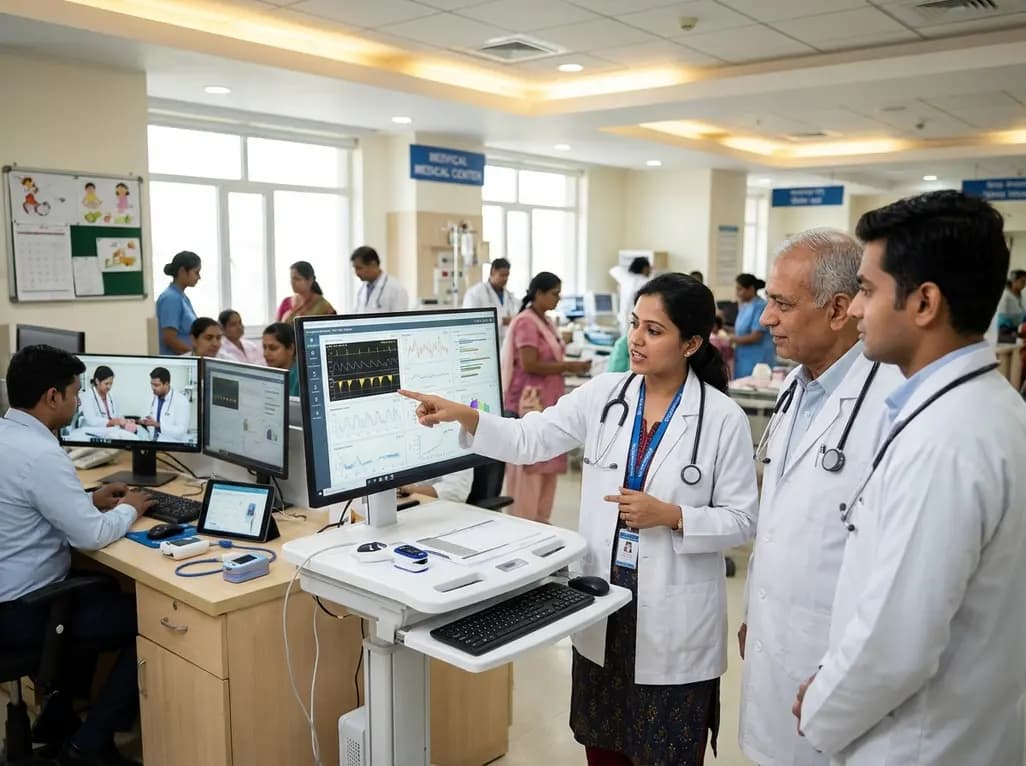
A landmark study details how an enterprise pediatric remote patient management model expanded from a single cardiology pilot to 16 diverse specialty programs by combining centralized digital operations with specialty clinical leadership.
Yesterday

Peripheral nerve injuries present clinical challenges due to regenerative mismatches between sensory and motor neurons. This review explores cutting-edge tissue-engineered nerve grafts designed as central-peripheral signal relays to overcome denervation atrophy and restore functional motor-sensory recovery.
Today
Protein O-GlcNAcylation couples cellular nutrient status to vital neuronal functions. This review explores how disrupted O-GlcNAc cycling drives both neurodevelopmental delays and neurodegenerative cascades, positioning metabolic post-translational modifications as therapeutic targets in clinical neurology.
Today
