.webp&w=384&q=75)

Loading, please wait...
Loading, please wait...

The global shift toward proactive health management has spurred the rapid development of sports smart wearable devices. These advanced systems integrate flexible electronics directly into athletic equipment to facilitate real-time data acquisition. By analyzing performance metrics, these devices provide a scientific foundation for evaluating athletic form and recognizing erroneous movements. Furthermore, they play a critical role in regulating sports loads to prevent injury. Recent research highlights MXene/cellulose composites as a cornerstone for the next generation of these technologies, offering a blend of high performance and environmental sustainability.
To meet the rigorous demands of athletic environments, materials must be both conductive and mechanically robust. MXenes, a class of two-dimensional transition metal carbides, possess exceptional metallic conductivity and hydrophilicity. When researchers combine MXenes with cellulose, the resulting composite addresses the limitations of using either material alone. Cellulose acts as a renewable organic framework that enhances the structural integrity and flexibility of the device. Consequently, these composites maintain high performance even under significant physical stress during intense exercise. Moreover, the inherent biodegradability of cellulose supports the creation of more sustainable electronic waste solutions.
The application of MXene/cellulose composites extends across several domains of sports medicine. Specifically, these materials are utilized in electromagnetic interference (EMI) shielding to protect sensitive biometric signals from external noise. Additionally, they are highly effective in body temperature regulation, ensuring athletes maintain optimal thermal homeostasis. In the realm of biomechanics, these composites enable precise monitoring of technical movements, which is vital for gait analysis and orthopedic rehabilitation. Finally, they provide continuous tracking of physiological indices, such as heart rate and oxygen saturation, allowing for immediate medical intervention if anomalies occur.
Despite the promising progress, several hurdles remain in the widespread adoption of these composites. Improving the long-term oxidation resistance of MXene is a primary concern for researchers. Furthermore, achieving a balance between high sensitivity and a broad sensing range is essential for detecting both subtle physiological changes and vigorous joint movements. Future development will likely focus on enhancing the interfacial bonding between MXene and cellulose to ensure durability over thousands of use cycles. Thus, continued innovation in material science will be the catalyst for smarter, more resilient athletic monitoring systems.
The combination provides excellent electrical conductivity for sensing and high mechanical flexibility for comfort. Additionally, cellulose adds a layer of sustainability and biocompatibility, which is essential for skin-contact devices.
By monitoring movement patterns in real-time, these devices can identify mechanical errors and overexertion. This data allows athletes and clinicians to adjust training loads before a repetitive strain injury occurs.
Current research focuses on enhancing the hydrophobic properties of these composites. By applying protective coatings or modifying the cellulose structure, developers aim to ensure the electronics remain functional even during heavy perspiration.
Disclaimer: This content is for informational and educational purposes only. It does not constitute medical advice or a professional relationship. Refer to the latest local and national guidelines for clinical practice.
References
Wu Y et al. MXene/Cellulose Composites Enabling Next-Generation Sports Smart Wearables: Progress, Challenges, and Prospects. ACS Appl Mater Interfaces. 2026 Apr 24. doi: 10.1021/acsami.6c04619. PMID: 42028678.
Li C et al. MXene-cellulose composite for healthcare applications: synthesis, properties and future outlook. Frontiers in Bioengineering and Biotechnology. 2026;14:128488.
Zhang T et al. Advances in Wearable Technology: MXene-Based Multifunctional and Biomedical Smart Textiles. PMC. 2025;10(4):567-582.
"
Read summarized clinical updates, watch expert medical content, and earn CME certifications right from your smartphone.
Open your smartphone camera to scan and install.





A review of MXene/cellulose composites in sports wearables for movement monitoring, physiological indexing, and electromagnetic interference shielding....
5 months ago

Following regulatory scrutiny from FSSAI regarding promotional representations and lean muscle preservation claims, Dr. Reddy's Laboratories and Nestlé Health Science are currently reviewing the branding and marketing strategy for their joint nutritional supplement Celevida GLP+.
Today

A comprehensive scoping review synthesises evidence linking prenatal maternal mental health to long-term offspring neurodevelopment, evaluating neuroendocrine, inflammatory, and epigenetic pathways while highlighting clinical screening and future research priorities.
Today

The Directorate General of Health Services directs Indian states to halt the hazardous reuse and reprocessing of single-use medical devices. Discover regulatory implications under the Drugs and Cosmetics Act, critical infection risks, legal liabilities, and operational changes required across clinical specialties.
Today
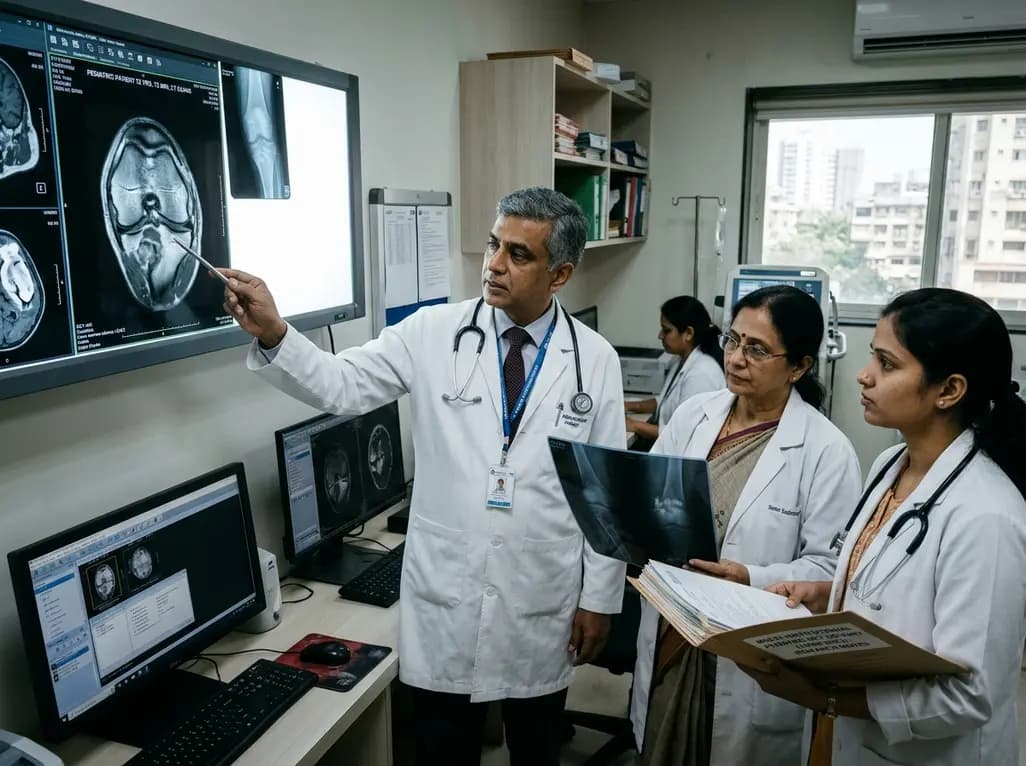
A 25-year multi-institutional cohort reveals high recurrence rates in pediatric giant cell tumor of bone, particularly in patients with open physes and bone marrow edema on preoperative MRI. Early surveillance and careful balance between growth plate preservation and tumor clearance are essential.
Today

India is advancing preventive healthcare by integrating genomics, artificial intelligence, and quantum technologies. With the SANGAM programme sequencing one million Indian genomes, clinicians can unlock personalized therapies, detect cardiometabolic risks early, and curb the burden of diabetes and heart disease.
Today
