.webp&w=384&q=75)

Loading, please wait...
Loading, please wait...

Modern medical practices increasingly rely on objective data to manage patient wellness effectively. Recently, a significant study introduced a machine learning pipeline for wearable stress detection technology that utilizes multimodal physiological signals. By integrating data from electrodermal activity (EDA), electrocardiography (ECG), and electroencephalography (EEG), researchers achieved a notable 95.9% classification accuracy. Consequently, this approach offers a more robust solution than traditional unimodal methods. Furthermore, this advancement helps clinicians identify stress and relaxation states with greater precision.
The study highlights how combining different sensors significantly boosts performance. While single-sensor approaches provide some insights, multimodal fusion increased accuracy by 12.9%. Moreover, the researchers employed systematic feature selection to refine the data. They compared four distinct methods, including Analysis of Variance (ANOVA) and Chi-squared (Chi2). Notably, Chi2 emerged as the most effective method for optimizing model accuracy across various datasets. As a result, the pipeline provides high interpretability for medical professionals.
Identifying specific physiological markers is essential for clinical interpretability. Therefore, the research identified several critical biomarkers across the three sensing modalities. For instance, ECG-based markers included the root-mean-square and median values of heart activity. Meanwhile, EEG findings pointed toward the importance of the beta-to-alpha ratio and relative alpha power. Additionally, EDA-based mean and sum phasic activity served as vital indicators of sympathetic nervous system arousal. In contrast to subjective assessments, these objective metrics offer tangible data for diagnosis.
Furthermore, external validation using the Stress Recognition in Automobile Drivers (SRAD) dataset confirmed the pipeline's reliability. Because of these results, we now understand that systematic feature selection is a requirement for high-performance diagnostic tools. Consequently, these systems could eventually provide real-time, non-invasive stress monitoring in various high-pressure environments. Although challenges remain in real-world deployment, this study marks a significant step forward.
Multimodal sensing captures a broader range of physiological responses compared to a single sensor. Specifically, by combining ECG, EEG, and EDA data, the system accounts for heart rate, brain activity, and skin conductance changes simultaneously. This comprehensive view reduces errors and increases overall detection accuracy by nearly 13%.
Feature selection identifies the most relevant data points while removing redundant information. For example, in this study, methods like Chi2 improved accuracy by an average of 4.8%. Consequently, this process makes models more efficient, faster to process, and much easier for clinicians to interpret in real-time.
Disclaimer: This content is for informational and educational purposes only. It does not constitute professional medical advice, diagnosis, or treatment. Always seek the advice of your physician or other qualified healthcare provider with any questions you may have regarding a medical condition. Refer to the latest local and national guidelines for clinical practice.
References
Ng SM et al. Multimodal Wearable Sensor-Based Stress Detection: Machine Learning Pipeline with Systematic Feature Selection and Key Biomarker Insights. Biomed Phys Eng Express. 2026 Mar 03. doi: 10.1088/2057-1976/ae4c93. PMID: 41774937.
Garg P et al. Stress Detection by Machine Learning and Wearable Sensors. 26th International Conference on Intelligent User Interfaces (IUI '21 Companion). 2021. doi: 10.1145/3397482.3450732.
Ates C et al. A multi-modal deep learning approach for stress detection using physiological signals: integrating time and frequency domain features. PMC. 2025.

Read summarized clinical updates, watch expert medical content, and earn CME certifications right from your smartphone.
Open your smartphone camera to scan and install.





Researchers achieve 95.9% accuracy in stress detection using multimodal sensors and machine learning pipelines, identifying key physiological biomarkers....
6 months ago

A new study reveals that lipid-related metabolic dysregulation, marked by elevated TG/HDL-C ratio and glymphatic changes, independently impacts survival in idiopathic normal pressure hydrocephalus.
Today
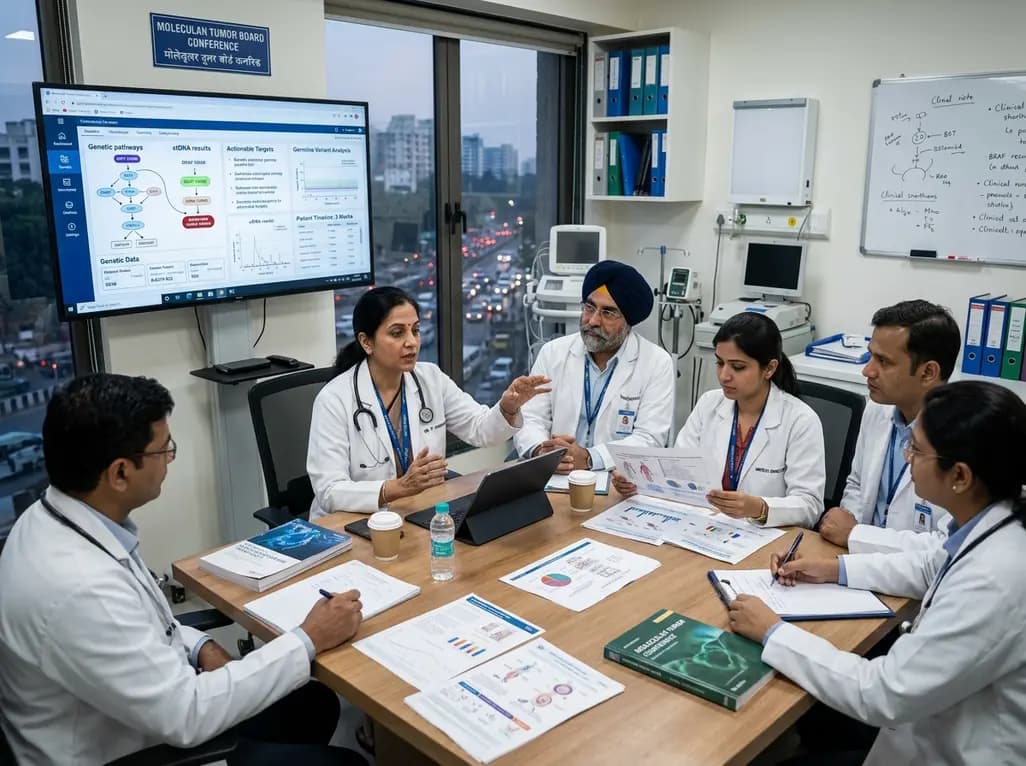
Explore real-world data showing how private oncogenetics and molecular tumor boards achieve 3-week consult turnaround, high ctDNA actionability, and vital germline variant detection, enhancing individualized cancer care and familial risk assessment.
Today
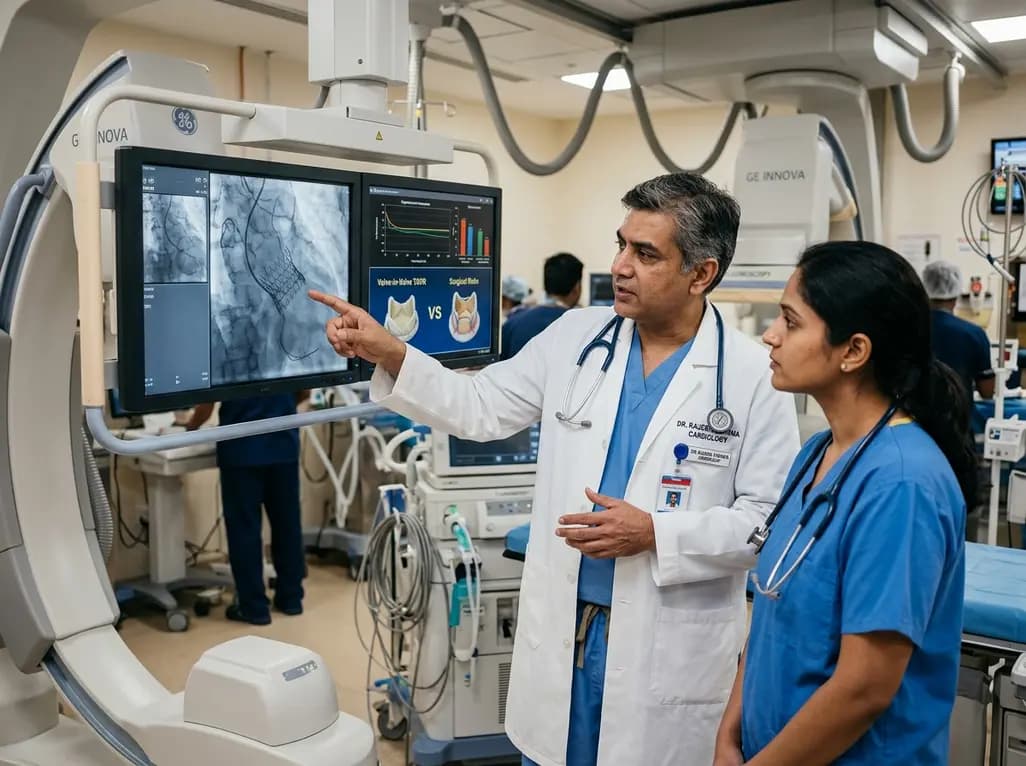
A meta-analysis of 13 propensity score-matched studies shows ViV-TAVR delivers lower early mortality and reduced bleeding compared to redo-SAVR for degenerated bioprosthetic aortic valves, though long-term hemodynamics warrant careful anatomical and patient-centered evaluation.
Today
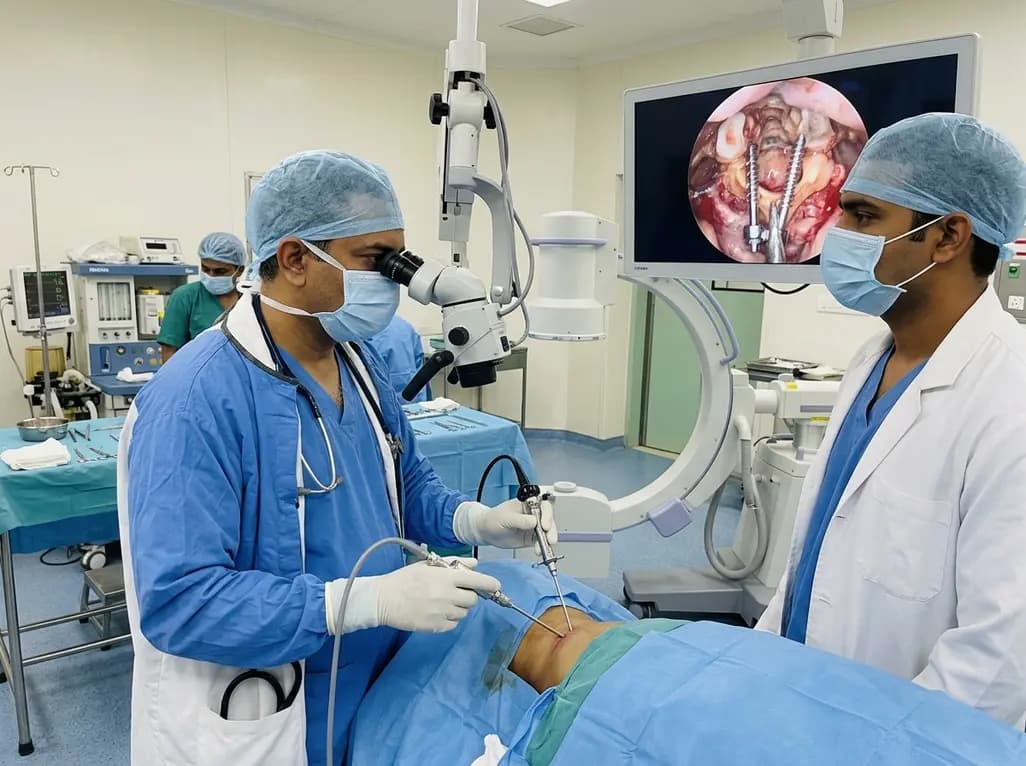
Endoscopic posterior cervical fusion combines minimally invasive decompression, joint preparation, and rigid screw-rod fixation for atlantoaxial pathologies. Early clinical findings demonstrate solid bony union, excellent symptom relief, and minimal soft-tissue morbidity without significant vascular compromise.
Yesterday
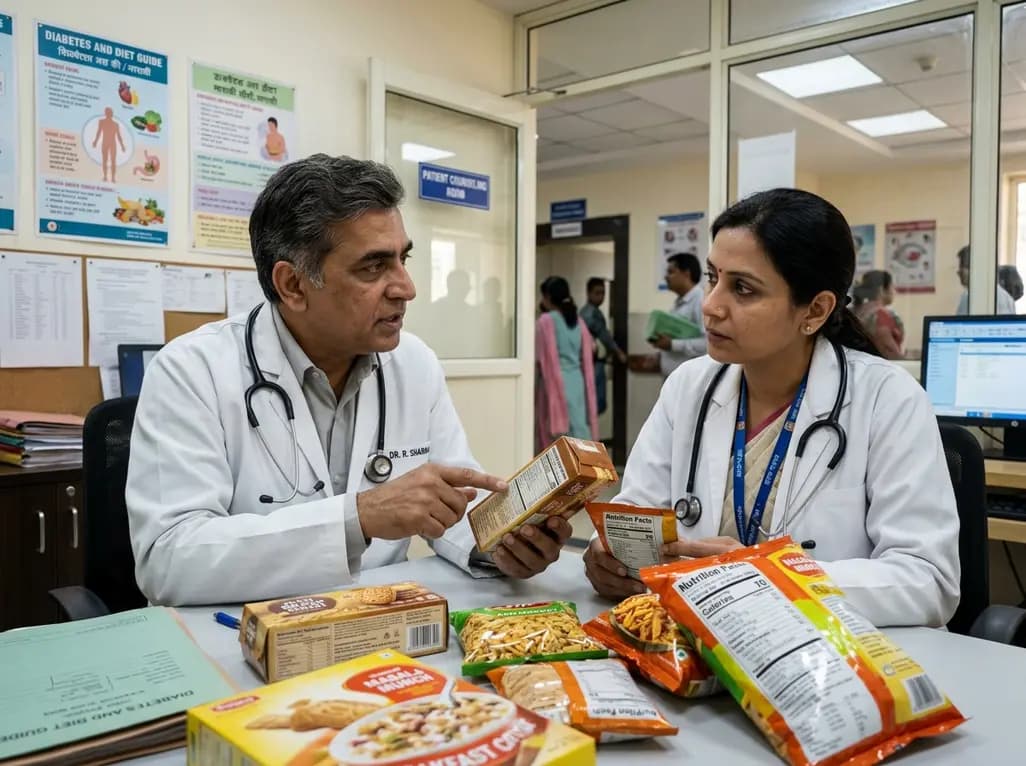
The All-India Food Processors' Association has approached the Supreme Court to oppose FSSAI's proposed per-100g benchmark for front-of-pack warning labels, advocating instead for a per-serving threshold. We explore the regulatory showdown, nutritional evidence, and implications for clinical lifestyle counseling.
Today
