.webp&w=384&q=75)

Loading, please wait...
Loading, please wait...

Modern oncology relies on precise planning to treat hepatic tumors effectively. A recent study evaluated a custom multibipolar radiofrequency ablation simulation designed to improve the predictability of thermal treatments in the liver. This numerical model accounts for temperature-dependent tissue changes and the complex cooling effects of nearby blood vessels.
The researchers utilized a GPU-accelerated finite-difference time-domain (FDTD) approach. This method specifically coupled the quasi-static Maxwell equations with Pennes' bioheat equation to model heat distribution. By simulating multibipolar radiofrequency ablation (mbRFA) using internally cooled applicators, the team tested how large vessels influence heat dissipation. They used a saline-perfused glass tube in a porcine liver model to represent standardized blood flow.
Furthermore, the results demonstrated a high level of precision. The simulation achieved a 96% conformity rate with actual experimental ablation areas. Statistical metrics revealed a Dice coefficient of 0.92 and a Jaccard coefficient of 0.85. Although the model slightly overestimated the ablation zone by 4%, it only underestimated the area by 10% in false-negative regions. Consequently, this tool offers a reliable quantitative prediction of ablation geometry, especially when considering the significant vascular cooling effects that often hinder treatment success.
Moreover, the simulation’s ability to model dehydration and coagulation makes it a robust tool for clinical planning. Since blood flow can lead to incomplete tumor destruction, having a predictive model allows surgeons to adjust applicator placement. Therefore, this technology could reduce local recurrence rates in patients undergoing hepatic thermal ablation.
Vascular cooling, also known as the heat-sink effect, occurs when blood flow in nearby vessels carries away thermal energy. This process can prevent the tissue from reaching the required temperature for coagulation, potentially leaving vital tumor cells behind.
A GPU-accelerated FDTD simulation provides high-speed computational power to solve complex electromagnetic and thermal equations. This allows for real-time or near-real-time treatment planning that accounts for intricate anatomical structures and dynamic tissue properties.
Disclaimer: This content is for informational and educational purposes only. It does not constitute medical advice or a professional recommendation. Refer to the latest local and national guidelines for clinical practice.
References
Neizert CA et al. Evaluation of a numerical simulation for multibipolar radiofrequency ablation. Int J Hyperthermia. 2026 Dec undefined. doi: 10.1080/02656736.2026.2657470. PMID: 42020932.
Poch FGM et al. Perivascular vital cells in the ablation center after multibipolar radiofrequency ablation in an in vivo porcine model. Refubium. 2021.
Mariappan P et al. GPU-based RFA simulation for minimally invasive cancer treatment of liver tumours. Int J Comput Assist Radiol Surg. 2017 Jan;12(1):149-158.

Read summarized clinical updates, watch expert medical content, and earn CME certifications right from your smartphone.
Open your smartphone camera to scan and install.





A study evaluates a numerical simulation for hepatic mbRFA, demonstrating 96% accuracy in predicting ablation shape and vascular cooling effects....
6 months ago
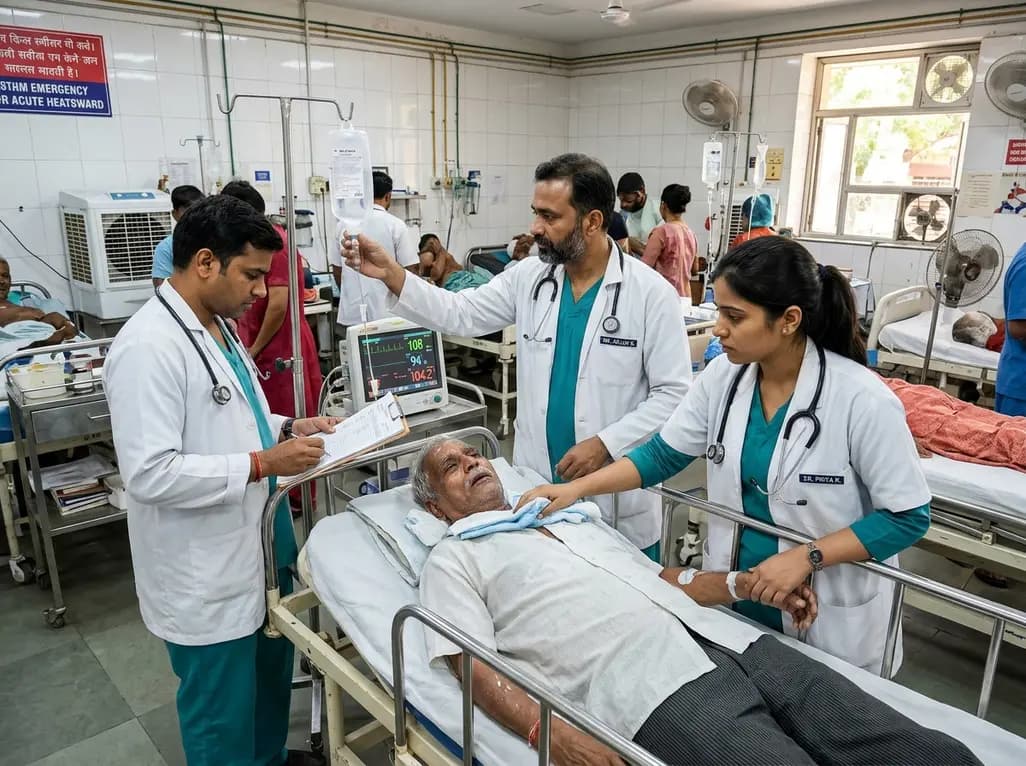
Recent epidemiological data reveals a dramatic surge in summer heat mortality driven by human-induced climate warming. This analysis explores the pathophysiological impacts on cardiac and renal systems, diagnostic dilemmas in death certification, and essential emergency cooling protocols for acute clinical care.
Today

Odisha has established India's first state-level clinical protocol specifically tailored for pregnant women with sickle cell disease. Developed with NHM and UNICEF, the framework provides structured antenatal screening, crisis mitigation, standardized referral pathways, and specialized interdisciplinary care.
Today

India is advancing preventive healthcare by integrating genomics, artificial intelligence, and quantum technologies. With the SANGAM programme sequencing one million Indian genomes, clinicians can unlock personalized therapies, detect cardiometabolic risks early, and curb the burden of diabetes and heart disease.
Today
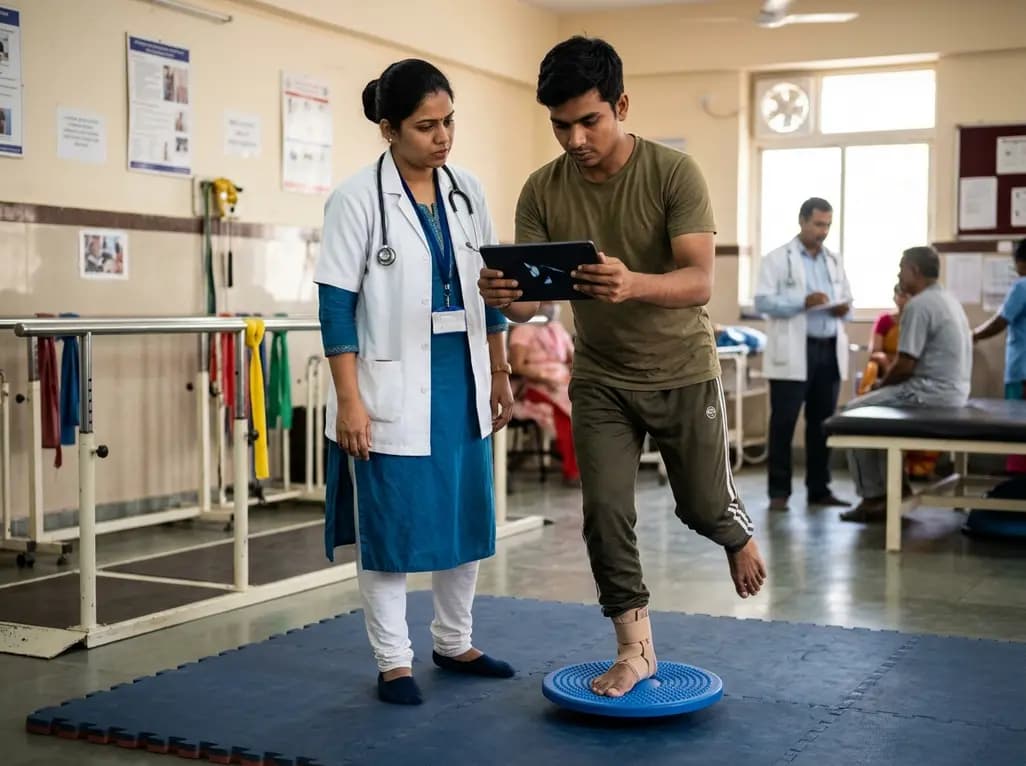
A randomized controlled trial demonstrates that an eight-week dual-task training intervention significantly improves static and dynamic postural control over standard balance exercises in individuals with chronic ankle instability, addressing critical neurocognitive deficits during athletic and daily activities.
Today

A retrospective cohort study of 7,716 ICU patients from the MIMIC-IV database demonstrates that Gradient Boosting Decision Trees significantly outperform traditional SOFA scores in predicting in-hospital mortality among patients with sepsis and diabetes, with SHAP analysis providing clinical interpretability.
Today
