.webp&w=384&q=75)

Loading, please wait...
Loading, please wait...

Ensuring ML-driven neurostimulation safety is paramount as machine learning models are increasingly integrated into neuroprosthetic devices. While these models offer precise control for visual and cortical prostheses, they present unique risks. Specifically, when model outputs interact directly with neural tissue, unpredictable stimulation patterns may emerge. Consequently, researchers have developed a systematic approach to detect and characterize these hazards before they reach the patient.
Automated software testing, known as coverage-guided fuzzing, provides a robust solution for stress testing these systems. This method works by perturbing model inputs to see if the resulting stimulation violates strict biophysical limits. These limits include charge density, instantaneous current, and electrode co-activation. Furthermore, the framework treats encoders as \"black boxes,\" meaning it explores the space of possible outputs without needing access to the model\'s internal logic.
When applied to deep stimulus encoders for the retina and cortex, this fuzzing method revealed various stimulation regimes that exceeded safety standards. Researchers utilized two specific violation-output coverage metrics. These metrics effectively identified the highest number and diversity of unsafe outputs. Therefore, this approach allows for interpretable comparisons across different model architectures and training strategies. By identifying these gaps, developers can refine models to prevent tissue damage while maintaining therapeutic efficacy.
This study signifies a major shift in how we approach the ML-driven neurostimulation safety landscape. Safety is no longer just a training heuristic but an empirical, measurable property of the deployed model. In addition, this framework establishes a foundation for evidence-based benchmarking and regulatory readiness. For clinicians and engineers in India and globally, this means a more reliable path toward ethical assurance in next-generation neural interfaces. Finally, it ensures that as we push the boundaries of neurotechnology, patient safety remains the core priority.
Fuzzing is an automated software testing technique that provides invalid or unexpected inputs to a system. In neurostimulation, it is used to stress test ML models to see if they generate stimulation patterns that could potentially harm neural tissue.
Traditional testing often relies on predefined scenarios. In contrast, coverage-guided fuzzing actively searches for edge cases and input combinations that might lead to biophysical violations, providing a much broader safety assessment of complex ML models.
Disclaimer: This content is for informational and educational purposes only and does not constitute medical advice or a professional recommendation. Refer to the latest local and national guidelines for clinical practice.
References
Downing M et al. Fuzzing the brain: Automated stress testing for the safety of ML-driven neurostimulation. J Neural Eng. 2026 Feb 23. doi: 10.1088/1741-2552/ae4927. PMID: 41730246.
U.S. Food and Drug Administration. Cybersecurity in Medical Devices: Quality System Considerations and Content of Premarket Submissions. 2023.
Code Intelligence. Securing medical devices: The role of fuzz testing in cybersecurity. 2024.
"
Read summarized clinical updates, watch expert medical content, and earn CME certifications right from your smartphone.
Open your smartphone camera to scan and install.





New research introduces coverage-guided fuzzing as an automated stress-testing method to ensure the safety of ML-driven neurostimulation devices....
7 months ago
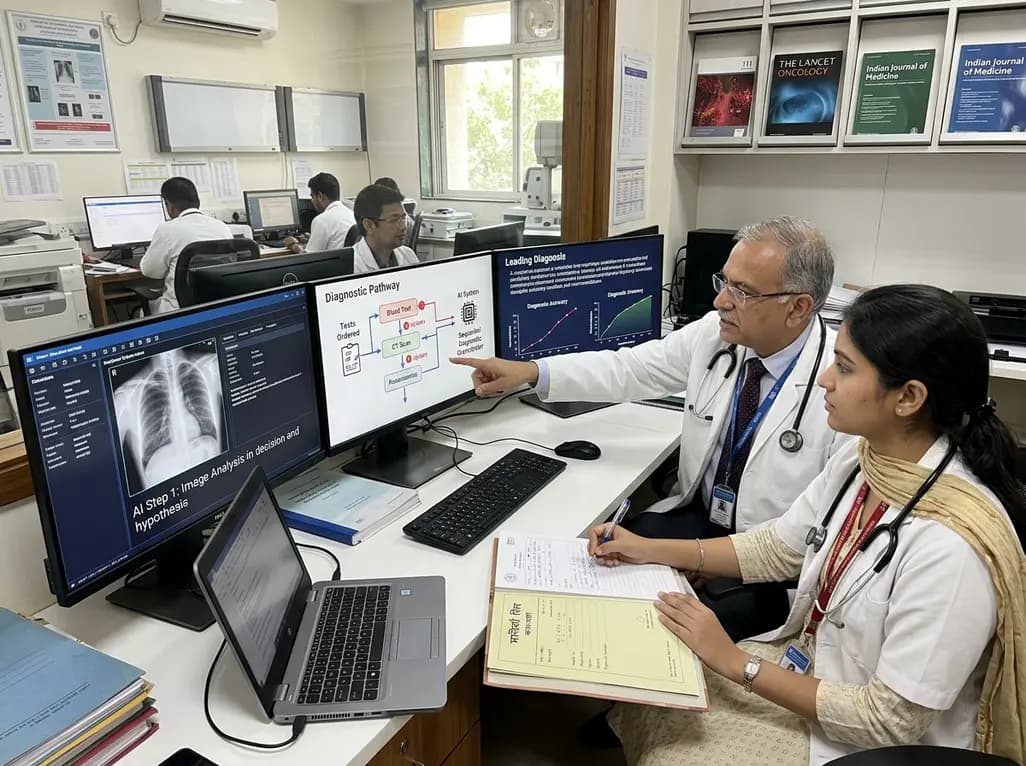
A breakthrough peer-reviewed study demonstrates that a sequential AI diagnosis system can mirror real-world clinical reasoning. By ordering stepwise tests and updating hypotheses dynamically, this multi-agent orchestrator achieved superior diagnostic accuracy while reducing investigative costs.
Today

A prenatal case highlights severe glutaric acidemia type II presenting as bilateral hyperechoic cystic kidneys at 18 weeks. Whole-exome sequencing revealed a novel homozygous ETFDH frameshift variant, demonstrating the power of rapid genetic testing in fetal renal anomalies.
Today

Review how tailored exercise programs benefit frail older patients with heart failure. Explore pathophysiological mechanisms, individualized training prescriptions, and strategies to overcome adherence barriers in clinical practice.
Yesterday

This comparative study evaluates posterior labral tears with and without glenohumeral instability, highlighting distinct demographic patterns, MRI underestimation in stable shoulders, and successful arthroscopic repair outcomes.
Yesterday

A clinical study demonstrates that early intervention with tocilizumab, either as monotherapy or bridged with corticosteroids, achieves significant proptosis reduction and resolves active inflammation in treatment-naive thyroid eye disease.
Yesterday
