.webp&w=384&q=75)

Loading, please wait...
Loading, please wait...

Recent research reveals a surprising trend: foreign-born residents in high-income nations frequently outlive native populations. This migrant longevity advantage persists despite significant socioeconomic challenges faced by immigrant communities. A comparative study across 10 European countries highlights how educational attainment and mortality patterns shape this phenomenon.
Investigators analyzed mortality data from 2010 to 2019 using national registers and census records. They estimated partial life expectancy between ages 35 and 80 for both groups. In nearly all countries, foreign-born individuals lived longer than their native-born counterparts. Interestingly, this advantage was most pronounced among those with low educational levels. However, Sweden and Estonia were notable exceptions where this trend did not hold.
The study found that lower mortality rates in less-educated immigrant groups primarily drive this longevity gap. Consequently, the healthy selection of migrants—where individuals with better health and resources are more likely to migrate—plays a crucial role. Nevertheless, the overrepresentation of immigrants in lower socioeconomic tiers often offsets some of these gains. Specifically, in countries like Lithuania and Spain, educational barriers prevent migrants from reaching their full longevity potential.
Societal barriers often concentrate healthy migrants into lower-income jobs, regardless of their original skills. Therefore, improving how nations recognize and utilize the resources of foreign-born populations is essential. Such integration would not only benefit individual longevity but also foster more inclusive social structures. Public health experts suggest that addressing these disparities can improve overall population health outcomes across Europe.
This refers to the observation that immigrants often have better health profiles than native populations. It typically occurs because individuals who choose to migrate are often healthier and more resilient than those who stay behind.
The longevity advantage is largely attributed to the initial selection of healthy individuals. Furthermore, cultural habits or social networks within immigrant communities may provide protective health benefits that mitigate the impacts of low socioeconomic status.
Disclaimer: This content is for informational and educational purposes only. It does not constitute professional medical advice, diagnosis, or treatment. Always seek the advice of your physician or other qualified healthcare provider with any questions you may have regarding a medical condition. Refer to the latest local and national guidelines for clinical practice.
References
Jang SY et al. Socioeconomic inequalities in life expectancy within and between native-born and foreign-born populations: a comparative study of 10 European countries. Int J Epidemiol. 2026 Apr 17. doi: undefined. PMID: 41995424.
Wallace M et al. The immigrant health paradox in Europe: a cross-national comparison. J Immigr Minor Health. 2019.
WHO Regional Office for Europe. Health of refugees and migrants: regional situation analysis. 2024.

Read summarized clinical updates, watch expert medical content, and earn CME certifications right from your smartphone.
Open your smartphone camera to scan and install.





A comparative study of 10 European countries examines why foreign-born residents often outlive native populations despite facing socioeconomic inequalities....
6 months ago
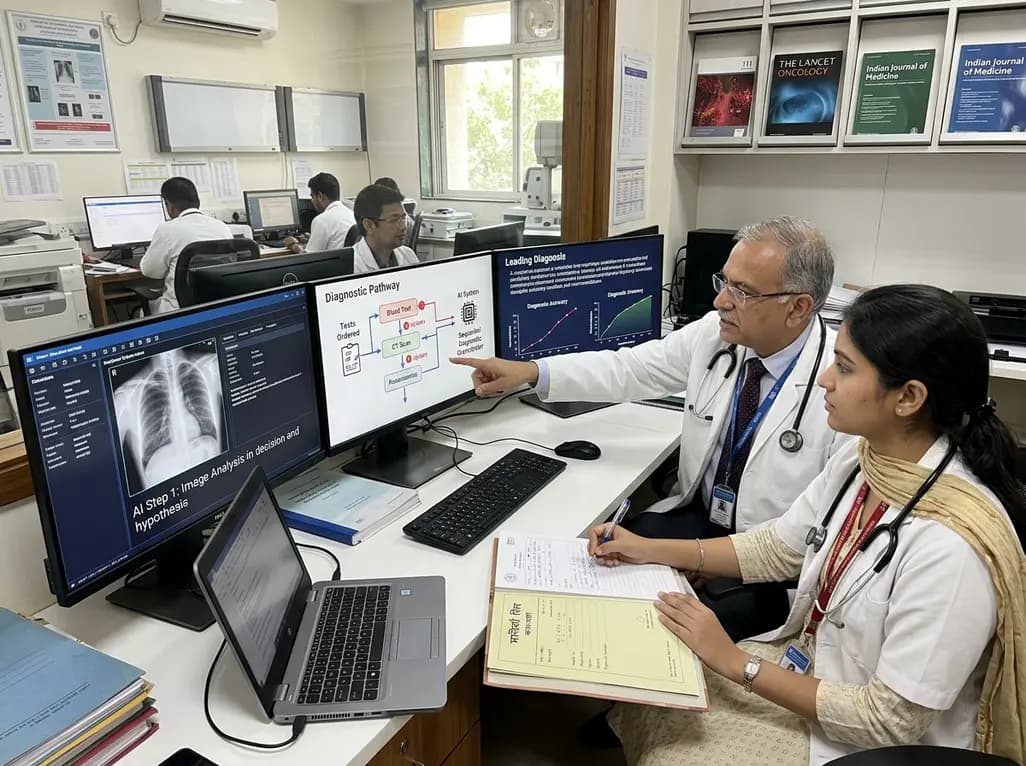
A breakthrough peer-reviewed study demonstrates that a sequential AI diagnosis system can mirror real-world clinical reasoning. By ordering stepwise tests and updating hypotheses dynamically, this multi-agent orchestrator achieved superior diagnostic accuracy while reducing investigative costs.
Today

A prenatal case highlights severe glutaric acidemia type II presenting as bilateral hyperechoic cystic kidneys at 18 weeks. Whole-exome sequencing revealed a novel homozygous ETFDH frameshift variant, demonstrating the power of rapid genetic testing in fetal renal anomalies.
Today

Review how tailored exercise programs benefit frail older patients with heart failure. Explore pathophysiological mechanisms, individualized training prescriptions, and strategies to overcome adherence barriers in clinical practice.
Yesterday

This comparative study evaluates posterior labral tears with and without glenohumeral instability, highlighting distinct demographic patterns, MRI underestimation in stable shoulders, and successful arthroscopic repair outcomes.
Yesterday

A clinical study demonstrates that early intervention with tocilizumab, either as monotherapy or bridged with corticosteroids, achieves significant proptosis reduction and resolves active inflammation in treatment-naive thyroid eye disease.
Yesterday
