.webp&w=384&q=75)

Loading, please wait...
Loading, please wait...

Recent scientific evidence highlights a significant link between membranous nephropathy and Graves' disease. Membranous nephropathy is a major cause of nephrotic syndrome that can progress to end-stage renal disease. To find this link, researchers used a phenome-wide association approach to examine 2,408 different diseases. Specifically, they discovered that genetically predicted thyroid conditions increase the risk of this kidney ailment.
The study also employed two-sample Mendelian randomization to explore causal relationships. This method uses genetic variants to reduce confounding factors and determine if one condition truly causes another. Consequently, the results showed that Graves' disease likely drives the development of renal immune deposits. Furthermore, the functional analysis suggests that the disease affects the differentiation of immune cells and Th1/Th2 balance. These immunological changes promote the proliferation of leukocytes, which eventually impacts the kidney.
In addition, the researchers conducted a replication analysis to confirm their findings. Therefore, medical professionals must recognize that thyroid-related autoimmunity affects more than just the thyroid gland. Instead, it can trigger secondary renal manifestations through complex immune pathways. Moreover, distinguishing between primary and secondary forms of renal disease is vital for selecting the correct treatment. For this reason, these findings emphasize the need for integrated medical care. However, more research is still needed to validate how these genetic associations translate into clinical outcomes for diverse populations.
Graves' disease is an autoimmune condition that may trigger secondary membranous nephropathy. It influences the immune system, leading to the formation of immune complexes that deposit in the kidney filters.
Mendelian randomization is a research method that uses measured variation in genes to investigate the causal effect of a risk factor on a disease in observational studies.
Distinguishing between the two is crucial because treatment for secondary membranous nephropathy often focuses on managing the underlying condition, such as Graves' disease, rather than just using general immunosuppression.
Disclaimer: This content is for informational and educational purposes only. It does not constitute medical advice or a professional relationship. Refer to the latest local and national guidelines for clinical practice.
References
Wenghaerbai A et al. A phenome-wide association and mendelian randomization study of genetically predicted membranous nephropathy with multiple diseases. Kidney Blood Press Res. 2026 Feb 26. doi: 10.1159/000551046. PMID: 41746865.
Vakrani GP et al. Membranous Nephropathy and Graves' Disease: A Case Report and Literature Review. J Nephrol Ther. 2013;3:142.
Frontiers in Medicine. Membranous Nephropathy Secondary to Graves' Disease: A Case Report. 2022. doi: 10.3389/fmed.2022.903334.
"
Read summarized clinical updates, watch expert medical content, and earn CME certifications right from your smartphone.
Open your smartphone camera to scan and install.





A new Mendelian randomization study identifies a genetic link between Graves' disease and an increased risk of developing membranous nephropathy....
7 months ago

Failing to account for competing events like mortality in longitudinal geriatric studies produces biased risk estimates and misleading inferences. This review highlights key methodological principles, insights from the Precipitating Events Project, and practical approaches for clinical research appraisal.
Today

A study in JAMIA Open shows lightweight open-source reasoning LLMs achieve up to 95% sensitivity and accelerate evidence synthesis screening by nearly twentyfold, presenting a cost-effective, scalable AI solution for biomedical research and systematic reviews.
Today
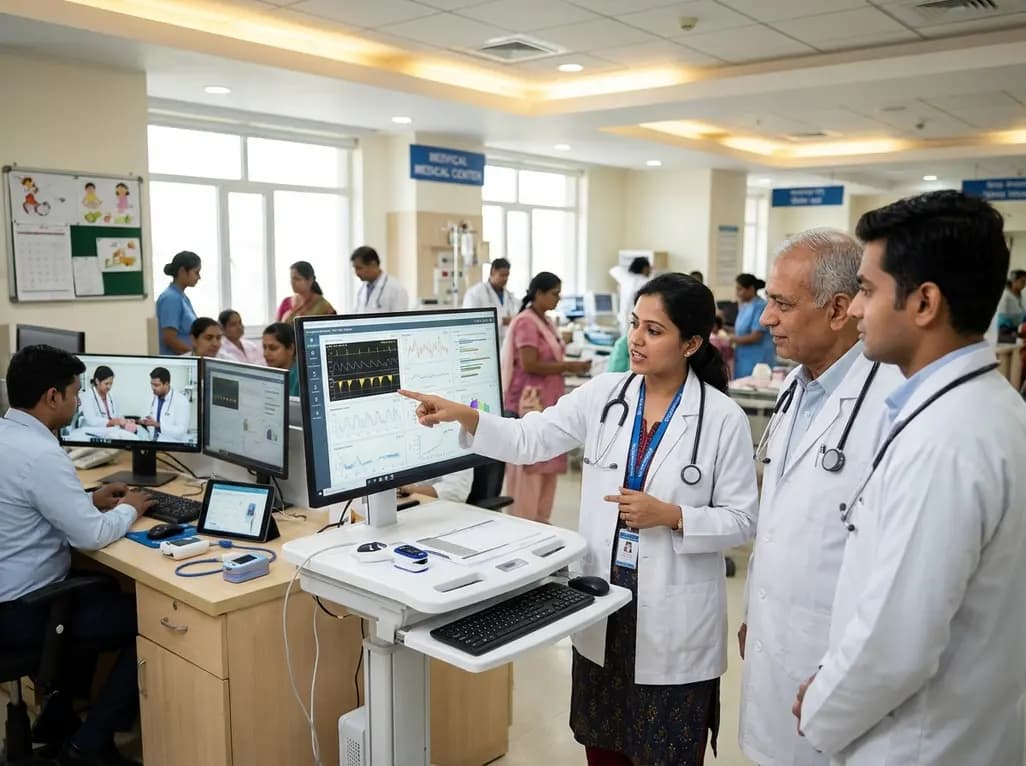
A landmark study details how an enterprise pediatric remote patient management model expanded from a single cardiology pilot to 16 diverse specialty programs by combining centralized digital operations with specialty clinical leadership.
Today

A comparative review of tension band wiring and intramedullary screw fixation in thumb metacarpophalangeal arthrodesis, evaluating union rates, hardware complications, and clinical outcomes.
Yesterday
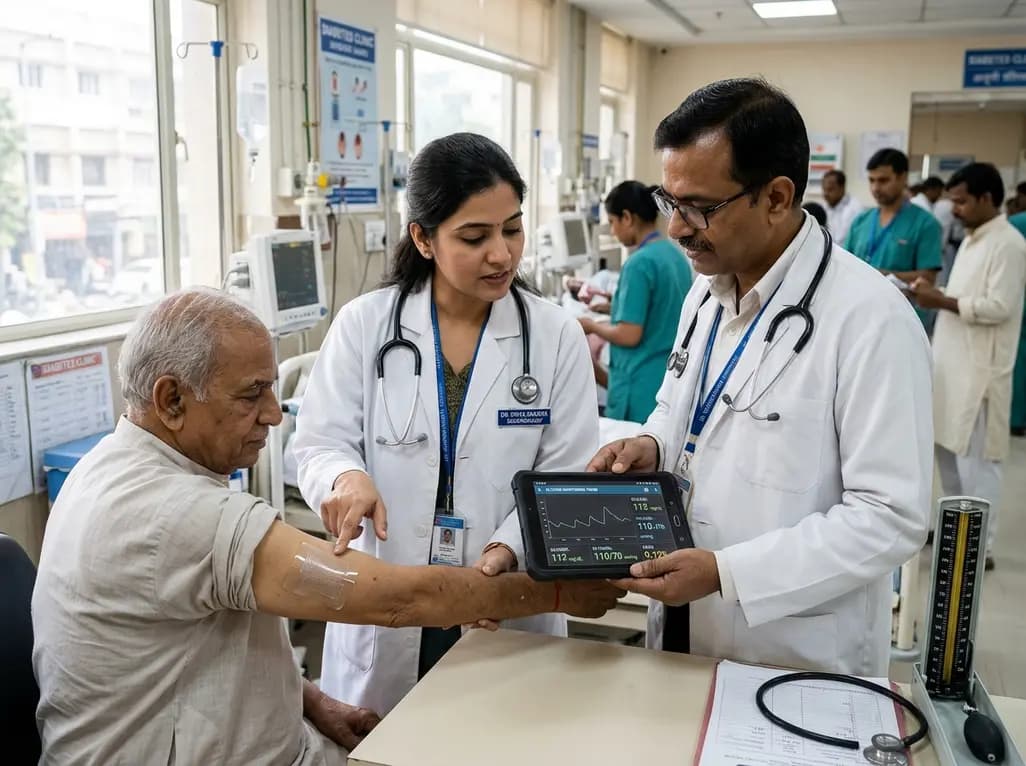
A breakthrough ultrathin multimodal sensor decouples physical hemodynamic monitoring from disposable electrochemical calibration, achieving long-term wearable glucose prediction with 81.36% accuracy and a 9.12% MARD. This offers a robust, drift-free solution for outpatient metabolic surveillance.
Today
