.webp&w=384&q=75)

Loading, please wait...
Loading, please wait...

Maxillary chondrosarcoma represents a rare and aggressive malignant tumor of cartilaginous origin within the facial skeleton. Although these tumors typically manifest during the fourth to sixth decades of life, they occasionally affect younger individuals. Clinical experts highlight that the most common symptom is a painless, slow-growing bone swelling. In this case, we examine the recurrence of this malignancy in a 33-year-old woman and discuss the clinical implications for long-term care.
A 33-year-old Iranian woman presented with a persistent swelling in her left maxillary region that had progressed over one year. Interestingly, the patient had a documented history of the same condition ten years earlier. At that time, she underwent surgical resection supplemented by radiotherapy and chemotherapy. Upon current presentation, radiographic imaging identified a radiopaque lesion with ill-defined borders. This lesion extended from the upper left canine to the first molar, causing significant expansion of the buccal and lingual plates. Consequently, the surgical team prioritized a thorough diagnostic workup.
Distinguishing maxillary chondrosarcoma from other bone pathologies, such as chondroblastic osteosarcoma, remains a significant diagnostic challenge. Microscopic examination in this case revealed histopathologic features consistent with grade 2 chondrosarcoma. Furthermore, the presence of metaplastic bone formation required careful differentiation from similar osseous malignancies. Precise staging and histological grading are essential because they dictate the aggressiveness of the treatment plan.
The standard treatment approach for this tumor involves radical surgical resection. Therefore, the surgeons resected the lesion with a safe margin of 5 mm, including the underlying bone. Because these tumors often exhibit a high rate of local recurrence, clinicians emphasize the necessity of rigorous monitoring. Following the procedure, the patient remained recurrence-free at her six-month follow-up. However, medical literature suggests that long-term surveillance is vital to ensure early detection of any late-stage recurrences.
The most common clinical manifestation is a painless swelling of the bone. In the maxillofacial region, it often appears in the anterior maxilla or the posterior mandible, sometimes leading to tooth displacement or cortical expansion.
Radical surgery is the gold standard for management. While chemotherapy and radiotherapy are sometimes used, these tumors are generally considered less sensitive to non-surgical modalities compared to other malignancies.
These tumors have a tendency for late recurrence, sometimes decades after the initial treatment. Regular imaging and clinical exams are necessary to manage the risk of local or systemic spread.
Disclaimer: This content is for informational and educational purposes only and does not constitute medical advice or a professional relationship. Refer to the latest local and national guidelines for clinical practice.
References
Tabatabaei SH et al. Maxillary chondrosarcoma: a case report. J Med Case Rep. 2026 Mar 29. doi: 10.1186/s13256-026-05962-8. PMID: 41906181.
Laskin DM et al. Chondrosarcoma of the jaws: clinical and radiologic features. Journal of Oral and Maxillofacial Surgery. 2023.
World Health Organization. WHO Classification of Tumours: Head and Neck Tumours. 5th Edition. 2024.
"
Read summarized clinical updates, watch expert medical content, and earn CME certifications right from your smartphone.
Open your smartphone camera to scan and install.





This case report details the presentation and management of recurrent grade 2 maxillary chondrosarcoma in a 33-year-old woman, focusing on surgical outcomes...
6 months ago

Review how tailored exercise programs benefit frail older patients with heart failure. Explore pathophysiological mechanisms, individualized training prescriptions, and strategies to overcome adherence barriers in clinical practice.
Today

Leucine Rich Bio has introduced South Asia's first comprehensive vaginal microbiome test, BugSpeaks. By profiling microbial dysbiosis, pathogens, and antimicrobial resistance, this next-generation diagnostic platform provides clinicians with deeper insights into recurrent infections, fertility, and reproductive health.
Today
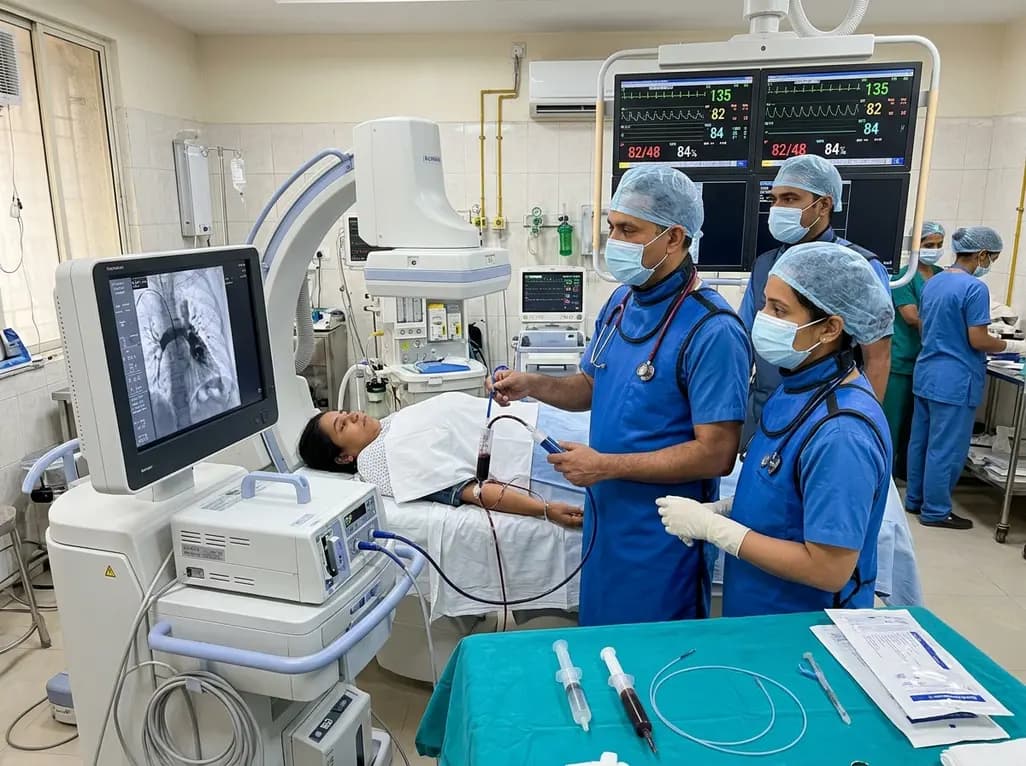
In high-risk pulmonary embolism complicated by severe anemia and active uterine bleeding, systemic thrombolysis is contraindicated. Large-bore aspiration thrombectomy provides rapid hemodynamic rescue without fibrinolysis, supported by inferior vena cava filter placement and multidisciplinary critical care.
Today

This comparative study evaluates posterior labral tears with and without glenohumeral instability, highlighting distinct demographic patterns, MRI underestimation in stable shoulders, and successful arthroscopic repair outcomes.
Today

A clinical study demonstrates that early intervention with tocilizumab, either as monotherapy or bridged with corticosteroids, achieves significant proptosis reduction and resolves active inflammation in treatment-naive thyroid eye disease.
Today
