.webp&w=384&q=75)

Loading, please wait...
Loading, please wait...

India remains a major hub for leprosy management globally. However, the safety of medical devices in these settings often lacks sufficient oversight. Integrating Materiovigilance in leprosy care is now a critical priority for health authorities and clinicians. Because leprosy patients suffer from significant sensory loss, they face a significantly higher risk of developing injuries from medical devices. Therefore, the medical community must adopt a robust monitoring framework to protect these vulnerable individuals effectively.
The Materiovigilance Programme of India (MvPI) serves as the primary system for monitoring medical device safety across the country. This program helps healthcare workers identify, report, and analyze device-related adverse events. Specifically, it classifies medical devices based on their risk status, which is vital for patients using orthotic aids or undergoing reconstructive surgery. Consequently, the successful integration of MvPI with national leprosy programs will likely improve long-term treatment outcomes and patient well-being.
Medical experts highlight several significant gaps in current leprosy elimination policies. Currently, most national policies focus on drug therapy rather than the safe use of medical devices. Integrating Materiovigilance in leprosy care requires clinicians to overcome hurdles such as limited funding and a lack of awareness among hospital staff. Moreover, dedicated training programs must educate healthcare providers on how to identify and report malfunctions. Implementing these strategies in a stage-wise manner will help identify operational issues early. Thus, a structured approach ensures that the safety program becomes stronger over time.
Hospitals must prioritize patient safety by merging vigilance frameworks into their daily routines. This integration will create a safer environment for both patients and healthcare providers. Additionally, these efforts align with international goals for leprosy elimination and zero disability. While the challenges are significant, the benefits of a dedicated safety program for leprosy-treating hospitals are undeniable. Finally, authorities should emphasize that every reported incident contributes to a more reliable and safer healthcare system for all.
Leprosy patients often experience a loss of sensation in their hands and feet. As a result, they may not feel pain if a medical device like a splint or protective footwear causes an injury. Materiovigilance ensures that these devices are safe, effective, and do not cause secondary harm.
The MvPI aims to monitor the safety of medical devices, generate reliable safety data, and create awareness among different stakeholders. It ultimately seeks to reduce the recurrence of device-related adverse events through systematic reporting and analysis.
Hospitals can achieve this by adopting a stage-wise implementation strategy. This process involves training staff members, securing necessary funding, and establishing clear protocols for reporting any medical device malfunctions or adverse events.
Disclaimer: This content is for informational and educational purposes only. It does not constitute professional medical advice, diagnosis, or treatment. Always seek the advice of your physician or other qualified healthcare provider with any questions you may have regarding a medical condition. Refer to the latest local and national guidelines for clinical practice.
References
Pugazhenthan T et al. The need for materiovigilance in leprosy-treating hospitals in India: a critical perspective on patient safety. Expert Rev Med Devices. 2026 Feb 25. doi: 10.1080/17434440.2026.2638364. PMID: 41738341.
Indian Pharmacopoeia Commission. Materiovigilance Programme of India (MvPI) Guidance Document.
National Leprosy Eradication Programme (NLEP). National Strategic Plan and Roadmap for Leprosy 2023-2027.

Read summarized clinical updates, watch expert medical content, and earn CME certifications right from your smartphone.
Open your smartphone camera to scan and install.





A perspective on integrating India's Materiovigilance Programme with leprosy care to prevent medical device-related injuries in patients with sensory loss....
7 months ago
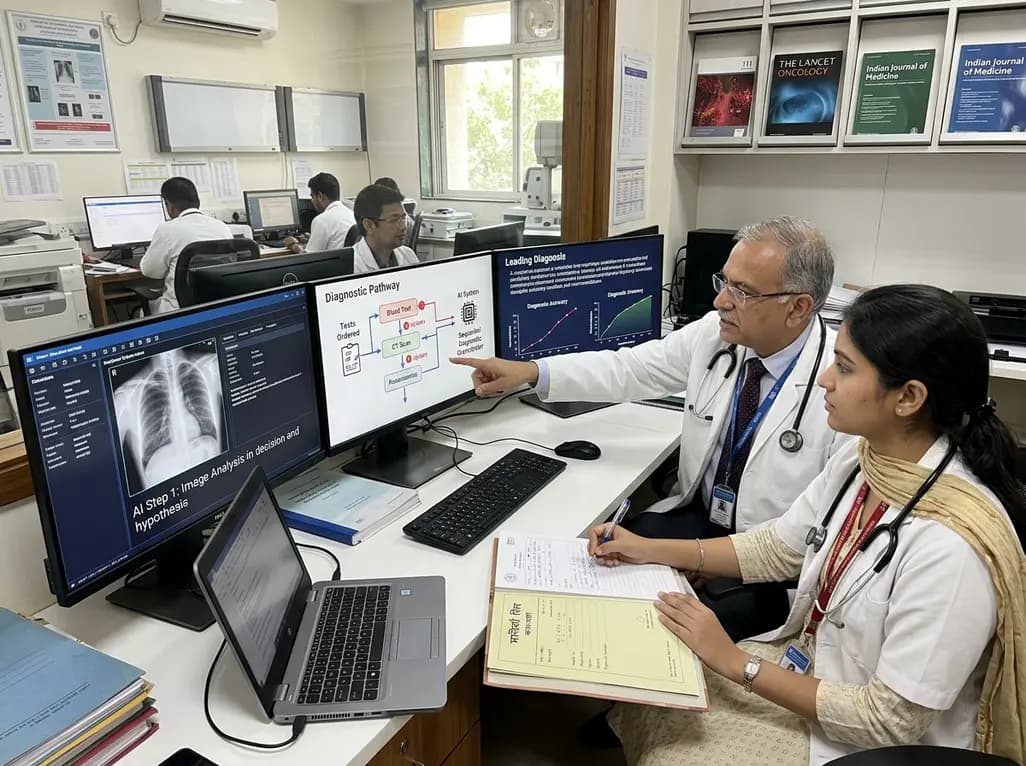
A breakthrough peer-reviewed study demonstrates that a sequential AI diagnosis system can mirror real-world clinical reasoning. By ordering stepwise tests and updating hypotheses dynamically, this multi-agent orchestrator achieved superior diagnostic accuracy while reducing investigative costs.
Today

A prenatal case highlights severe glutaric acidemia type II presenting as bilateral hyperechoic cystic kidneys at 18 weeks. Whole-exome sequencing revealed a novel homozygous ETFDH frameshift variant, demonstrating the power of rapid genetic testing in fetal renal anomalies.
Today

Review how tailored exercise programs benefit frail older patients with heart failure. Explore pathophysiological mechanisms, individualized training prescriptions, and strategies to overcome adherence barriers in clinical practice.
Yesterday

This comparative study evaluates posterior labral tears with and without glenohumeral instability, highlighting distinct demographic patterns, MRI underestimation in stable shoulders, and successful arthroscopic repair outcomes.
Yesterday

A clinical study demonstrates that early intervention with tocilizumab, either as monotherapy or bridged with corticosteroids, achieves significant proptosis reduction and resolves active inflammation in treatment-naive thyroid eye disease.
Yesterday
