.webp&w=384&q=75)

Loading, please wait...
Loading, please wait...

Male infertility in India is currently a significant public health concern that often remains hidden behind social stigma. Recent clinical reports suggest that only one in four Indian men possess normal semen parameters. Consequently, medical experts are calling for a more proactive and open approach to reproductive diagnosis. Historically, society often blamed women for a couple's inability to conceive. However, modern research indicates that male factors contribute to nearly 50% of all infertility cases. This biological reality necessitates a shift in how we approach fertility care.
Recent data highlights a sharp decline in reproductive health metrics across the country. Furthermore, average sperm counts have plummeted from 60 million/ml to just 20 million/ml over the last three decades. This decline highlights a growing crisis in reproductive health that affects one in six urban couples. Because fertility is frequently linked to cultural notions of masculinity, many men hesitate to seek testing. Therefore, identifying male factors early is essential to prevent unnecessary delays in successful conception.
Several lifestyle and environmental factors influence this downward trend in sperm health. For example, metabolic syndrome, obesity, and diabetes significantly disrupt hormonal balance in men. Additionally, rising exposure to environmental toxins and microplastics acts as a collection of endocrine disruptors. Chronic stress from a young age also plays a pivotal role in reducing reproductive potential. Because these issues are often reversible, timely medical intervention can lead to improved outcomes. Clinicians must look beyond simple biology to find comprehensive solutions for their patients.
To improve outcomes, clinicians should move beyond basic sperm counts during evaluations. Specifically, DNA Fragmentation Index (DFI) testing offers deeper insights into sperm integrity and embryo development. Moreover, AI-driven semen analysis now reduces human error and standardizes results across clinical laboratories. Experts recommend a couple-centric approach where both partners undergo testing simultaneously from the beginning. Furthermore, semen analysis should be considered a routine health check for men above age 25. Early intervention remains the most effective strategy for achieving successful outcomes in fertility care.
Q1: Why is male infertility testing often delayed in India?
Testing is often delayed due to deep-seated social stigma and the incorrect assumption that normal sexual performance equates to normal fertility. Additionally, outdated guidelines often suggest waiting a year before seeking help, which may not be suitable for older couples.
Q2: What lifestyle factors most affect sperm count and quality?
Obesity, diabetes, and metabolic syndrome are major clinical drivers. Environmental pollutants, chronic stress, and delayed parenthood also contribute significantly to the decline in sperm parameters seen in Indian men today.
Q3: Can male infertility be treated without IVF?
Yes, many causes such as varicoceles or infections are reversible with medication or minor surgical procedures. Identifying these underlying issues early can help couples conceive naturally or through less invasive methods like IUI.
Disclaimer: This content is for informational and educational purposes only. It does not constitute medical advice or replace professional judgment. Refer to the latest local and national guidelines for clinical practice.
References

Read summarized clinical updates, watch expert medical content, and earn CME certifications right from your smartphone.
Open your smartphone camera to scan and install.





Experts at ETHealthworld discuss the alarming decline in sperm counts among Indian men and the need for a couple-centric approach to fertility care....
6 months ago

Chronic eosinophilic pneumonia can present with atypical bronchoalveolar lavage findings and an organizing pneumonia pattern, necessitating surgical lung biopsy.
Today

Discover the crucial distinctions between mesonephric and mesonephric-like proliferations of the female genital tract. Learn the key histomorphologic, immunohistochemical, and molecular differences essential for accurate diagnosis and clinical management.
Today
Kikuchi-Fujimoto disease rarely presents with refractory shock and sinus bradycardia in children. This case report highlights life-threatening hemodynamic instability requiring intensive care, preserved cardiac contractility, and the critical diagnostic role of early excisional lymph node biopsy.
Today
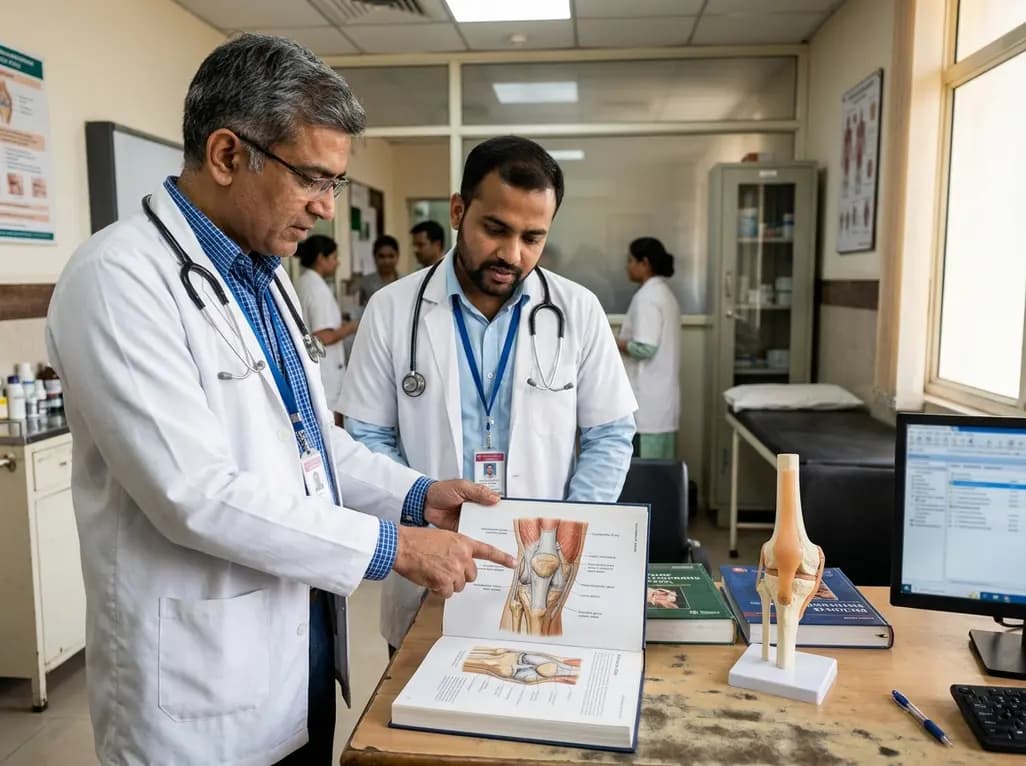
A narrative review investigates whether the articularis genus muscle functions as an independent anatomical entity or blends with the vastus intermedius. We evaluate its morphology, role in retracting the suprapatellar bursa, and direct clinical significance in anterior knee pain and arthroplasty.
Today

A Bayesian multilevel meta-analysis reveals that aerobic training combined with moderate carbohydrate restriction modestly lowers HbA1c in type 2 diabetes. However, sparse data and very low certainty leave incremental benefits over exercise or diet alone unproven, highlighting the need for individualized care.
Today
