.webp&w=384&q=75)

Loading, please wait...
Loading, please wait...

Lung cancer remains a significant health burden in India. Consequently, clinical teams require faster ways to differentiate between non-small cell (NSCLC) and small cell lung cancer (SCLC). In fact, a recent study by Shao W et al. demonstrates how lung cancer machine learning models can achieve this goal. Initially, researchers analyzed pathological images from 240 confirmed cases to extract quantitative cellular microarchitecture.
Following this, they used the Random Forest algorithm to identify the 20 most informative features for the diagnostic process. Subsequently, they trained four different classifiers: Support Vector Machine (SVM), Gradient Boosting, Logistic Regression, and Decision Tree. Specifically, Logistic Regression emerged as the top performer with a median accuracy near 90%. Therefore, this framework offers a highly robust method for oncologists and pathologists to optimize lung cancer management.
Furthermore, the study highlighted the importance of physical science features in providing quantitative data from histopathological images. Moreover, these metrics ensure the model remains stable across different training and validation sets. For instance, fivefold cross-validation confirmed that SVM and Gradient Boosting also maintained AUCs above 0.90. While the Decision Tree showed some variability, it still provided acceptable recall for SCLC cases. In addition, this high level of precision is vital for tailoring therapeutic decisions in the Indian clinical context.
Eventually, integrating these AI-driven tools into routine practice could significantly reduce diagnostic turnaround times. Actually, pathologists in India often face heavy workloads, making automated assistance an invaluable resource. Additionally, early and precise classification directly improves prognosis prediction and patient outcomes. Thus, as these technologies mature, they will likely become standard components of digital pathology workflows. Consequently, healthcare providers can ensure that patients receive the most appropriate treatments as quickly as possible.
Machine learning models analyze specific physical features in pathological images, such as cellular microarchitecture and polarization histograms. These models recognize patterns that distinguish the two types of cancer with high precision.
The Logistic Regression model achieved the highest overall performance. It reached a median accuracy of approximately 90% and an AUC consistently exceeding 0.90 during validation.
Physical science features provide quantitative data on cancer cell structures. Using these features makes the diagnostic process more objective and robust compared to traditional qualitative visual analysis alone.
Disclaimer: This content is for informational and educational purposes only... Refer to the latest local and national guidelines for clinical practice.
References
Shao W et al. Accurate diagnosis of non-small cell and small cell lung cancer by using machine learning models trained with physical science features extracted from pathological images. J Microsc. 2026 Apr 11. doi: 10.1111/jmi.70090. PMID: 41964375.
Coudray N, et al. Classification and mutation prediction from non-small cell lung cancer histopathology images using deep learning. Nat Med. 2018;24(10):1559-1567.
National Cancer Registry Programme (NCRP). Indian Council of Medical Research. Results from the National Cancer Registry Programme: Lung Cancer Projections 2025.

Read summarized clinical updates, watch expert medical content, and earn CME certifications right from your smartphone.
Open your smartphone camera to scan and install.





Discover how machine learning models trained on physical science features provide a robust framework for differentiating NSCLC from SCLC with 90% accuracy....
6 months ago

Recent epidemiological data reveals a dramatic surge in summer heat mortality driven by human-induced climate warming. This analysis explores the pathophysiological impacts on cardiac and renal systems, diagnostic dilemmas in death certification, and essential emergency cooling protocols for acute clinical care.
Today
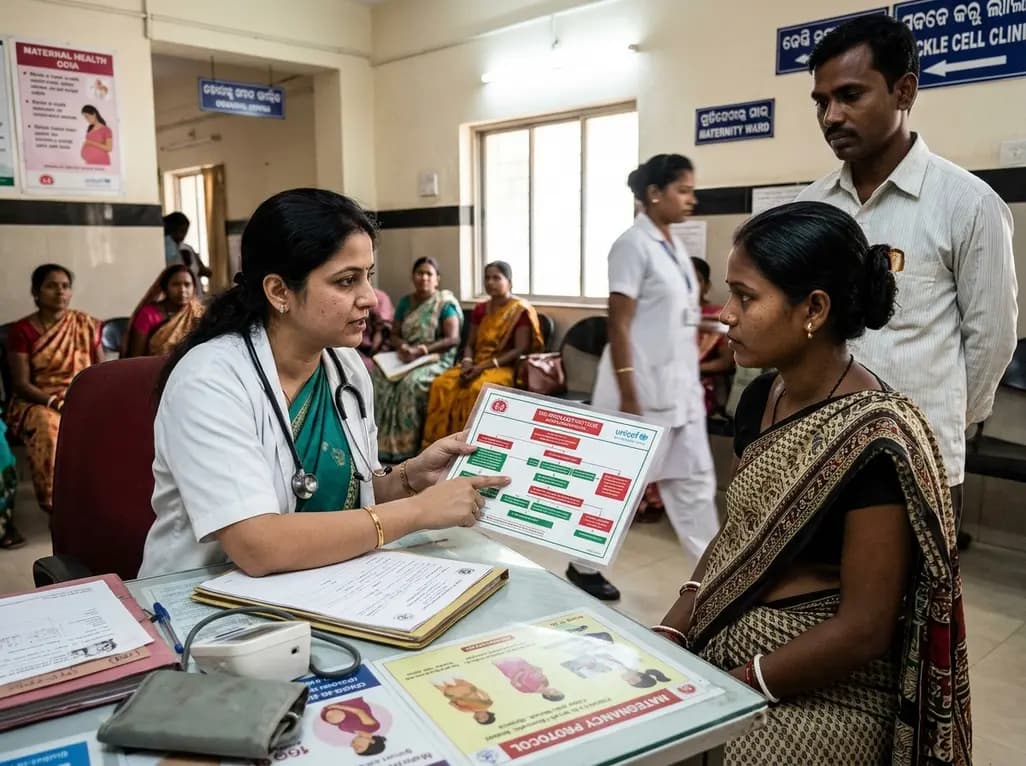
Odisha has established India's first state-level clinical protocol specifically tailored for pregnant women with sickle cell disease. Developed with NHM and UNICEF, the framework provides structured antenatal screening, crisis mitigation, standardized referral pathways, and specialized interdisciplinary care.
Today

India is advancing preventive healthcare by integrating genomics, artificial intelligence, and quantum technologies. With the SANGAM programme sequencing one million Indian genomes, clinicians can unlock personalized therapies, detect cardiometabolic risks early, and curb the burden of diabetes and heart disease.
Today

A randomized controlled trial demonstrates that an eight-week dual-task training intervention significantly improves static and dynamic postural control over standard balance exercises in individuals with chronic ankle instability, addressing critical neurocognitive deficits during athletic and daily activities.
Today

A retrospective cohort study of 7,716 ICU patients from the MIMIC-IV database demonstrates that Gradient Boosting Decision Trees significantly outperform traditional SOFA scores in predicting in-hospital mortality among patients with sepsis and diabetes, with SHAP analysis providing clinical interpretability.
Today
