.webp&w=384&q=75)

Loading, please wait...
Loading, please wait...

Kenya will launch a revolutionary program for Lenacapavir HIV prevention this March. The health ministry announced the rollout across 15 priority regions on Wednesday. Notably, this groundbreaking drug requires only two injections per year. Clinical trials demonstrate that this treatment reduces HIV transmission risk by over 99.9 percent. While it acts as a chemical drug rather than a vaccine, its high efficacy marks a major milestone in public health.
Lenacapavir functions as a first-in-class capsid inhibitor. It targets the HIV-1 capsid, which is the protein shell protecting the viral genetic material. By disrupting the capsid at multiple stages of the viral lifecycle, the drug prevents replication effectively. Furthermore, the PURPOSE clinical trials confirmed its superior performance. In these studies, the drug showed near-complete protection across diverse populations. Consequently, medical experts view it as a game-changer for high-risk groups who struggle with daily oral pill adherence.
The first phase of the implementation begins in early March 2026. Initially, the program will cover 15 high-burden counties to maximize impact. Kenya already received its first batch of 21,000 doses through a strategic partnership. This deal involves the manufacturer, Gilead Sciences, and the Global Fund to Fight AIDS. Additionally, the ministry expects 12,000 continuation doses by April. The US government also committed to supplying another 25,000 doses. These efforts aim to address Kenya's HIV prevalence, which currently stands at 3.7 percent.
The introduction of this drug occurs during a complex geopolitical period. African countries currently face significant aid cuts from the United States administration. However, Kenya recently signed a $2.5 billion health aid deal to secure essential programs. This bilateral agreement provides $1.6 billion over five years for various health initiatives. Kenya must contribute $850 million to this fund while assuming more operational responsibility. Although a senator has challenged the deal in court, the health ministry continues to prepare for the March rollout. Kenya joins South Africa, Eswatini, and Zambia in this critical regional effort.
Q1: How often must a person receive the injection?
Patients receive the Lenacapavir injection twice a year, or once every six months. This long-acting schedule significantly improves adherence compared to daily oral medications.
Q2: Is Lenacapavir considered a vaccine?
No, it is technically a chemical drug rather than a vaccine. Unlike a vaccine, it does not train the immune system to recognize the virus but instead directly inhibits viral replication.
Q3: Which regions in Kenya will receive the drug first?
The health ministry will prioritize 15 high-burden counties during the first phase of the rollout starting in March 2026.
Disclaimer: This content is for informational and educational purposes only. It does not constitute medical advice or replace professional judgment. Refer to the latest local and national guidelines for clinical practice.
References

Read summarized clinical updates, watch expert medical content, and earn CME certifications right from your smartphone.
Open your smartphone camera to scan and install.





Kenya launches a groundbreaking twice-yearly HIV prevention injection, Lenacapavir, in March 2026, targeting high-burden regions with 99.9% efficacy....
7 months ago
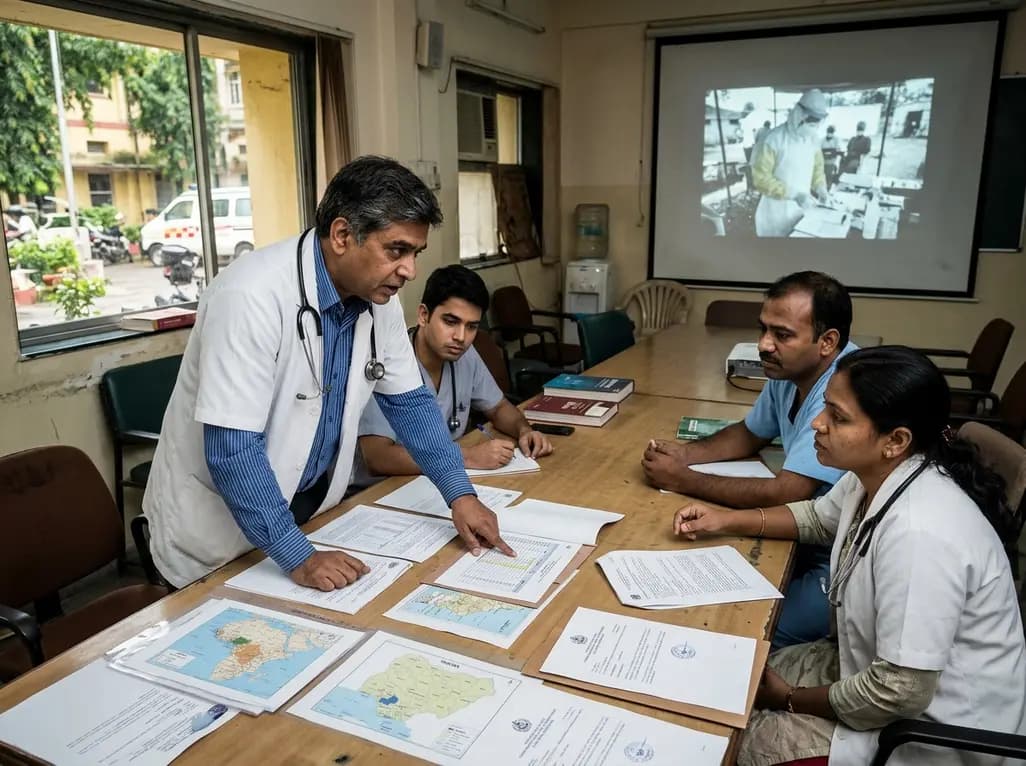
Following Nigeria's first recorded Ebola case linked to regional travel, the Africa CDC has convened an emergency ministerial summit. This alert underscores critical clinical priorities for healthcare professionals, including differentiating early viral infection from malaria, implementing barrier nursing, and triage.
Today

Leucine Rich Bio has introduced South Asia's first comprehensive vaginal microbiome test, BugSpeaks. By profiling microbial dysbiosis, pathogens, and antimicrobial resistance, this next-generation diagnostic platform provides clinicians with deeper insights into recurrent infections, fertility, and reproductive health.
Today

Review how tailored exercise programs benefit frail older patients with heart failure. Explore pathophysiological mechanisms, individualized training prescriptions, and strategies to overcome adherence barriers in clinical practice.
Today

This comparative study evaluates posterior labral tears with and without glenohumeral instability, highlighting distinct demographic patterns, MRI underestimation in stable shoulders, and successful arthroscopic repair outcomes.
Today

A clinical study demonstrates that early intervention with tocilizumab, either as monotherapy or bridged with corticosteroids, achieves significant proptosis reduction and resolves active inflammation in treatment-naive thyroid eye disease.
Today
