.webp&w=384&q=75)

Loading, please wait...
Loading, please wait...

Managing infection and persistent inflammation in diabetic foot ulcers remains a significant challenge for healthcare providers globally. Recent clinical evidence highlights that JJWT diabetic wound healing protocols significantly improve recovery outcomes by modulating specific molecular pathways. By focusing on microbial control and inflammatory markers, this integrative approach provides a promising alternative to traditional topical treatments alone.
Researchers conducted a controlled study involving sixty patients diagnosed with diabetic foot ulcers. The participants were divided into a control group receiving standard magnesium sulfate treatment and a treatment group receiving Jiangjunsan wrapping therapy (JJWT) for two weeks. Consequently, the study sought to evaluate differences in microbial colony counts and systemic inflammatory cytokines. Notably, the treatment group exhibited a much lower microbial colony count after the intervention period compared to the control group. Furthermore, clinicians observed a substantial decrease in the levels of tumor necrosis factor-alpha (TNF-α) and interleukin-6 (IL-6), which are critical markers of chronic wound inflammation.
The therapeutic efficacy of Jiangjunsan appears to stem from its interaction with the PI3K/AKT signaling pathway. Western blot analysis revealed that patients in the JJWT group had significantly higher expression levels of phosphatidylinositol 3-kinase (PI3K) and protein kinase B (AKT) in their wound tissues. This finding is vital because the PI3K/AKT pathway plays a central role in regulating cell survival, proliferation, and migration during the tissue repair process. By activating this pathway, JJWT not only dampens the overactive inflammatory response but also fosters an environment conducive to cellular regeneration.
These results suggest that integrating traditional wrapping therapies into modern diabetic care can yield superior antibacterial and anti-inflammatory effects. Specifically, the dual action of reducing pathogenic microbial loads while simultaneously upregulating repair-oriented signaling pathways offers a comprehensive strategy for refractory ulcers. Therefore, clinicians should consider the potential of JJWT as a synergistic tool in the multidisciplinary management of the diabetic foot.
JJWT works by significantly lowering the expression of pro-inflammatory cytokines like TNF-α and IL-6, which often stall the healing process in diabetic patients.
The PI3K/AKT pathway is a master regulator of cellular activities; its activation promotes the survival and migration of fibroblasts and other cells essential for closing a wound.
Based on recent study results, JJWT showed superior outcomes in reducing microbial colonies and promoting molecular markers of healing compared to magnesium sulfate over a two-week period.
Disclaimer: This content is for informational and educational purposes only and does not constitute medical advice or a professional recommendation. Healthcare professionals should rely on their clinical judgment and refer to the latest local and national guidelines for clinical practice.
References
Liu Z et al. JJWT promotes antibacterial and anti-inflammatory activity for diabetic wound healing through the PI3K/akt signaling pathway. Cutan Ocul Toxicol. 2026 Feb 21. doi: 10.1080/15569527.2026.2618012. PMID: 41722025.
Jere SW et al. Role of the PI3K/AKT (mTOR and GSK3β) signalling pathway and photobiomodulation in diabetic wound healing. Cytokine Growth Factor Rev. 2019 Dec;50:52-59.
Wang J et al. Cell migration in diabetic wound healing: Molecular mechanisms and therapeutic strategies. PMC. 2023 May.
"
Read summarized clinical updates, watch expert medical content, and earn CME certifications right from your smartphone.
Open your smartphone camera to scan and install.





A study shows JJWT improves diabetic wound healing by reducing inflammation and microbial count through the PI3K/AKT pathway, offering a new clinical approa...
7 months ago

Discover how to identify superimposed entrapment neuropathy in diabetic patients. This review details clinical evaluation, surgical decompression evidence, and a structured algorithm for primary care referrals to prevent ulcers and preserve limb function.
Today
A retrospective cohort study evaluated 1,000 low-risk singleton births to assess maternal and neonatal outcomes during office-hours versus off-hours. Off-hours deliveries were significantly associated with higher odds of intrapartum cesarean sections and episiotomies, highlighting critical obstetric staffing considerations.
Today
A comprehensive systematic review reveals that CT-based epicardial adipose tissue radiomics combined with machine learning holds significant promise for predicting atrial fibrillation occurrence and recurrence. However, technical heterogeneity and validation gaps currently limit immediate clinical adoption.
Today

Researchers have engineered an artificial sensory-pain integrated receptor using a multi-threshold organic synaptic transistor. The system distinguishes benign touch from noxious stimuli, enabling safer, more responsive prosthetic limbs with built-in memory and simplified hardware architecture.
Today
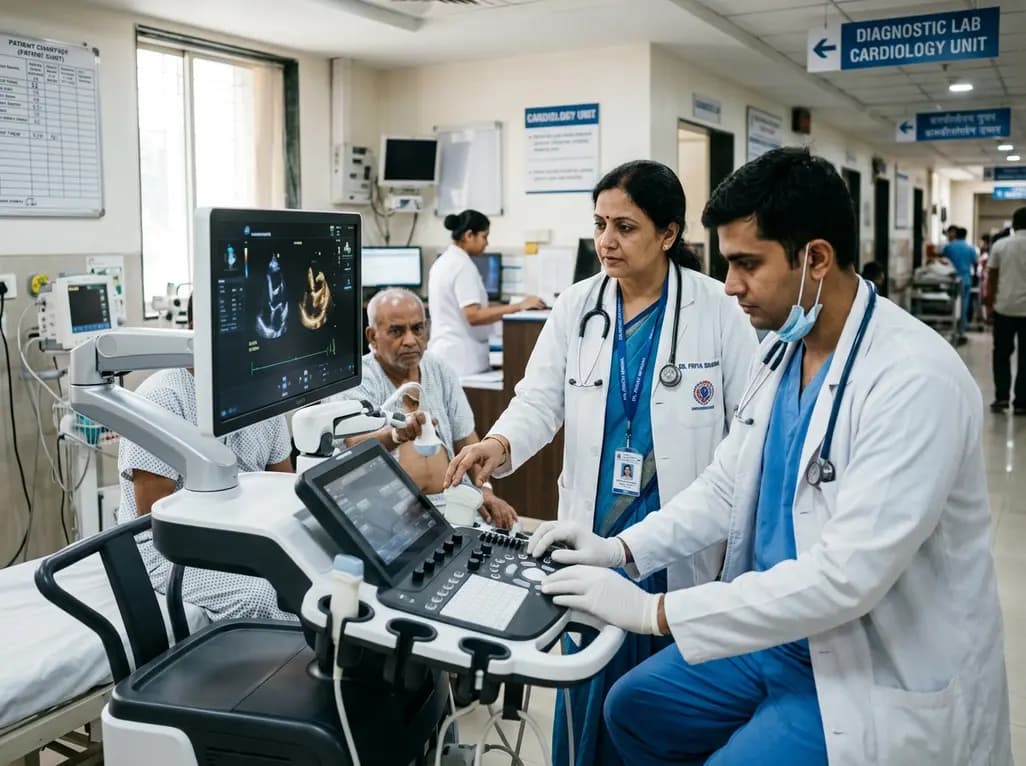
Medical robotics is transitioning beyond operative suites into diagnostics, cardiology, and endocrinology. Explore how innovations in tele-robotics, AI integration, and nanomedicine are overcoming geographical barriers and transforming precision healthcare delivery across India's evolving disease landscape.
Today
