.webp&w=384&q=75)

Loading, please wait...
Loading, please wait...

In-vitro fertilization (IVF) failure rates currently remain above 65% and unfortunately, many cases involve unknown causes. But researchers now focus on uterine receptivity and they solve this problem because uterine peristalsis determines receptivity and success. Therefore, a multi-center study investigated IVF outcome prediction using machine learning and ultrasound strain analysis.
First, the researchers recruited 62 patients and then they performed transvaginal scans and also they used strain analysis. Second, the team extracted 25 features and they also used speckle tracking to ensure accuracy. Next, they analyzed frequency and amplitude and coordination features. Consequently, they evaluated uterine activity and then they compared algorithms and also they tested accuracy. This comprehensive approach allowed them to capture subtle uterine movements effectively.
Notably, the study compared SVM and KNN and AdaBoost models. And the SVM model performed the best and also it reached an average area under the ROC curve of 0.81. In fact, it reached a high score so it distinguishes pregnancies effectively and also accurately. Specifically, coordination features showed links to success and frequency also showed strong associations. Therefore, these specific motion patterns serve as vital indicators for IVF outcome prediction in clinical settings.
Moreover, the SVM model demonstrated reliable performance and also it worked well across multiple fertility centers. Thus, clinicians can use this framework and also they make better decisions because the method is safe and also non-invasive. Similarly, it helps personalize treatment plans and also it enhances implantation success. Finally, this innovative approach might finally enhance IVF success rates and indeed, AI offers a promising path forward and also it improves patient care.
Uterine peristalsis determines the receptivity of the environment. Excessive or uncoordinated motion can prevent embryo implantation, so its assessment is vital for success.
The Support Vector Machine (SVM) model demonstrated the best performance in this study, and it achieved an average AUC of 0.81 for predicting outcomes.
Features related to the frequency and coordination of uterine peristalsis showed the strongest association with successful clinical pregnancy rates.
Disclaimer: This content is for informational and educational purposes only. It does not constitute medical advice or a professional relationship. Refer to the latest local and national guidelines for clinical practice.
References

Read summarized clinical updates, watch expert medical content, and earn CME certifications right from your smartphone.
Open your smartphone camera to scan and install.





A multi-center study demonstrates that machine learning models using ultrasound strain analysis can accurately predict IVF success by assessing uterine moti...
7 months ago
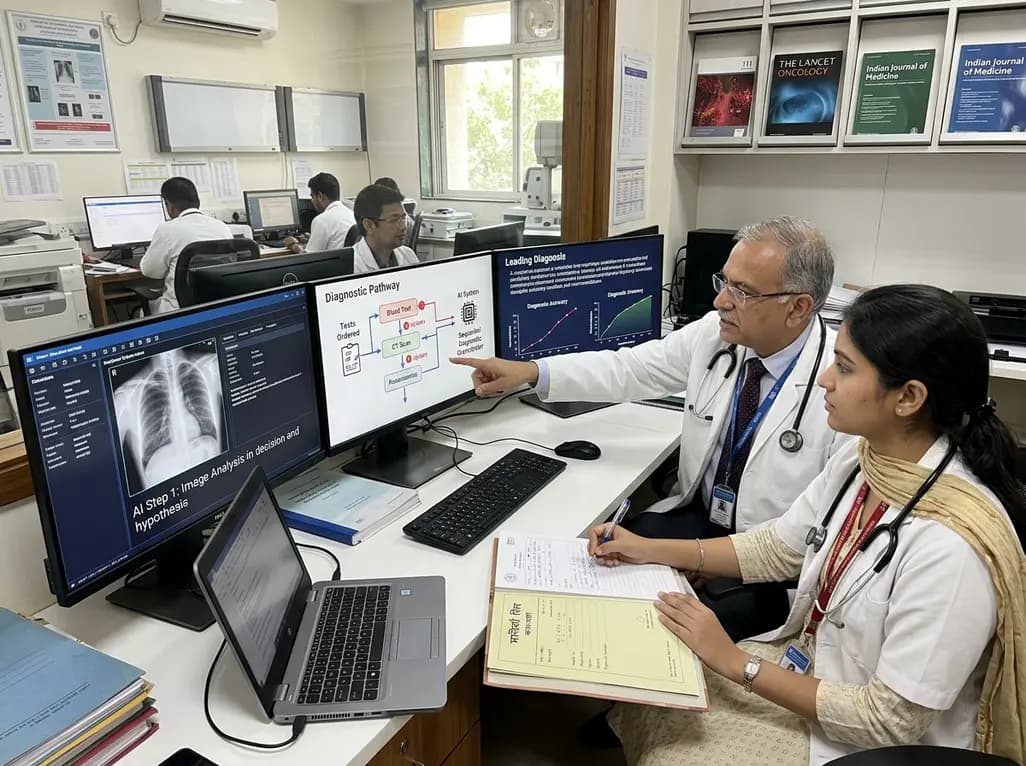
A breakthrough peer-reviewed study demonstrates that a sequential AI diagnosis system can mirror real-world clinical reasoning. By ordering stepwise tests and updating hypotheses dynamically, this multi-agent orchestrator achieved superior diagnostic accuracy while reducing investigative costs.
Today

A prenatal case highlights severe glutaric acidemia type II presenting as bilateral hyperechoic cystic kidneys at 18 weeks. Whole-exome sequencing revealed a novel homozygous ETFDH frameshift variant, demonstrating the power of rapid genetic testing in fetal renal anomalies.
Today

Review how tailored exercise programs benefit frail older patients with heart failure. Explore pathophysiological mechanisms, individualized training prescriptions, and strategies to overcome adherence barriers in clinical practice.
Yesterday

This comparative study evaluates posterior labral tears with and without glenohumeral instability, highlighting distinct demographic patterns, MRI underestimation in stable shoulders, and successful arthroscopic repair outcomes.
Yesterday

A clinical study demonstrates that early intervention with tocilizumab, either as monotherapy or bridged with corticosteroids, achieves significant proptosis reduction and resolves active inflammation in treatment-naive thyroid eye disease.
Yesterday
