.webp&w=384&q=75)

Loading, please wait...
Loading, please wait...

Surgeons performing spinal stabilization must ensure highly precise implant placement to avoid catastrophic iatrogenic injuries. While traditional methods rely on post-operative imaging, intraoperative tools offer immediate feedback. Consequently, researchers have focused on identifying the most reliable imaging modality for the operating room. A recent comparative study investigated intraoperative CBCT accuracy alongside multi-slice computed tomography (MSCT) and end-on fluoroscopy (eoF) to determine their effectiveness in detecting implant positions relative to the vertebral canal.
The study utilized twenty-two feline cadavers to simulate a realistic surgical approach. Specifically, four 1.2mm Kirschner wires were inserted at three thoracolumbar locations. Researchers purposely included canal perforations to test the detection limits of each modality. Four blinded evaluators assessed the resulting images for implant position and subjective certainty. Furthermore, the team measured image acquisition times to determine which method best fits a fast-paced surgical environment.
The results revealed that Cone-Beam Computed Tomography (CBCT) provided the highest performance metrics. CBCT achieved a sensitivity of 88.5% and a specificity of 83.4%, leading to a balanced accuracy of 85.9%. In contrast, MSCT and eoF showed lower balanced accuracies of 81.7% and 81.3%, respectively. Moreover, interrater agreement was notably higher for CBCT with a kappa value of 0.72. Consequently, these findings suggest that CBCT offers a more consistent and reliable assessment across different surgeons.
Efficiency also played a major role in the analysis. Researchers observed that both CBCT and eoF were significantly faster than MSCT regarding image acquisition times. Because surgical duration directly impacts patient outcomes, the speed of CBCT makes it a highly attractive option. Additionally, interrater reliability was strongest for implants that were either completely perforating or non-perforating, though it decreased for partially perforating implants.
The high intraoperative CBCT accuracy demonstrated in this study highlights its potential as a gold standard for spinal surgery. By providing superior sensitivity and faster results than traditional CT, it allows for immediate intraoperative corrections. This capability significantly reduces the need for revision surgeries. Therefore, integrating CBCT into spinal workflows could improve safety margins and streamline the overall surgical process.
CBCT showed higher sensitivity (88.5% vs 80.2%) and faster acquisition times compared to MSCT, making it more efficient for intraoperative use.
High interrater reliability, like the 0.72 kappa found with CBCT, ensures that different surgeons will interpret the implant position consistently, reducing the risk of subjective error.
Reliability remains high for completely perforating and non-perforating implants, but surgeons should exercise caution when evaluating partially perforating implants, as agreement levels typically drop for these cases.
Disclaimer: This content is for informational and educational purposes only. It is not intended to be a substitute for professional medical advice, diagnosis, or treatment. Always seek the advice of your physician or other qualified health provider with any questions you may have regarding a medical condition. Refer to the latest local and national guidelines for clinical practice.
References
1. Koch C et al. EXPRESS: Accuracy of intraoperative computed tomography to determine implant position in the feline vertebral spine. J Feline Med Surg. 2026 Apr 25. doi: 10.1177/1098612X261447641. PMID: 42033184.
2. Salem AM et al. Precision of Measurements from Computed Tomography (CT), Cone Beam Computed Tomography (CBCT) and their Reformatted Images. Int J Surg Res Pract. 2014;1:1.
3. Gerszten PC et al. Setup accuracy of spine radiosurgery using cone beam computed tomography image guidance in patients with spinal implants. J Neurosurg Spine. 2010;12(4):351-358.

Read summarized clinical updates, watch expert medical content, and earn CME certifications right from your smartphone.
Open your smartphone camera to scan and install.





This study evaluates intraoperative CBCT, MSCT, and fluoroscopy for predicting spinal implant positions, finding CBCT offers superior sensitivity and speed....
5 months ago

A retrospective cohort study of 7,716 ICU patients from the MIMIC-IV database demonstrates that Gradient Boosting Decision Trees significantly outperform traditional SOFA scores in predicting in-hospital mortality among patients with sepsis and diabetes, with SHAP analysis providing clinical interpretability.
Today
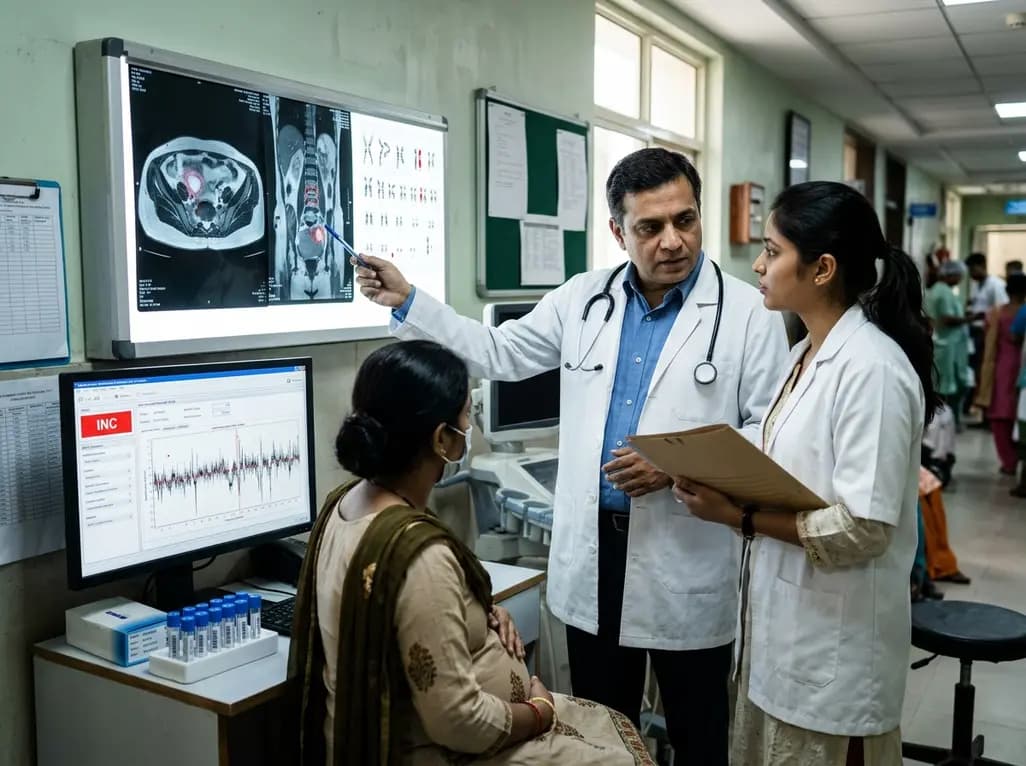
Occult maternal malignancy accounts for 3.82% of persistent unreportable NIPT results with genomic noise. Multiple chromosomal aberrations, notably on chromosome 18, warrant thorough oncological evaluation and whole-body MRI to ensure timely maternal diagnosis while preserving fetal care.
Today
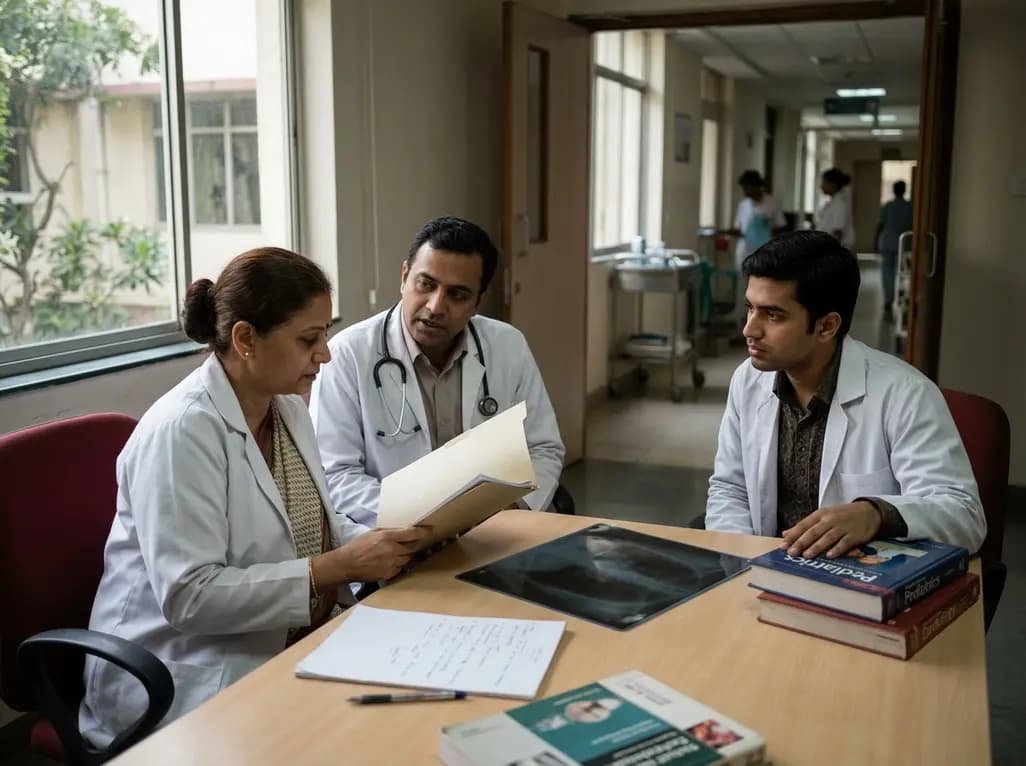
This article reviews the forensic and clinical complexities of acute myocarditis arising on left ventricular hypertrophy in children, highlighting early diagnostic red flags and multidisciplinary postmortem autopsy protocols.
Today

This comparative study evaluates posterior labral tears with and without glenohumeral instability, highlighting distinct demographic patterns, MRI underestimation in stable shoulders, and successful arthroscopic repair outcomes.
Yesterday

A clinical study demonstrates that early intervention with tocilizumab, either as monotherapy or bridged with corticosteroids, achieves significant proptosis reduction and resolves active inflammation in treatment-naive thyroid eye disease.
Yesterday
