.webp&w=384&q=75)

Loading, please wait...
Loading, please wait...

The landscape of spinal medicine is evolving rapidly. Traditionally, a clear division existed between the work of spine surgeons and interventional pain management physicians (IPMPs). However, recent data suggests that the boundaries defining these specialties are becoming increasingly blurred. Specifically, a high number of IPMPs are now performing interventional spine procedures that were historically the exclusive domain of orthopedic or neurosurgeons.
A recent study analyzed 269 healthcare providers identified through the American Society of Interventional Pain Physicians (ASIPP) database. The findings reveal that approximately 27.5% of these physicians perform invasive spinal interventions. For instance, many are now conducting minimally invasive lumbar decompressions and interspinous spacer insertions. Furthermore, a smaller but significant portion of these specialists is performing complex tasks like spinal fusion and discectomies. This trend indicates a major shift in how chronic spinal conditions are managed in modern clinical practice.
As the scope of practice expands, the academic profiles of these physicians have come under scrutiny. Interestingly, the study found no significant differences in age, publication counts, or h-index between IPMPs who perform these interventional spine procedures and those who do not. This suggests that the move toward more invasive techniques is not necessarily driven by academic seniority or specific research interests. Instead, it appears to be a systemic change within the specialty itself.
Moreover, the study highlighted that nearly 10% of the surveyed pain physicians are performing discectomies. In addition, others are involved in sacroiliac joint fusions and even disc replacements. Consequently, this expansion of the IPMP scope provides patients with more options for minimally invasive care. Nevertheless, it also raises critical questions regarding the standardization of training. While surgeons undergo years of residency and fellowship focused on structural anatomy, interventional pain training models can vary significantly. Therefore, the medical community must now focus on better defining these training requirements to ensure long-term patient safety.
The high incidence of invasive procedures among non-surgeons highlights a need for collaborative oversight. Researchers emphasize that future studies should analyze patient-reported outcomes to compare the efficacy of these treatments across specialties. Additionally, professional societies should work together to establish clear guidelines that prioritize patient safety while acknowledging the benefits of minimally invasive options. Ultimately, the goal is to ensure that every patient receives the most appropriate and safest care for their specific spinal disorder.
The most frequent procedures include minimally invasive lumbar decompression (MILD), the insertion of interspinous spacers (like Superion or Vertiflex), and percutaneous spinal fusions. Many physicians also perform discectomies and neural decompressions.
The boundary is blurring because of the rise of minimally invasive technology. These advancements allow non-surgeons to address structural issues using percutaneous methods. Additionally, there is an increasing patient demand for options that avoid traditional open surgery.
Yes, there are significant differences. Spine surgeons undergo long-term surgical residency and fellowship training focused on anatomy and mechanical stability. Pain management physicians often come from anesthesiology or physiatry backgrounds, focusing more on image-guided percutaneous techniques.
Disclaimer: This content is for informational and educational purposes only. It is not intended as medical advice or a substitute for professional clinical judgment. Refer to the latest local and national guidelines for clinical practice.
References
1. Giraldo JP et al. Prevalence of interventional spine procedures performed by pain management physicians: blurred boundaries. J Neurosurg Spine. 2026 May 08. doi: 10.3171/2025.10.SPINE241562. PMID: 42102410.
2. Rosner et al. Trends in the Utilization of Interspinous Devices and MILD Procedures. Medicare Analysis Report. 2024.
3. Sarikonda V, et al. Examining Interventional Procedures Through the Lens of Disruptive Innovation. Scholastica Spine Review. 2025.

Read summarized clinical updates, watch expert medical content, and earn CME certifications right from your smartphone.
Open your smartphone camera to scan and install.





New research highlights how pain management physicians are increasingly performing complex spinal procedures once reserved for surgeons....
5 months ago

Recent epidemiological data reveals a dramatic surge in summer heat mortality driven by human-induced climate warming. This analysis explores the pathophysiological impacts on cardiac and renal systems, diagnostic dilemmas in death certification, and essential emergency cooling protocols for acute clinical care.
Today

Odisha has established India's first state-level clinical protocol specifically tailored for pregnant women with sickle cell disease. Developed with NHM and UNICEF, the framework provides structured antenatal screening, crisis mitigation, standardized referral pathways, and specialized interdisciplinary care.
Today

India is advancing preventive healthcare by integrating genomics, artificial intelligence, and quantum technologies. With the SANGAM programme sequencing one million Indian genomes, clinicians can unlock personalized therapies, detect cardiometabolic risks early, and curb the burden of diabetes and heart disease.
Today
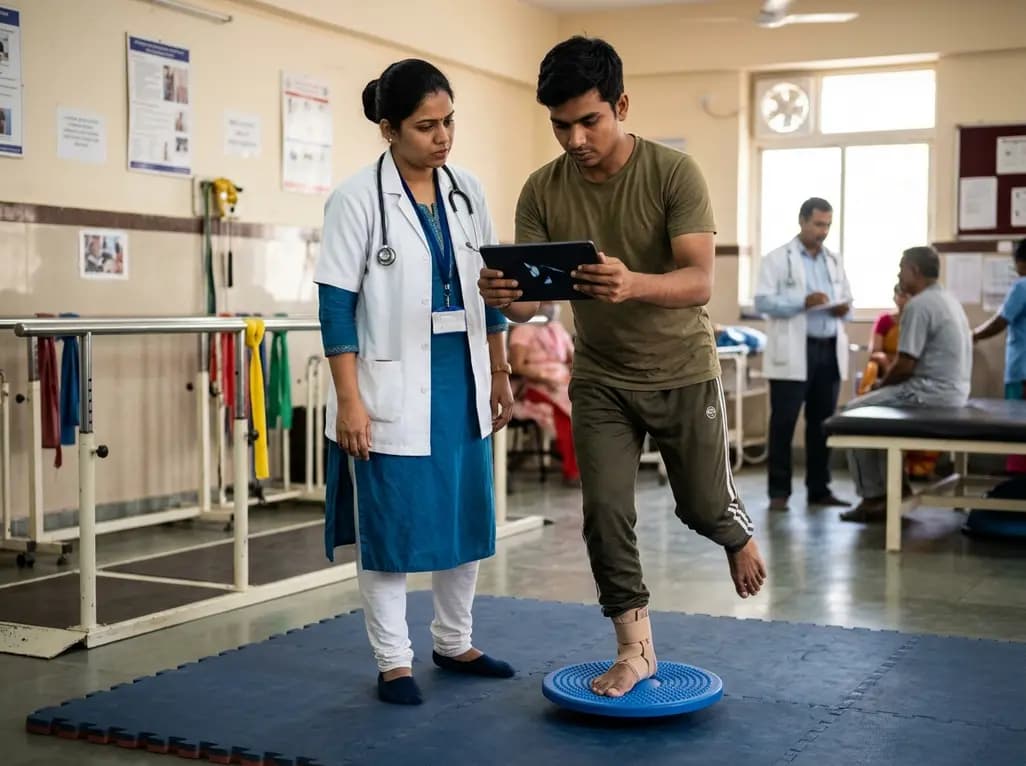
A randomized controlled trial demonstrates that an eight-week dual-task training intervention significantly improves static and dynamic postural control over standard balance exercises in individuals with chronic ankle instability, addressing critical neurocognitive deficits during athletic and daily activities.
Today

A retrospective cohort study of 7,716 ICU patients from the MIMIC-IV database demonstrates that Gradient Boosting Decision Trees significantly outperform traditional SOFA scores in predicting in-hospital mortality among patients with sepsis and diabetes, with SHAP analysis providing clinical interpretability.
Today
