.webp&w=384&q=75)

Loading, please wait...
Loading, please wait...

S3V Vascular Technologies recently reached a major milestone in Indian medical innovation. They announced plans to move their indigenous TAVR system India into preclinical evaluation. This phase will validate the safety and design performance of the balloon-expandable device. Consequently, the company hopes for a commercial launch within the next 18 months.
Transcatheter Aortic Valve Replacement (TAVR) offers a minimally invasive alternative for severe aortic stenosis. Traditionally, patients required open-heart surgery for valve issues. However, clinicians can now replace the valve via a catheter. This method significantly reduces recovery time for high-risk or elderly patients. Furthermore, domestic innovation ensures that the technology meets local clinical needs effectively.
Currently, India performs only 4,000 TAVR procedures annually. Nevertheless, the clinical need exceeds 50,000 cases each year. High costs of imported devices create a significant barrier for many patients. Imported systems usually cost between ₹13 lakh and ₹23 lakh. Therefore, S3V aims to democratize care by providing a high-quality, local alternative. This shift could transform cardiac care delivery across the country.
Q1: What is the main benefit of the S3V TAVR system?
A1: It aims to provide a high-quality, affordable local alternative to expensive imported heart valves, increasing accessibility for Indian patients.
Q2: When will the new TAVR system be available?
A2: S3V plans to launch the device commercially within 12 to 18 months, pending successful trials and regulatory approvals.
Disclaimer: This content is for informational and educational purposes only. It does not constitute medical advice or replace professional judgment. Refer to the latest local and national guidelines for clinical practice.
References

Read summarized clinical updates, watch expert medical content, and earn CME certifications right from your smartphone.
Open your smartphone camera to scan and install.





S3V Vascular Technologies moves its indigenous TAVR system into preclinical trials to lower costs and improve access to cardiac care for Indian patients....
7 months ago
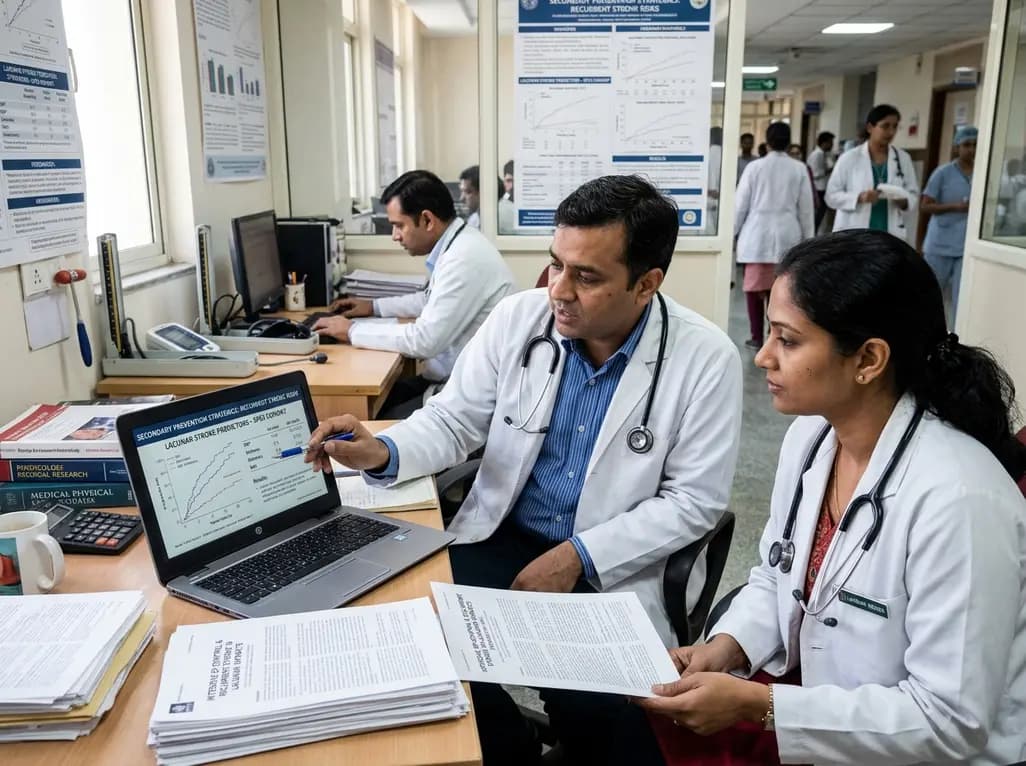
Explore vital recurrent stroke predictors in lacunar stroke patients managed with intensive blood pressure lowering. This analysis examines trial findings from SPS3 to uncover residual vascular risks, metabolic factors, and targeted secondary prevention strategies for high-risk neurological patients.
Today

Odisha has established India's first state-level clinical protocol specifically tailored for pregnant women with sickle cell disease. Developed with NHM and UNICEF, the framework provides structured antenatal screening, crisis mitigation, standardized referral pathways, and specialized interdisciplinary care.
Today

The Directorate General of Health Services directs Indian states to halt the hazardous reuse and reprocessing of single-use medical devices. Discover regulatory implications under the Drugs and Cosmetics Act, critical infection risks, legal liabilities, and operational changes required across clinical specialties.
Today

Mitochondria-targeted nanoparticles self-assembled from EGCG and L-glutamic acid effectively restore mitochondrial homeostasis, suppress synovial inflammation, and attenuate chondrocyte senescence in osteoarthritis, offering a promising disease-modifying nanotherapy.
Today

India is advancing preventive healthcare by integrating genomics, artificial intelligence, and quantum technologies. With the SANGAM programme sequencing one million Indian genomes, clinicians can unlock personalized therapies, detect cardiometabolic risks early, and curb the burden of diabetes and heart disease.
Today
