.webp&w=384&q=75)

Loading, please wait...
Loading, please wait...

Critical segmental bone defects in elderly patients present a significant clinical hurdle. These patients often suffer from limited autograft availability and compromised healing due to fibrous tissue invasion. However, a new research study introduces a development-based in vivo bioreactor bone strategy to overcome these challenges. By using BMP-2-loaded biomaterials, this method triggers the body's intrinsic developmental programs to engineer functional bone tissue.
The researchers developed vBR-Bone, which successfully recapitulates native osseous architecture. This includes the restoration of vasculature, cortical bone, trabeculae, and the bone marrow niche. In aged murine models, this technique rejuvenated bone bioactivity that is typically lost during aging. Furthermore, the in vivo bioreactor bone exhibited reduced senescence and significantly elevated remodeling capacity. This improvement directly enhances stem cell functionality within the defect site.
To address large segmental defects, the team used an asymmetric biomimetic periosteum. This structure inhibits fibrous invasion while permitting essential vascular ingrowth. Consequently, vBR-Bone fragments progressively integrated into functional trabecular bone within six weeks. Therefore, the strategy restores bone mineral density and volume even in aged environments. This compartmentalized approach effectively partitions the defect into manageable fragments for better regeneration.
The study also explored the underlying biological mechanisms. Multi-factors within the vBR-Bone reconstitute a specialized bone-remodeling microenvironment. Specifically, matrix-released TGF-β1 activates the PI3K/AKT/mTOR signaling axis. This process occurs via TRAF6-dependent ubiquitylation to promote robust osteogenesis. Thus, the strategy offers a clinically translatable solution for geriatric orthopedic care.
Unlike classical engineering, this strategy uses the patient's own body as a bioreactor. It triggers intrinsic developmental programs to create bone that mimics native architecture and vasculature.
The strategy reduces senescence and improves stem cell functionality. By restoring high bone turnover and remodeling capacity, it allows for faster repair in elderly patients with compromised healing.
The periosteum acts as a protective barrier. It prevents fibrous tissue from invading the defect while allowing blood vessels to grow into the new bone, creating an ideal space for regeneration.
Disclaimer: This content is for informational and educational purposes only and does not constitute medical advice. Always seek the advice of a qualified healthcare provider with any questions regarding a medical condition. Refer to the latest local and national guidelines for clinical practice.
References
Zhang W et al. Development-based In Vivo Bioreactor Strategy for Challenging Senescent Bone Reconstruction. Adv Sci (Weinh). 2026 Mar 09. doi: 10.1002/advs.202522408. PMID: 41801226.

Read summarized clinical updates, watch expert medical content, and earn CME certifications right from your smartphone.
Open your smartphone camera to scan and install.





A study presents an in vivo bioreactor strategy using BMP-2 to rejuvenate senescent bone and repair critical femoral defects in aged murine models....
7 months ago
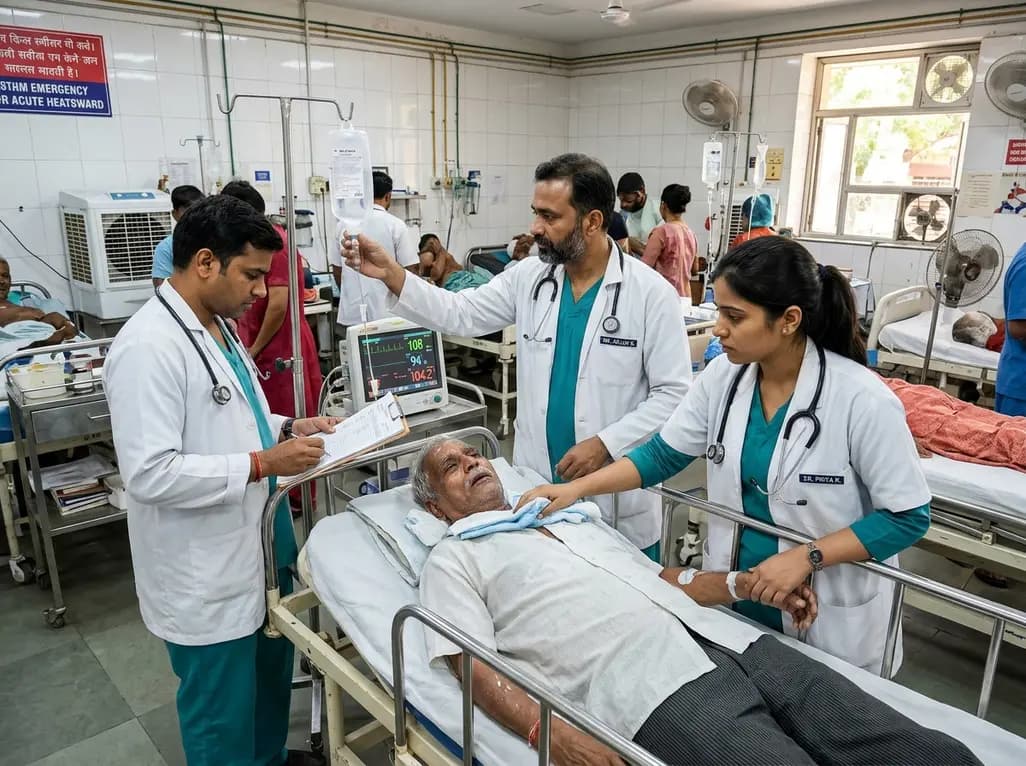
Recent epidemiological data reveals a dramatic surge in summer heat mortality driven by human-induced climate warming. This analysis explores the pathophysiological impacts on cardiac and renal systems, diagnostic dilemmas in death certification, and essential emergency cooling protocols for acute clinical care.
Today

Odisha has established India's first state-level clinical protocol specifically tailored for pregnant women with sickle cell disease. Developed with NHM and UNICEF, the framework provides structured antenatal screening, crisis mitigation, standardized referral pathways, and specialized interdisciplinary care.
Today

India is advancing preventive healthcare by integrating genomics, artificial intelligence, and quantum technologies. With the SANGAM programme sequencing one million Indian genomes, clinicians can unlock personalized therapies, detect cardiometabolic risks early, and curb the burden of diabetes and heart disease.
Today

A randomized controlled trial demonstrates that an eight-week dual-task training intervention significantly improves static and dynamic postural control over standard balance exercises in individuals with chronic ankle instability, addressing critical neurocognitive deficits during athletic and daily activities.
Today

A retrospective cohort study of 7,716 ICU patients from the MIMIC-IV database demonstrates that Gradient Boosting Decision Trees significantly outperform traditional SOFA scores in predicting in-hospital mortality among patients with sepsis and diabetes, with SHAP analysis providing clinical interpretability.
Today
