.webp&w=384&q=75)

Loading, please wait...
Loading, please wait...

Accurately assessing the progression of dementia is essential for modern clinical management. A recent study introduces a cognitive function prediction model that integrates plasma biomarkers with electroencephalogram (EEG) signals. This hybrid approach offers a more precise method for monitoring patients from mild cognitive impairment to moderate dementia. Traditionally, clinicians relied on singular diagnostic tools, yet this integration provides a far more comprehensive view of neurodegeneration.
Researchers evaluated 75 patients using machine learning to synthesize biochemical and electrophysiological data. Specifically, they combined plasma biomarkers like neurofilament light chain (NfL) and p-Tau181 with 2,737 time-frequency and connectivity features from resting-state EEG. Consequently, the results demonstrated that the hybrid model significantly outperformed plasma-only or EEG-only methods. With an R² value exceeding 0.74 across various cognitive assessments, the model proves highly effective in tracking patient decline.
Biochemical markers like NfL show a strong negative correlation with cognitive performance. However, biomarkers alone cannot capture the full physiological spectrum of cognitive decline. Therefore, adding EEG data helps bridge the gap between structural damage and functional brain activity. Furthermore, this multi-modal strategy allows for a more nuanced understanding of individual patient trajectories. Such insights are crucial for early intervention and personalized treatment strategies.
Moreover, the integration of 19-channel EEG features ensures that the functional connectivity of the brain is accurately mapped. This additional layer of data enhances the predictive power of the cognitive function prediction model significantly. As clinicians seek more accessible and non-invasive tools, this hybrid approach presents a viable future for dementia diagnostics in routine practice. Consequently, healthcare providers can gain deeper insights without relying solely on invasive procedures.
While the study highlights substantial improvements, external validation remains necessary to confirm these findings across broader populations. Nonetheless, the feasibility of using plasma and EEG in tandem is promising for geriatric and neurological clinics in India. Integrating these technologies can lead to earlier detection of cognitive shifts, allowing for better-informed care plans. Therefore, practitioners may soon utilize these automated models to augment standard neuropsychological testing and improve overall patient outcomes.
Standard tests like the MoCA or MMSE rely on patient performance, which can vary based on external factors. The hybrid model uses objective physiological data from blood and brain signals to provide a more consistent assessment of brain health.
Neurofilament light chain (NfL) and p-Tau181 were the primary indicators. NfL, in particular, correlated strongly with lower cognitive scores, reflecting its role as a marker for neuroaxonal damage.
While EEG and plasma tests are widely accessible, the specific integrated machine learning model is still undergoing research validation. However, its components are already frequently used in specialized Indian medical centers for individual assessments.
Disclaimer: This content is for informational and educational purposes only. It does not constitute professional medical advice, diagnosis, or treatment. Always seek the advice of your physician or other qualified healthcare provider with any questions you may have regarding a medical condition. Refer to the latest local and national guidelines for clinical practice.
References
Chen GW et al. Estimating cognitive function score from mild cognitive impairment to moderate dementia using a hybrid model combining plasma biomarkers with electroencephalogram signal. J Alzheimers Dis. 2026 Mar 13. doi: 10.1177/13872877261429861. PMID: 41823065.
Li TR et al. A prediction model of dementia conversion for mild cognitive impairment by combining plasma pTau181 and structural imaging features. CNS Neurosci Ther. 2024;30(1):e14454. doi: 10.1111/cns.14454.
Thijssen EH et al. Plasma biomarkers for diagnosis of Alzheimer's disease and prediction of cognitive decline in individuals with mild cognitive impairment. Nat Med. 2022;28(5):1024-1033. doi: 10.1038/s41591-022-01825-4.

Read summarized clinical updates, watch expert medical content, and earn CME certifications right from your smartphone.
Open your smartphone camera to scan and install.





A study highlights a hybrid model combining plasma biomarkers and EEG signals that significantly improves cognitive function score prediction in dementia st...
7 months ago

Recent epidemiological data reveals a dramatic surge in summer heat mortality driven by human-induced climate warming. This analysis explores the pathophysiological impacts on cardiac and renal systems, diagnostic dilemmas in death certification, and essential emergency cooling protocols for acute clinical care.
Today

Odisha has established India's first state-level clinical protocol specifically tailored for pregnant women with sickle cell disease. Developed with NHM and UNICEF, the framework provides structured antenatal screening, crisis mitigation, standardized referral pathways, and specialized interdisciplinary care.
Today

India is advancing preventive healthcare by integrating genomics, artificial intelligence, and quantum technologies. With the SANGAM programme sequencing one million Indian genomes, clinicians can unlock personalized therapies, detect cardiometabolic risks early, and curb the burden of diabetes and heart disease.
Today
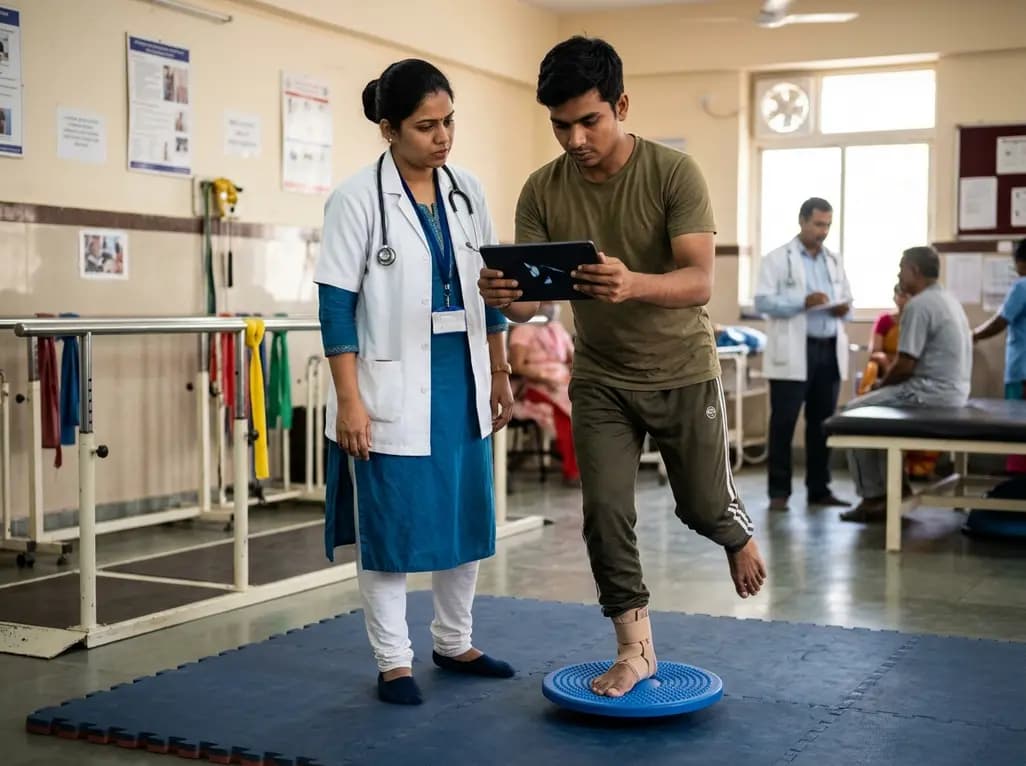
A randomized controlled trial demonstrates that an eight-week dual-task training intervention significantly improves static and dynamic postural control over standard balance exercises in individuals with chronic ankle instability, addressing critical neurocognitive deficits during athletic and daily activities.
Today

A retrospective cohort study of 7,716 ICU patients from the MIMIC-IV database demonstrates that Gradient Boosting Decision Trees significantly outperform traditional SOFA scores in predicting in-hospital mortality among patients with sepsis and diabetes, with SHAP analysis providing clinical interpretability.
Today
