.webp&w=384&q=75)

Loading, please wait...
Loading, please wait...

Skeletal muscles typically work in coordinated pairs to enable cyclic motion. While the contraction of one muscle stretches its antagonist, the body uses a unique mechanical response to maintain efficiency. Recently, researchers developed hierarchical artificial muscles that replicate this biological nonlinear elasticity. These innovative actuators employ supercoiled fishing line fibers to achieve a J-shaped stress-strain response. Consequently, the material remains soft at low strains to minimize resistance but stiffens at high strains to release energy economically.
For surgeons and orthopedic specialists, hierarchical artificial muscles offer a glimpse into the future of bionic limbs. Human tissue naturally prevents damage through its hierarchical architecture, which limits excessive elongation. Similarly, these new artificial fibers use advanced plying techniques to mimic that protective behavior. Therefore, prosthetic devices could soon offer more natural movement patterns while consuming significantly less power. Furthermore, these actuators allow for antagonistic actuation in robotic joints, much like the human biceps and triceps mechanism.
The research team demonstrated the power of hierarchical artificial muscles through a specialized climbing robot. Although the robot weighs only 14.4 grams, it can carry a payload over 14 times its own weight. Computational models using Cosserat rods reveal the physical mechanisms behind this strength. Because the fibers stiffen under tension, they prevent structural failure while maintaining flexibility. Additionally, this technology could revolutionize surgical robotics by providing more compliant and precise tools for minimally invasive procedures.
These muscles use a J-shaped stress-strain curve, meaning they offer low resistance during initial movement and high force during full contraction. This mimics natural muscle pairs and reduces the energy required for cyclic motions.
This curve allows materials to be soft and compliant at rest but extremely tough and rigid under high stress. It protects biological tissues from tearing and is essential for effective energy storage and release.
Yes, their lightweight and flexible nature makes them ideal for small-scale robotic tools. They provide the necessary strength for delicate tasks while ensuring the device remains compliant enough to prevent accidental tissue damage.
Disclaimer: This content is for informational and educational purposes only. It does not constitute medical advice or endorse any specific technology for clinical use. Refer to the latest local and national guidelines for clinical practice.
References
Tsai S et al. Hierarchical Artificial Muscle with Nonlinear Elasticity for Antagonistic and Cyclic Robotics. Adv Sci (Weinh). 2026 Mar 19. doi: 10.1002/advs.202521604. PMID: 41856930.
Ma et al. Design and application of 'J-shaped' stress-strain behavior in stretchable electronics: a review. PMC. 2017.
Higueras-Ruiz D et al. Cavatappi artificial muscles from drawing, twisting, and coiling polymer tubes. Sci Robot. 2021.

Read summarized clinical updates, watch expert medical content, and earn CME certifications right from your smartphone.
Open your smartphone camera to scan and install.





Scientists developed hierarchical artificial muscles that mimic the J-shaped stress-strain response of human tissue, enhancing robotic and prosthetic design...
7 months ago
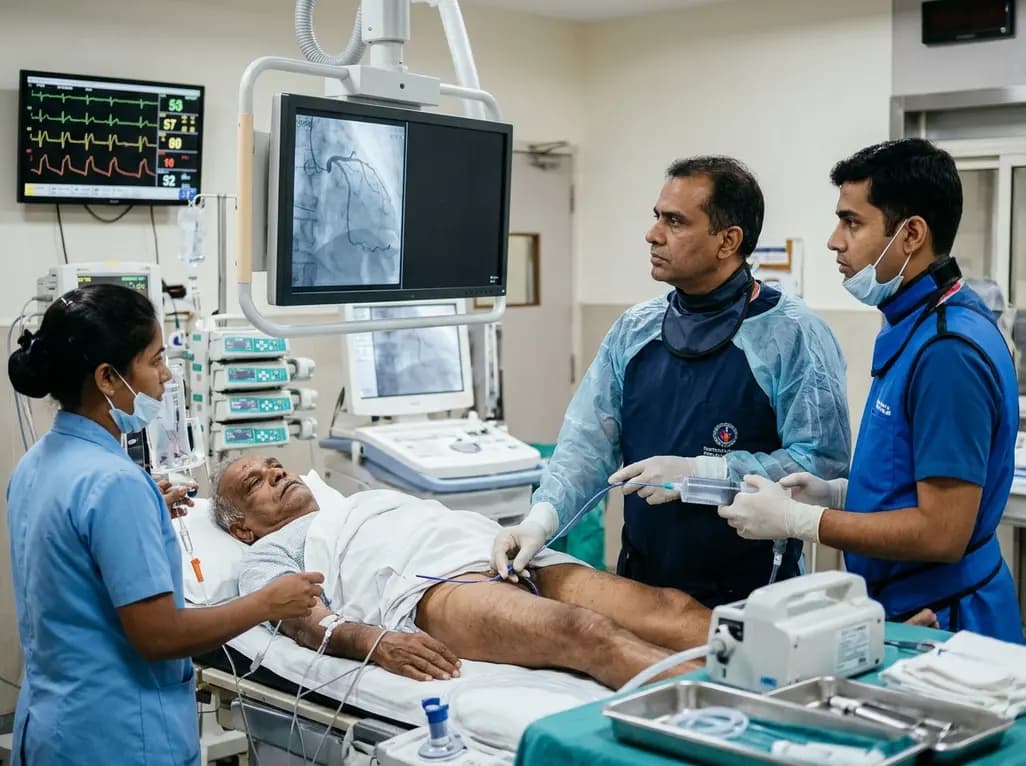
An elderly man with partially repaired Tetralogy of Fallot presented with STEMI caused by coronary embolism rather than atherosclerosis. Successful treatment with sustained mechanical aspiration thrombectomy underscores the vital need for high clinical vigilance in adult congenital heart disease.
Today

Demanding exhaustive hormonal profiling can inadvertently discourage clinical studies involving females. Methodological standards must align with the specific scientific question to expand, not restrict, equitable evidence for women.
Today

A recent study demonstrates that spinal oxygen sensors do not require mitochondrial electron transport to trigger sympathetic excitation during acute hypoxia, revealing new insights into how mitochondrial oxidative stress modulates autonomic tone in cardiovascular and neurological diseases.
Today

A novel calcium polyphosphate coacervate enables injectable bone implants with in situ hierarchical porosity via phase separation and gas foaming, significantly enhancing cell proliferation, energy metabolism, and osteogenic differentiation for minimally invasive bone defect repair.
Today

Following regulatory scrutiny from FSSAI regarding promotional representations and lean muscle preservation claims, Dr. Reddy's Laboratories and Nestlé Health Science are currently reviewing the branding and marketing strategy for their joint nutritional supplement Celevida GLP+.
Today
