.webp&w=384&q=75)

Loading, please wait...
Loading, please wait...

Age-related hearing loss is a common and highly prevalent condition. However, it is also frequently underrecognized in clinical settings. Therefore, implementing routine hearing screening in elderly populations is vital because it supports long-term biopsychosocial health. This new study protocol evaluates a specialized program. Specifically, researchers embedded the program in primary care to reach underserved groups. Since traditional audiology is often hard to access, this model offers a better path for patients. Consequently, the team expects higher participation rates and improved health outcomes. Also, this approach simplifies the journey for those in marginalized communities.
Hearing loss often leads to social isolation and communication issues. But, many older adults do not receive help early enough. Therefore, the study uses tablet-based audiometry and self-report tools. For instance, the HHI-S tool identifies subjective disability levels accurately. Additionally, the team randomizes patients to either counseling or usual care. Because this intervention happens at the point-of-care, it is more convenient for the patient. Furthermore, staff interviews will provide qualitative data. As a result, researchers can better understand participant attitudes and potential barriers. Then, they can refine the intervention for future use.
The study primarily focuses on feasibility and recruitment success. First, researchers will check adherence to the program. Next, they will monitor HHI-S scores over three months. Since the main goal is improved access, they will also track subsequent audiology service utilization. Finally, these findings will inform future trials. These trials will focus on quality of life and overall patient health. Because the target population is underserved, this research is very important for health equity. Similarly, it may serve as a scalable model for other geriatric clinics. Therefore, the results will likely influence future primary care guidelines.
The program integrates screening and counseling directly into routine primary care visits. Consequently, it is much more accessible for older adults who face transportation or cost barriers.
The researchers use a validated tablet-based pure tone audiometry tool and the HHI-S questionnaire. Therefore, they capture both objective clinical hearing loss and the patient's subjective experience of disability.
Disclaimer: This content is for informational and educational purposes only. It does not constitute professional medical advice, diagnosis, or treatment. Always seek the advice of your physician or other qualified healthcare provider with any questions you may have regarding a medical condition. Refer to the latest local and national guidelines for clinical practice.
References
1. Friedmann DR et al. Study protocol: feasibility of a hearing program in primary care for underserved older adults. Pilot Feasibility Stud. 2026 Feb 24. doi: 10.1186/s40814-026-01773-2. PMID: 41736137.
2. Goman AM, Reed NS, Lin FR. Addressing Age-Related Hearing Loss in Primary Care. JAMA. 2020;324(21):2203-2204.
3. World Health Organization. World report on hearing. Geneva: World Health Organization; 2021.

Read summarized clinical updates, watch expert medical content, and earn CME certifications right from your smartphone.
Open your smartphone camera to scan and install.





This study protocol evaluates a hearing screening program in primary care for underserved older adults, aiming to improve accessibility and health outcomes....
7 months ago
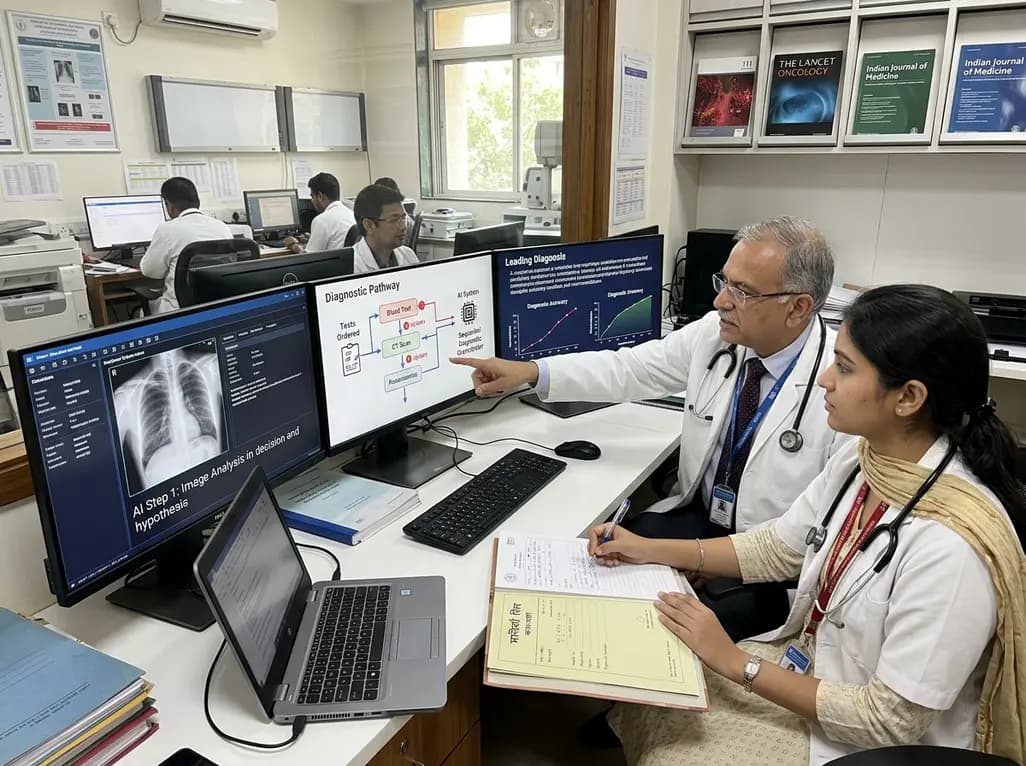
A breakthrough peer-reviewed study demonstrates that a sequential AI diagnosis system can mirror real-world clinical reasoning. By ordering stepwise tests and updating hypotheses dynamically, this multi-agent orchestrator achieved superior diagnostic accuracy while reducing investigative costs.
Today

A prenatal case highlights severe glutaric acidemia type II presenting as bilateral hyperechoic cystic kidneys at 18 weeks. Whole-exome sequencing revealed a novel homozygous ETFDH frameshift variant, demonstrating the power of rapid genetic testing in fetal renal anomalies.
Today

Review how tailored exercise programs benefit frail older patients with heart failure. Explore pathophysiological mechanisms, individualized training prescriptions, and strategies to overcome adherence barriers in clinical practice.
Yesterday

This comparative study evaluates posterior labral tears with and without glenohumeral instability, highlighting distinct demographic patterns, MRI underestimation in stable shoulders, and successful arthroscopic repair outcomes.
Yesterday

A clinical study demonstrates that early intervention with tocilizumab, either as monotherapy or bridged with corticosteroids, achieves significant proptosis reduction and resolves active inflammation in treatment-naive thyroid eye disease.
Yesterday
