.webp&w=384&q=75)

Loading, please wait...
Loading, please wait...

Public health departments often face immense pressure to address deep-seated social disparities. However, achieving lasting results requires more than traditional medical interventions. By implementing innovative health equity strategies, departments can begin to dismantle the structural barriers that cause health disparities. These strategies often involve an "inside-outside" approach. This framework helps organizations align their internal operations with external community-led movements for justice.
The inside-outside strategy consists of two primary spheres of action. The "inside" work refers to the internal transformations a health department must undergo. This includes training staff to understand structural racism and re-evaluating how internal policies support or hinder equity. Consequently, the organization becomes better equipped to navigate political landscapes and support social justice movements authentically. Furthermore, leadership must build a culture that values power-sharing and community accountability.
The "outside" work focuses on building genuine alliances with community power-building organizations (CPBOs). These groups represent the interests of marginalized populations and possess the grassroots power to demand policy changes. By allying with them, health departments provide the data and technical expertise needed to turn community demands into legislative reality. Therefore, this collaboration bridges the gap between governmental resources and community-led advocacy.
Real change occurs when laws, regulations, and norms are modified to favor social justice. For instance, examples from Illinois and California show health departments successfully partnering with organizers to influence housing policies and worker rights. These partnerships demonstrate that public health is not just about clinical care. Instead, it involves participating in an ecosystem of organizations dedicated to fairness in social arrangements. Moreover, such strategies ensure that health equity is not a fleeting goal but a structural mandate.
An inside-outside strategy involves internal organizational changes (inside) paired with external community partnerships (outside). This dual approach allows health departments to support social movements while simultaneously improving their own internal capacity for equity work.
CPBOs are vital because they hold the collective power needed to shift policies and laws. While health departments have technical data, CPBOs have the community trust and political leverage to drive structural reforms that address the root causes of health inequities.
No, health departments often lack the political power to change laws or regulations on their own. By acting as part of a larger ecosystem of social justice organizations, they can more effectively advocate for systemic changes that promote health for all.
Disclaimer: This content is for informational and educational purposes only. It is not intended to provide medical advice or to be a substitute for professional healthcare. Refer to the latest local and national guidelines for clinical practice.
References
Iton AB et al. How Health Departments Can Use Inside-Outside Strategies to Build Partnerships With Community Power-Building Organizations to Achieve Structural Change. Milbank Q. 2026 Feb 21. doi: 10.1111/1468-0009.70068. PMID: 41722029.
Heller J. Using an Inside-Outside Strategy to Build Power and Advance Equity. Human Impact Partners. 2025.
Aly S, Diaby A, Drix J. The Five Dimensions of Inside-Outside Strategy: A Guide for Public Health and Social Movements. National Collaborating Centre for Determinants of Health. 2025.
"
Read summarized clinical updates, watch expert medical content, and earn CME certifications right from your smartphone.
Open your smartphone camera to scan and install.





Health departments can achieve health equity by adopting an inside-outside strategy to partner with community power-building organizations....
8 months ago

Explore vital recurrent stroke predictors in lacunar stroke patients managed with intensive blood pressure lowering. This analysis examines trial findings from SPS3 to uncover residual vascular risks, metabolic factors, and targeted secondary prevention strategies for high-risk neurological patients.
Today
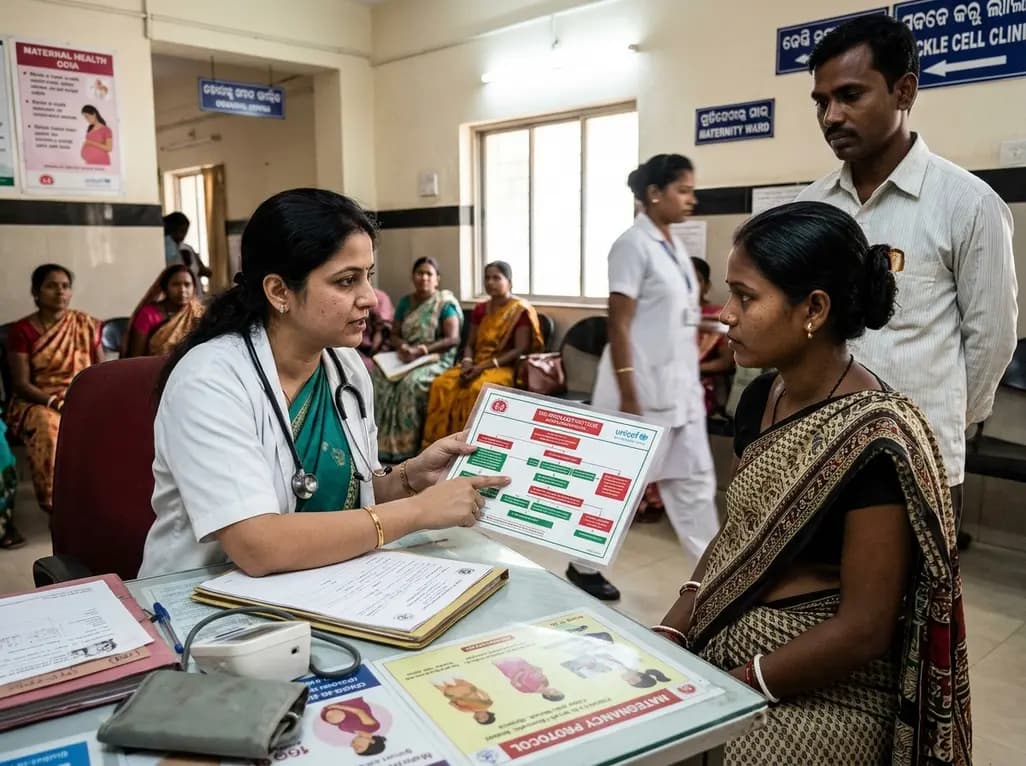
Odisha has established India's first state-level clinical protocol specifically tailored for pregnant women with sickle cell disease. Developed with NHM and UNICEF, the framework provides structured antenatal screening, crisis mitigation, standardized referral pathways, and specialized interdisciplinary care.
Today

The Directorate General of Health Services directs Indian states to halt the hazardous reuse and reprocessing of single-use medical devices. Discover regulatory implications under the Drugs and Cosmetics Act, critical infection risks, legal liabilities, and operational changes required across clinical specialties.
Today

Mitochondria-targeted nanoparticles self-assembled from EGCG and L-glutamic acid effectively restore mitochondrial homeostasis, suppress synovial inflammation, and attenuate chondrocyte senescence in osteoarthritis, offering a promising disease-modifying nanotherapy.
Today

India is advancing preventive healthcare by integrating genomics, artificial intelligence, and quantum technologies. With the SANGAM programme sequencing one million Indian genomes, clinicians can unlock personalized therapies, detect cardiometabolic risks early, and curb the burden of diabetes and heart disease.
Today
