.webp&w=384&q=75)

Loading, please wait...
Loading, please wait...

Ghana recently joined other African nations in declining a major health partnership with the United States. This decision highlights growing health data privacy concerns across the continent. According to officials, the proposed deal lacked sufficient safeguards for sensitive citizen information. Consequently, Ghana has prioritized national data sovereignty over significant foreign funding.
The proposed agreement was worth approximately $300 million over five years. However, the Ghanaian Data Protection Commission identified several legal and ethical breaches. Specifically, the deal would have granted up to 10 US entities access to national health datasets. Furthermore, these entities would not have needed prior approval from the Ghanaian government. Instead, the US would simply notify the country after data utilization. Therefore, officials argued that this arrangement effectively outsourced the nation's health architecture. Moreover, the scope of access extended beyond raw data to include dashboards and data models.
Ghana is the latest country to walk away from the \"America First\" global health funding model. For instance, Zimbabwe rejected a similar proposal earlier this year. Zambia is also currently reviewing sections of its draft agreement with significant skepticism. Activists claim these deals often lack adequate protections for pathogen and genomic information. Additionally, some agreements are viewed as overly restrictive regarding which healthcare providers receive support. As a result, the Africa CDC has expressed major concerns regarding international data sharing. Ghana now seeks improved terms that respect local governance and citizen privacy.
Q1: Why did Ghana reject the US health agreement?
Ghana rejected the deal primarily due to health data privacy concerns. The agreement would have allowed foreign access to sensitive data without adequate local oversight or prior approval.
Q2: How much funding was involved in the rejected Ghana-US deal?
The deal was worth about $300 million total. It included $109 million in direct US funding over five years to fight diseases like malaria and HIV/AIDS.
Disclaimer: This content is for informational and educational purposes only. It does not constitute medical advice or replace professional judgment. Refer to the latest local and national guidelines for clinical practice.
References

Read summarized clinical updates, watch expert medical content, and earn CME certifications right from your smartphone.
Open your smartphone camera to scan and install.





Ghana joins Zimbabwe in rejecting a US health deal due to health data privacy concerns and lack of oversight regarding sensitive citizen information....
5 months ago
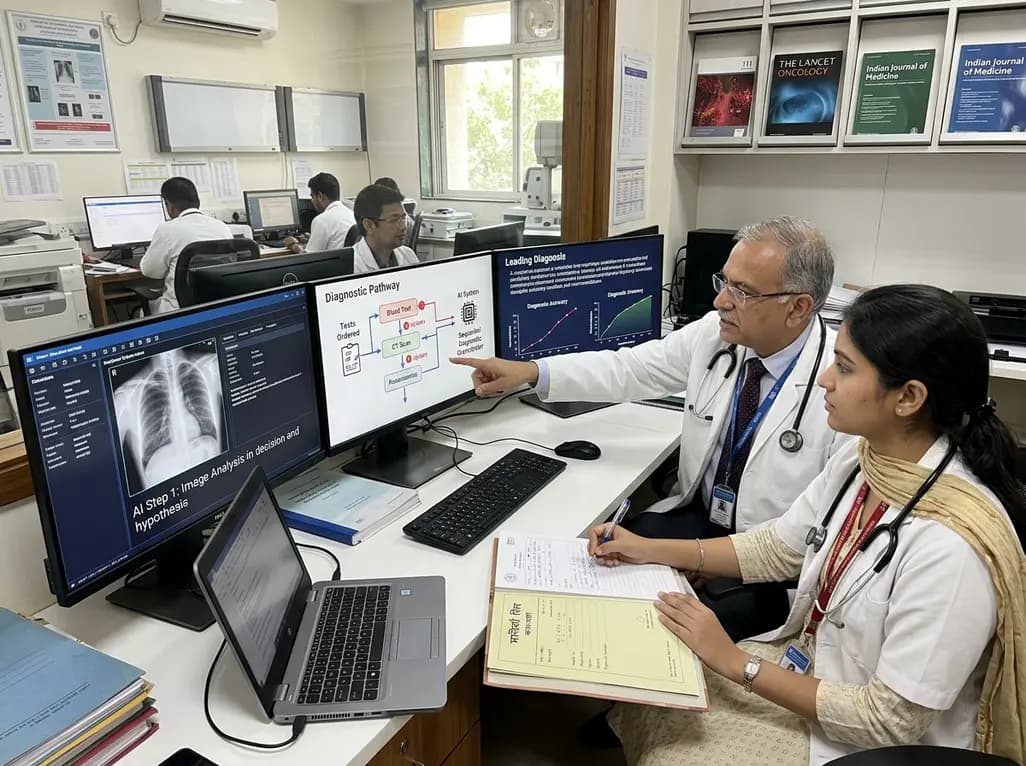
A breakthrough peer-reviewed study demonstrates that a sequential AI diagnosis system can mirror real-world clinical reasoning. By ordering stepwise tests and updating hypotheses dynamically, this multi-agent orchestrator achieved superior diagnostic accuracy while reducing investigative costs.
Today

A prenatal case highlights severe glutaric acidemia type II presenting as bilateral hyperechoic cystic kidneys at 18 weeks. Whole-exome sequencing revealed a novel homozygous ETFDH frameshift variant, demonstrating the power of rapid genetic testing in fetal renal anomalies.
Today

Review how tailored exercise programs benefit frail older patients with heart failure. Explore pathophysiological mechanisms, individualized training prescriptions, and strategies to overcome adherence barriers in clinical practice.
Yesterday

This comparative study evaluates posterior labral tears with and without glenohumeral instability, highlighting distinct demographic patterns, MRI underestimation in stable shoulders, and successful arthroscopic repair outcomes.
Yesterday

A clinical study demonstrates that early intervention with tocilizumab, either as monotherapy or bridged with corticosteroids, achieves significant proptosis reduction and resolves active inflammation in treatment-naive thyroid eye disease.
Yesterday
