.webp&w=384&q=75)

Loading, please wait...
Loading, please wait...

Distant metastases to the head and neck region are rare but clinically significant. They often present a diagnostic dilemma for surgeons and oncologists alike. Frequently, these lesions originate from infraclavicular primary tumors, such as those in the lung, breast, or kidneys. Identifying these secondary growths early is vital because they often represent the first clinical manifestation of an underlying malignancy. Consequently, a thorough understanding of their presentation can lead to faster primary tumor detection.
A recent extensive analysis of 136 cases highlights the patterns of these distant spreads. Most metastases appeared in the cervical lymph nodes, accounting for nearly 87% of cases. Furthermore, when organ-specific spread occurred, the parotid gland was the most common site. Therefore, any unexplained parotid or neck swelling requires careful investigation.
Histology plays a critical role in the diagnostic workup. While primary head and neck cancers are typically squamous cell carcinomas, metastases from remote sites often show adenocarcinoma. In fact, adenocarcinoma was the most frequent histological finding in the study group. Moreover, the majority of patients presented with indolent or painless swelling. Because 66.9% of these cases were the first sign of a primary tumor, physicians must look beyond the neck when they find unusual histology.
The primary sources identified were primarily lung carcinomas (33.1%), followed by breast and renal cell carcinomas. However, isolated cervical metastasis remains rare, occurring in only a small fraction of patients. Instead, most presentations indicate advanced or disseminated disease. Therefore, staging investigations like PET-CT are essential for accurate management.
Early clinical manifestation makes cervical metastases a valuable diagnostic window. Biopsy accessibility in the supraclavicular region allows for rapid histological confirmation. Nevertheless, clinicians must recognize that distant cervical metastasis generally signals a late-stage primary cancer. Treatment typically involves a multidisciplinary approach, focusing on the primary site while managing the metastatic burden.
Lung cancer is the most frequent primary source, followed by breast (mammary) and renal cell carcinomas. These three types account for the majority of distant metastases found in the head and neck region.
Primary head and neck cancers are usually squamous cell carcinomas. If a biopsy reveals adenocarcinoma, it strongly suggests that the cancer originated from a site below the clavicle, such as the lungs or gastrointestinal tract.
No. In many cases, a neck mass is the first sign of an infraclavicular primary tumor. Finding a metastasis in the supraclavicular region often indicates a remote primary site rather than a local one.
Disclaimer: This content is for informational and educational purposes only and does not constitute medical advice. Always seek the advice of a physician or other qualified health provider with any questions you may have regarding a medical condition. Refer to the latest local and national guidelines for clinical practice.
References
Franzen AM et al. Head and Neck Metastases From Infraclavicular Primary Tumors: Analysis of 136 Cases. Laryngoscope. 2026 Mar 15. doi: 10.1002/lary.70496. PMID: 41832667.
Psychogios G, et al. Incidence of occult cervical metastasis in head and neck carcinomas: development over time. J Surg Oncol. 2013;107(4):384-387.
Mutlu F, et al. A clinicopathological evaluation of the patients with supraclavicular lymphadenopathy: a retrospective analysis. ENT Updates. 2021;11(1):1-5.
"
Read summarized clinical updates, watch expert medical content, and earn CME certifications right from your smartphone.
Open your smartphone camera to scan and install.





A comprehensive analysis of 136 cases where head and neck metastases were the first sign of primary cancers located below the clavicle, such as lung and bre...
7 months ago

Recent epidemiological data reveals a dramatic surge in summer heat mortality driven by human-induced climate warming. This analysis explores the pathophysiological impacts on cardiac and renal systems, diagnostic dilemmas in death certification, and essential emergency cooling protocols for acute clinical care.
Today
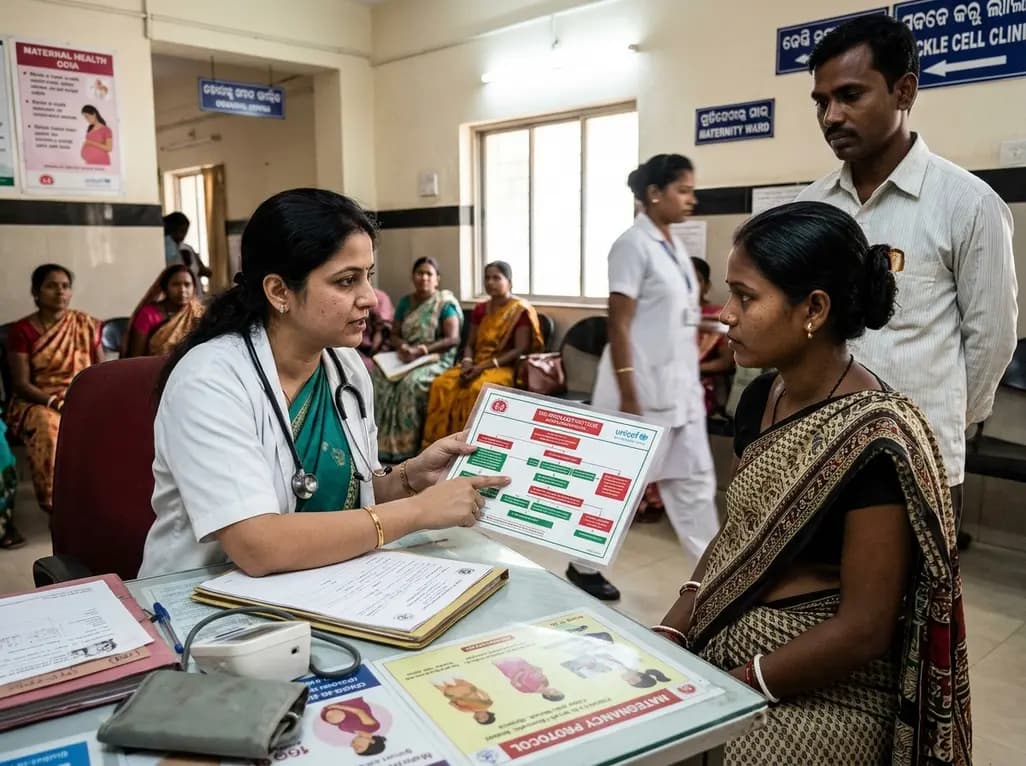
Odisha has established India's first state-level clinical protocol specifically tailored for pregnant women with sickle cell disease. Developed with NHM and UNICEF, the framework provides structured antenatal screening, crisis mitigation, standardized referral pathways, and specialized interdisciplinary care.
Today

India is advancing preventive healthcare by integrating genomics, artificial intelligence, and quantum technologies. With the SANGAM programme sequencing one million Indian genomes, clinicians can unlock personalized therapies, detect cardiometabolic risks early, and curb the burden of diabetes and heart disease.
Today

A randomized controlled trial demonstrates that an eight-week dual-task training intervention significantly improves static and dynamic postural control over standard balance exercises in individuals with chronic ankle instability, addressing critical neurocognitive deficits during athletic and daily activities.
Today

A retrospective cohort study of 7,716 ICU patients from the MIMIC-IV database demonstrates that Gradient Boosting Decision Trees significantly outperform traditional SOFA scores in predicting in-hospital mortality among patients with sepsis and diabetes, with SHAP analysis providing clinical interpretability.
Today
