.webp&w=384&q=75)

Loading, please wait...
Loading, please wait...

The relationship between Hallux Valgus and Flatfoot has long been a subject of clinical debate in orthopedic medicine. Hallux valgus (HV) involves a progressive deformity of the first metatarsophalangeal joint. Furthermore, physicians often observe a concomitant collapse of the medial longitudinal arch (MLA), commonly known as flatfoot. Consequently, a recent finite element study aimed to quantify how these two conditions interact to influence foot biomechanics and joint stress. The researchers sought to determine if MLA attenuation directly worsens the severity of HV.
Researchers utilized 3D finite element foot models to simulate various stages of HV and MLA attenuation. The results demonstrated that plantar pressure in the medial foot area increases as HV severity worsens. Moreover, when combined with MLA collapse, this pressure elevation becomes significantly more pronounced. Therefore, understanding the structural integrity of the arch is essential for predicting disease progression. The study particularly highlighted that flexible flatfoot deformity significantly alters the load distribution across the entire foot complex.
The study found that stress shifts across the metatarsal shafts during the progression of HV. Specifically, the equivalent stress in the first metatarsal shaft decreases, while stress in the other metatarsals increases. Additionally, every joint within the MLA experiences heightened equivalent stress when the arch collapses. All medial ligaments in the ankle also showed increased tension. These findings suggest that addressing the arch may be as critical as correcting the hallux deformity itself to ensure long-term stability.
This correlation suggests that therapeutic management should account for both the hallux angle and arch height. By stabilizing the MLA, clinicians might prevent the further deterioration of the first ray. Furthermore, these insights could lead to more refined surgical techniques that prioritize global foot stability over isolated deformity correction. Future research should continue to investigate intrinsic factors that contribute to these combined deformities.
Flatfoot or MLA collapse increases the load on the medial aspect of the foot. This structural shift places excessive stress on the first metatarsophalangeal joint, potentially accelerating the development of hallux valgus.
Yes, stabilizing the medial longitudinal arch through orthotics or surgery may reduce the biomechanical triggers that worsen hallux valgus. This dual approach helps balance joint and ligament stress across the entire foot.
Disclaimer: This content is for informational and educational purposes only. It does not constitute medical advice or establish a doctor-patient relationship. Always seek the advice of a qualified healthcare provider for any questions regarding a medical condition. Refer to the latest local and national guidelines for clinical practice.
References
Zhang Y et al. Finite element study of the role of medial longitudinal arch in hallux valgus deformity. Bone Joint Res. 2026 Mar 25. doi: 10.1302/2046-3758.153.BJR-2025-0021.R2. PMID: 41878874.
Choi YH et al. Hallux valgus and pes planus: Correlation analysis using deep learning-assisted radiographic angle measurements. Foot Ankle Surg. 2025 Feb;31(2):170-176. doi: 10.1016/j.fas.2024.09.003.
Liang YF et al. Association between knee osteoarthritis and foot deformities: epidemiological analysis of hallux valgus and flatfoot. Ann Med. 2025 Dec;57(1):2536213. doi: 10.1080/07853890.2025.2536213.
"
Read summarized clinical updates, watch expert medical content, and earn CME certifications right from your smartphone.
Open your smartphone camera to scan and install.





A finite element study reveals the significant biomechanical correlation between hallux valgus severity and medial longitudinal arch (MLA) collapse....
5 months ago
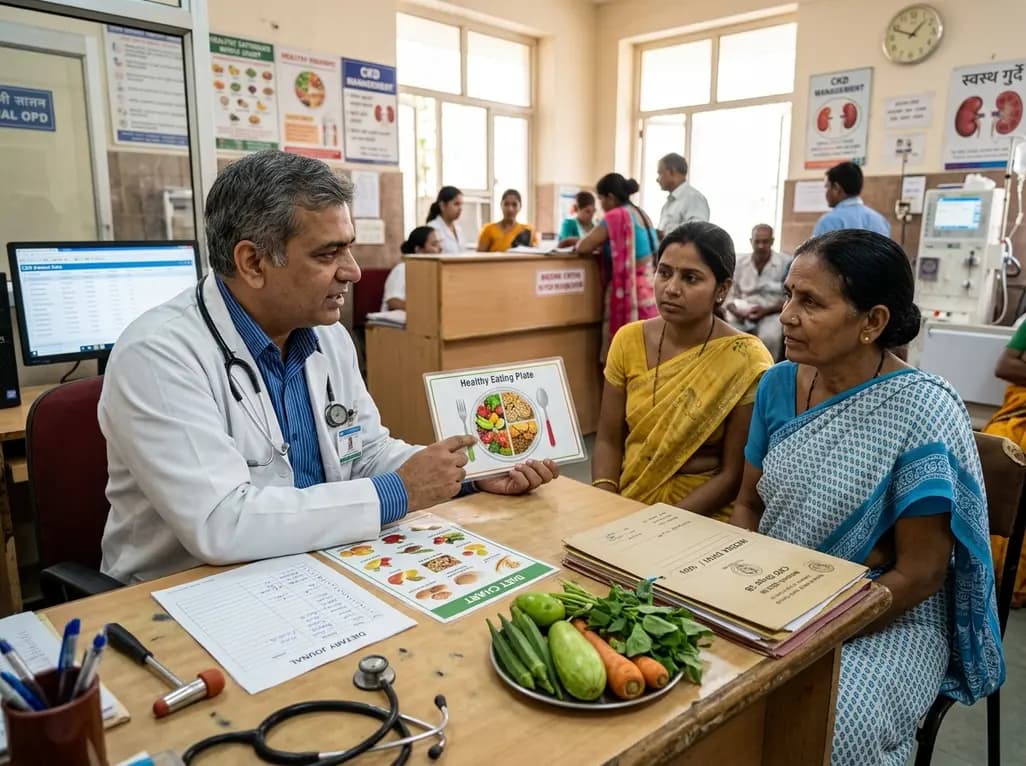
A large NHANES cohort study reveals that higher Healthy Eating Index scores significantly reduce all-cause mortality risk in CKD patients by 45%. This analysis highlights the importance of comprehensive diet quality and medical nutrition therapy in renal care to optimize long-term clinical survival.
Today

Explore real-world data showing how private oncogenetics and molecular tumor boards achieve 3-week consult turnaround, high ctDNA actionability, and vital germline variant detection, enhancing individualized cancer care and familial risk assessment.
Today
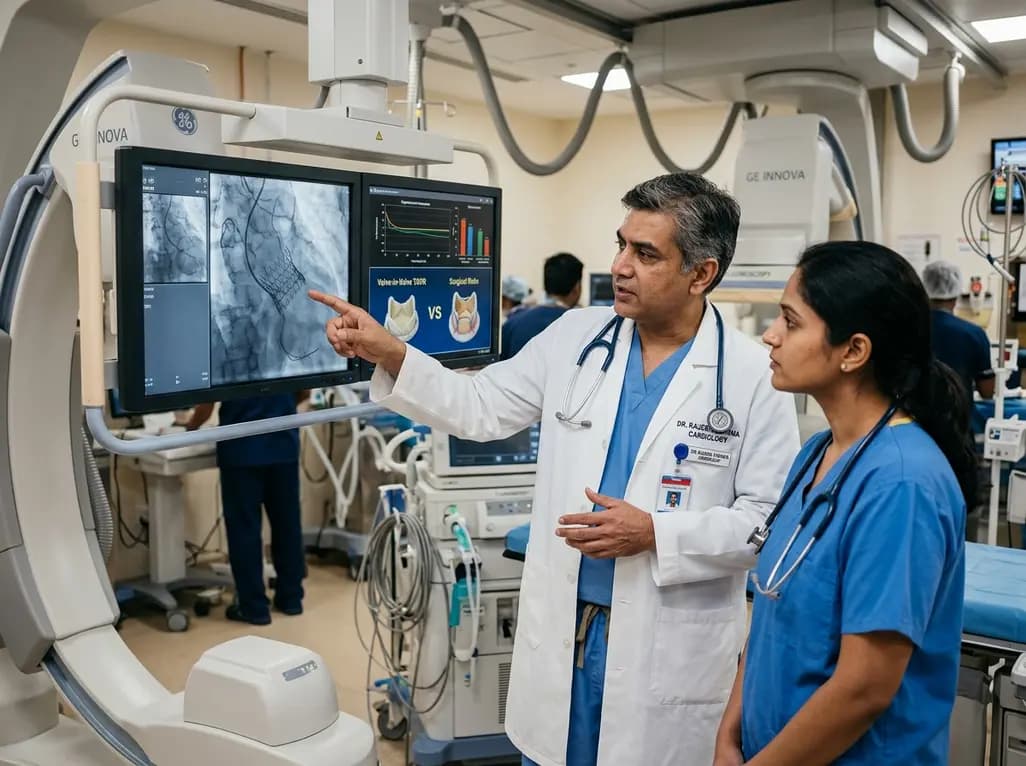
A meta-analysis of 13 propensity score-matched studies shows ViV-TAVR delivers lower early mortality and reduced bleeding compared to redo-SAVR for degenerated bioprosthetic aortic valves, though long-term hemodynamics warrant careful anatomical and patient-centered evaluation.
Today
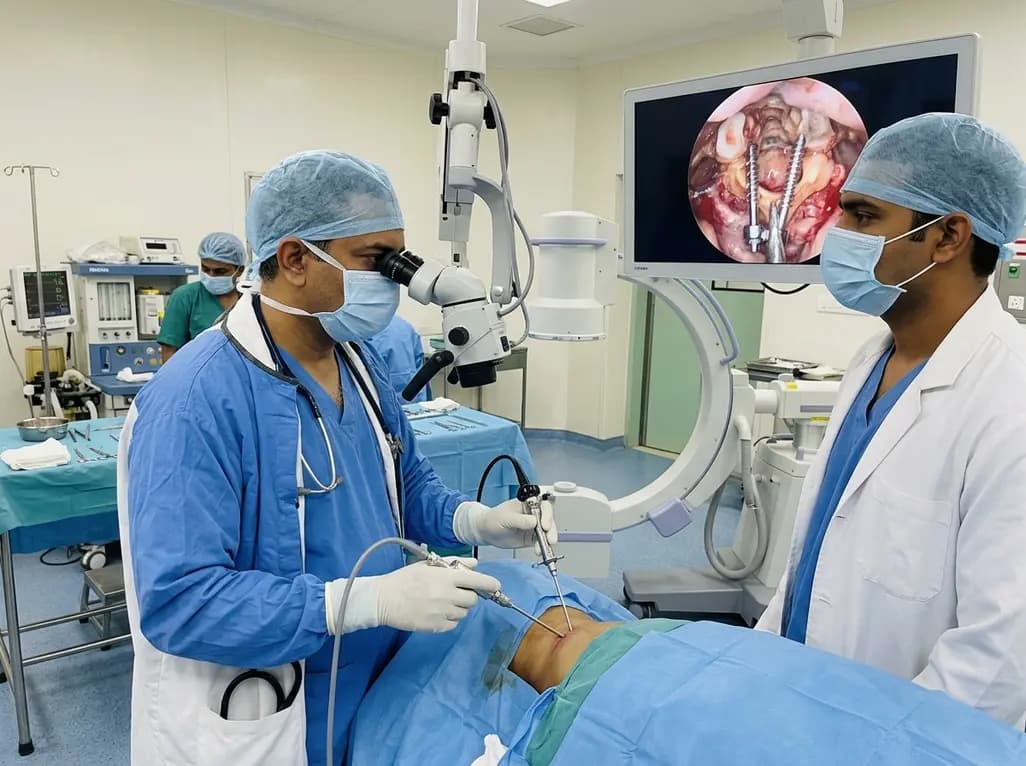
Endoscopic posterior cervical fusion combines minimally invasive decompression, joint preparation, and rigid screw-rod fixation for atlantoaxial pathologies. Early clinical findings demonstrate solid bony union, excellent symptom relief, and minimal soft-tissue morbidity without significant vascular compromise.
Today

The All-India Food Processors' Association has approached the Supreme Court to oppose FSSAI's proposed per-100g benchmark for front-of-pack warning labels, advocating instead for a per-serving threshold. We explore the regulatory showdown, nutritional evidence, and implications for clinical lifestyle counseling.
Today
