.webp&w=384&q=75)

Loading, please wait...
Loading, please wait...

Hypertensive disorders of pregnancy (HDP) remain a major challenge for obstetricians globally. Recent research from the Tongji-Huaxi-Shuangliu Birth Cohort highlights a significant link between maternal grip strength and HDP risk. This study suggests that a simple, non-invasive measure of physical strength could assist in early risk stratification. Consequently, healthcare providers may identify women at risk for gestational hypertension and preeclampsia much earlier in their journey.
The prospective analysis included 6,802 pregnant women. Researchers measured absolute grip strength (AGS) and relative indices normalized to weight or BMI during the first trimester. Notably, women with higher grip strength in early pregnancy showed a significantly lower risk of developing HDP. Specifically, those in the highest quartile of strength had a 65% lower risk compared to the lowest quartile.
Moreover, the findings revealed a nonlinear relationship for absolute grip strength. The risk of HDP decreased linearly once grip strength exceeded a threshold of 18.1 kg. In addition, relative grip strength (RGS) measures demonstrated a consistent linear association with reduced risk. These strength measures also correlated with favorable metabolic profiles. Women with higher RGS tended to have lower levels of low-density lipoprotein cholesterol and C-reactive protein.
Furthermore, integrating grip strength assessments into routine antenatal care could offer a low-cost screening method. In countries like India, where maternal morbidity due to hypertension is high, such simple tools are invaluable. Therefore, this physical biomarker provides a practical way to monitor maternal health without expensive lab equipment.
Lower grip strength often reflects poor muscle mass and underlying metabolic health issues. Clinical evidence indicates that women with lower physical strength are more likely to develop hypertensive disorders like preeclampsia during their pregnancy.
While both measures are useful, relative grip strength—which accounts for BMI or body weight—showed a clearer linear association with reduced HDP risk in recent cohort studies.
Research suggests that a threshold of 18.1 kg is significant for absolute grip strength. Above this level, the risk of developing hypertension during pregnancy begins to decrease linearly.
Disclaimer: This content is for informational and educational purposes only and does not constitute medical advice or a professional relationship. Always seek the advice of a physician or other qualified health provider with any questions regarding a medical condition. Refer to the latest local and national guidelines for clinical practice.
References
Wang Y et al. Association between grip strength and hypertensive disorders of pregnancy: Prospective analyses in the Tongji-Huaxi-Shuangliu Birth Cohort. Chin Med J (Engl). 2026 Apr 01. doi: 10.1097/CM9.0000000000004024. PMID: 41922913.
Leeman L, et al. Hypertensive Disorders of Pregnancy. Am Fam Physician. 2016;93(2):121-127.
Mbada CE, et al. Hand Grip Strength in Pregnant and Non-Pregnant Females. Middle East J Rehabil Health Stud. 2015;2(2):e27641.

Read summarized clinical updates, watch expert medical content, and earn CME certifications right from your smartphone.
Open your smartphone camera to scan and install.





A large cohort study finds that higher grip strength in early pregnancy is linked to a significantly lower risk of hypertensive disorders like preeclampsia....
6 months ago
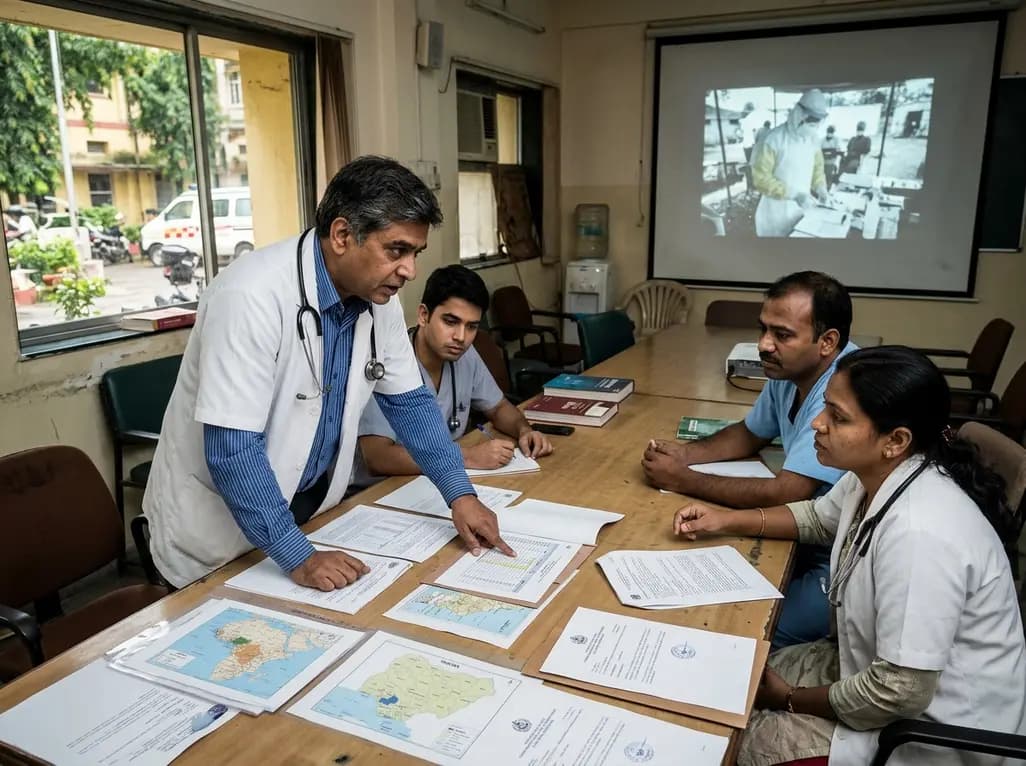
Following Nigeria's first recorded Ebola case linked to regional travel, the Africa CDC has convened an emergency ministerial summit. This alert underscores critical clinical priorities for healthcare professionals, including differentiating early viral infection from malaria, implementing barrier nursing, and triage.
Today

Leucine Rich Bio has introduced South Asia's first comprehensive vaginal microbiome test, BugSpeaks. By profiling microbial dysbiosis, pathogens, and antimicrobial resistance, this next-generation diagnostic platform provides clinicians with deeper insights into recurrent infections, fertility, and reproductive health.
Today

Review how tailored exercise programs benefit frail older patients with heart failure. Explore pathophysiological mechanisms, individualized training prescriptions, and strategies to overcome adherence barriers in clinical practice.
Today

This comparative study evaluates posterior labral tears with and without glenohumeral instability, highlighting distinct demographic patterns, MRI underestimation in stable shoulders, and successful arthroscopic repair outcomes.
Today

A clinical study demonstrates that early intervention with tocilizumab, either as monotherapy or bridged with corticosteroids, achieves significant proptosis reduction and resolves active inflammation in treatment-naive thyroid eye disease.
Today
