.webp&w=384&q=75)

Loading, please wait...
Loading, please wait...

India's leading private healthcare providers are currently reevaluating their involvement in government health schemes India. Hospitals like Max Healthcare and Narayana Health report significant revenue pressure. Consequently, experts suggest a shift toward more sustainable payer mixes. This trend reflects growing frustration over pricing curbs and payment delays. Furthermore, the share of revenue from these programs is expected to decline by 2027.
Industry data indicates that schemes like CGHS and ECHS account for roughly 25% of revenue at top facilities. However, low reimbursement rates often force hospitals to sell services below cost. For instance, Max Healthcare reported a Rs 200-crore impact from chemotherapy drug discounts. Moreover, hospitals are now capping bed allocations for these patients. These strategic moves aim to protect working capital and ensure long-term viability. As a result, many groups are leaning on private patients and insurance categories to bolster their earnings.
Many leading healthcare groups are now moving toward payers with shorter collection periods. Consequently, this shift helps maintain healthier working capital during economic uncertainty. Furthermore, some facilities have started pledging government receivables as collateral for short-term loans. This situation highlights the urgent need for rate revisions to sustain public-private partnerships. Although some revisions occurred recently, the full financial impact remains uncertain. Experts believe that without structural changes, the participation of top-tier hospitals will continue to dwindle.
Q1: Which schemes are primarily affected by these hospital decisions?
The Central Government Health Scheme (CGHS) and the Ex-Servicemen Contributory Health Scheme (ECHS) are the primary programs facing participation challenges due to low rates.
Q2: How are hospitals managing the financial losses from these schemes?
Hospitals are managing losses by capping bed allocations for scheme patients and focusing on high-value treatments for private and insured patients.
Disclaimer: This content is for informational and educational purposes only. It does not constitute medical advice or replace professional judgment. Refer to the latest local and national guidelines for clinical practice.
References

Read summarized clinical updates, watch expert medical content, and earn CME certifications right from your smartphone.
Open your smartphone camera to scan and install.





Major private hospitals in India are scaling back government health scheme participation due to low rates and payment delays affecting financial sustainabil...
5 months ago

A retrospective cohort study of 7,716 ICU patients from the MIMIC-IV database demonstrates that Gradient Boosting Decision Trees significantly outperform traditional SOFA scores in predicting in-hospital mortality among patients with sepsis and diabetes, with SHAP analysis providing clinical interpretability.
Today
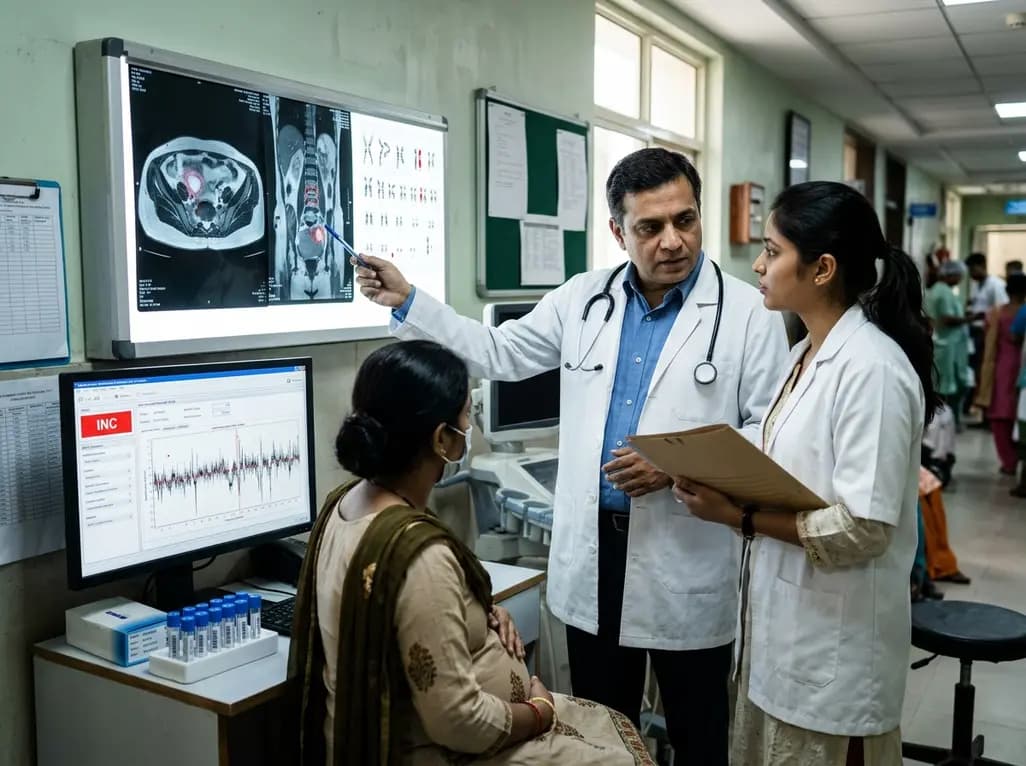
Occult maternal malignancy accounts for 3.82% of persistent unreportable NIPT results with genomic noise. Multiple chromosomal aberrations, notably on chromosome 18, warrant thorough oncological evaluation and whole-body MRI to ensure timely maternal diagnosis while preserving fetal care.
Today
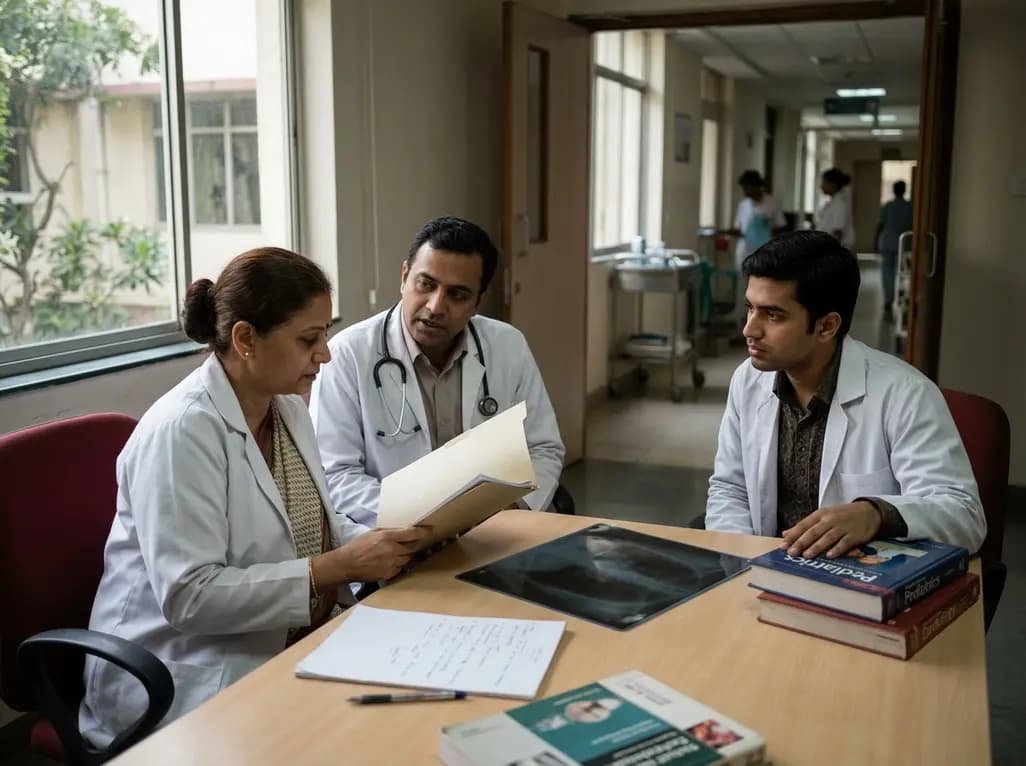
This article reviews the forensic and clinical complexities of acute myocarditis arising on left ventricular hypertrophy in children, highlighting early diagnostic red flags and multidisciplinary postmortem autopsy protocols.
Today

This comparative study evaluates posterior labral tears with and without glenohumeral instability, highlighting distinct demographic patterns, MRI underestimation in stable shoulders, and successful arthroscopic repair outcomes.
Yesterday

A clinical study demonstrates that early intervention with tocilizumab, either as monotherapy or bridged with corticosteroids, achieves significant proptosis reduction and resolves active inflammation in treatment-naive thyroid eye disease.
Yesterday
