.webp&w=384&q=75)

Loading, please wait...
Loading, please wait...

The global stroke burden remains a significant public health challenge because lifestyle factors drive a majority of cases. Recent findings from the Global Burden of Disease Study 2021 (GBD 2021) highlight how alcohol and tobacco use contribute to stroke-related mortality and disability. Although age-standardized rates currently show improvement, the total number of deaths remains alarmingly high. Therefore, healthcare providers must prioritize modifiable risk factor management to protect patient health.
In 2021, tobacco use led to over 1.07 million stroke-related deaths worldwide. During the same period, alcohol consumption resulted in more than 360,000 deaths. However, age-standardized mortality rates (ASMR) for both risks actually declined between 1990 and 2021. This paradox occurs because population aging and growth offset the individual gains in health outcomes. Consequently, the overall number of disability-adjusted life years (DALYs) continues to increase.
Effectively reducing the global stroke burden requires targeted interventions for different demographics. For instance, the burden often remains higher among males and older age groups for tobacco-related events. Conversely, alcohol-related stroke impact is frequently prominent in middle-aged adults. Furthermore, low-sociodemographic regions face unique challenges with stagnant mortality rates. Thus, clinicians should advocate for stronger tobacco and alcohol control policies. Moreover, early screening and patient education are essential for long-term stroke prevention.
Tobacco use damages blood vessels and promotes atherosclerosis, while high alcohol intake raises blood pressure and contributes to cardiac arrhythmias, both of which are major stroke precursors.
While age-standardized rates are falling globally due to better healthcare, the total number of stroke cases and deaths is rising because of an aging and growing population.
Disclaimer: This content is for informational and educational purposes only and does not constitute professional medical advice, diagnosis, or treatment. Always seek the advice of your physician or other qualified health provider with any questions you may have regarding a medical condition. Refer to the latest local and national guidelines for clinical practice.
References
Huang H et al. Modifiable Risks, Unmodifiable Outcomes: Alcohol and Tobacco's Role in Global Stroke Burden. Curr Neurovasc Res. 2026 Apr 06. doi: 10.2174/0115672026435256260326094246. PMID: 41944110.
Feigin VL et al. Global, regional, and national burden of stroke and its risk factors, 1990–2021: a systematic analysis for the Global Burden of Disease Study 2021. Lancet Neurol. 2024;23(10):973-1003.
GBD 2021 Risk Factors Collaborators. Global burden of 88 risk factors in 204 countries and territories, 1990–2021: a systematic analysis for the Global Burden of Disease Study 2021. Lancet. 2024;403(10444):2133-2161.

Read summarized clinical updates, watch expert medical content, and earn CME certifications right from your smartphone.
Open your smartphone camera to scan and install.





A detailed analysis of the Global Burden of Disease 2021 data regarding stroke deaths and disability linked to alcohol and tobacco use worldwide....
6 months ago

An observational study from the NIH All of Us Research Program reveals that adding a multi-ancestry polygenic risk score to machine learning models provides only modest improvements in predicting adult weight gain, underscoring the enduring significance of routine clinical and lifestyle factors.
Today

A study in JAMIA Open shows lightweight open-source reasoning LLMs achieve up to 95% sensitivity and accelerate evidence synthesis screening by nearly twentyfold, presenting a cost-effective, scalable AI solution for biomedical research and systematic reviews.
Today
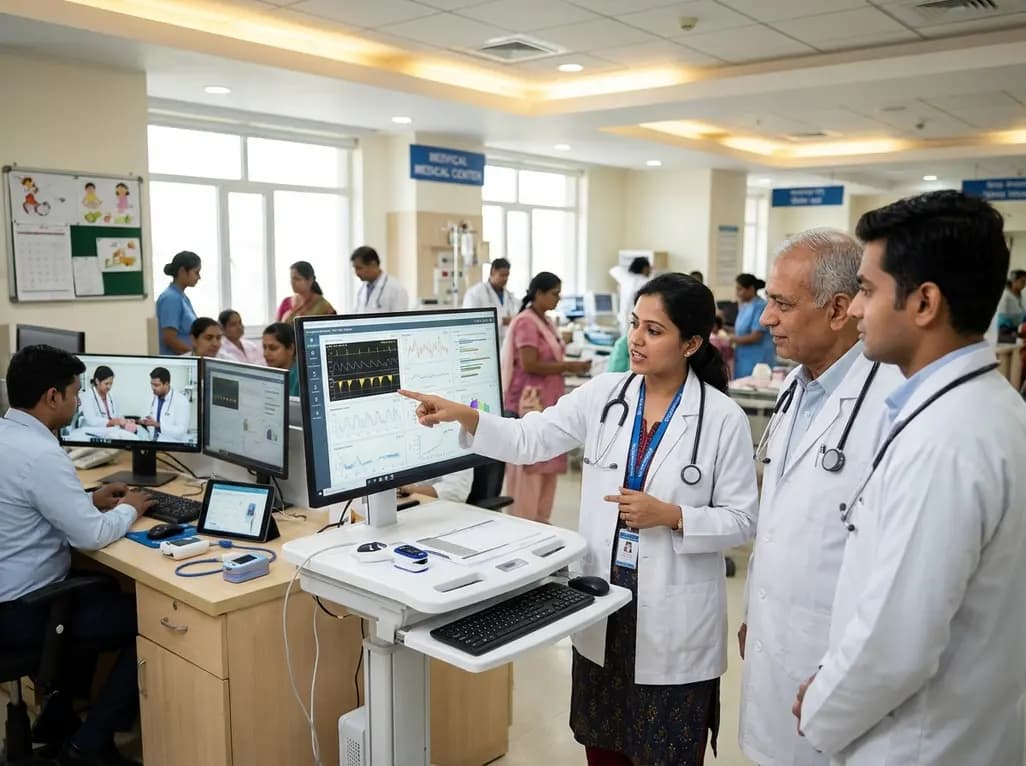
A landmark study details how an enterprise pediatric remote patient management model expanded from a single cardiology pilot to 16 diverse specialty programs by combining centralized digital operations with specialty clinical leadership.
Yesterday

A comparative review of tension band wiring and intramedullary screw fixation in thumb metacarpophalangeal arthrodesis, evaluating union rates, hardware complications, and clinical outcomes.
Yesterday
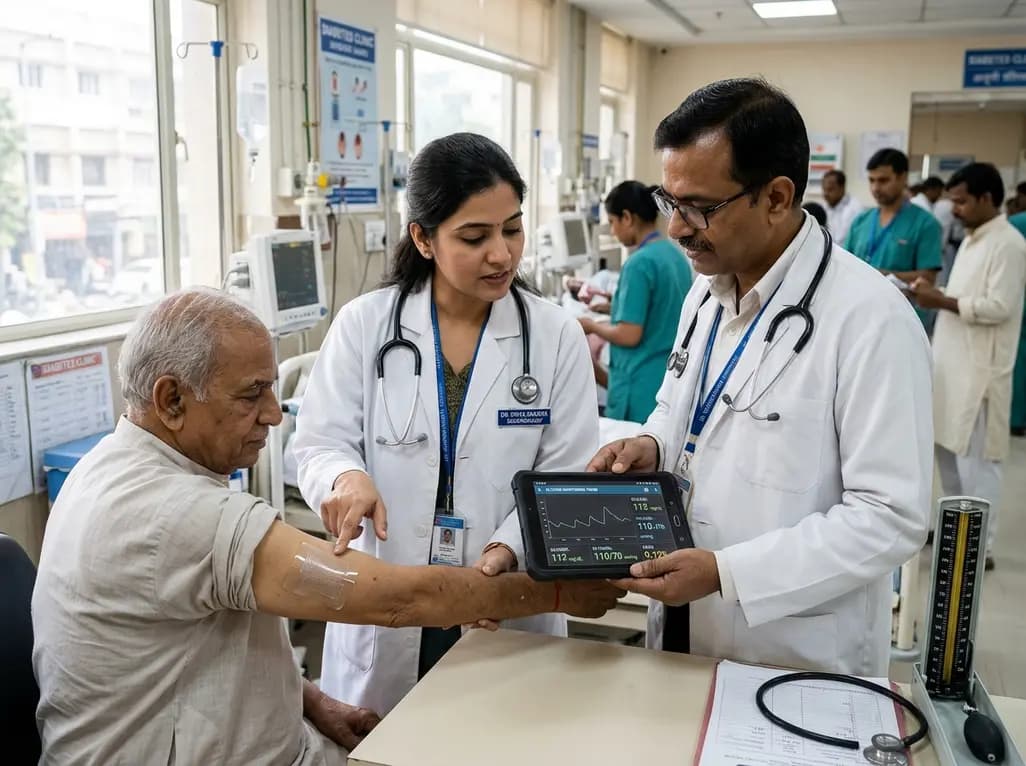
A breakthrough ultrathin multimodal sensor decouples physical hemodynamic monitoring from disposable electrochemical calibration, achieving long-term wearable glucose prediction with 81.36% accuracy and a 9.12% MARD. This offers a robust, drift-free solution for outpatient metabolic surveillance.
Yesterday
