.webp&w=384&q=75)

Loading, please wait...
Loading, please wait...
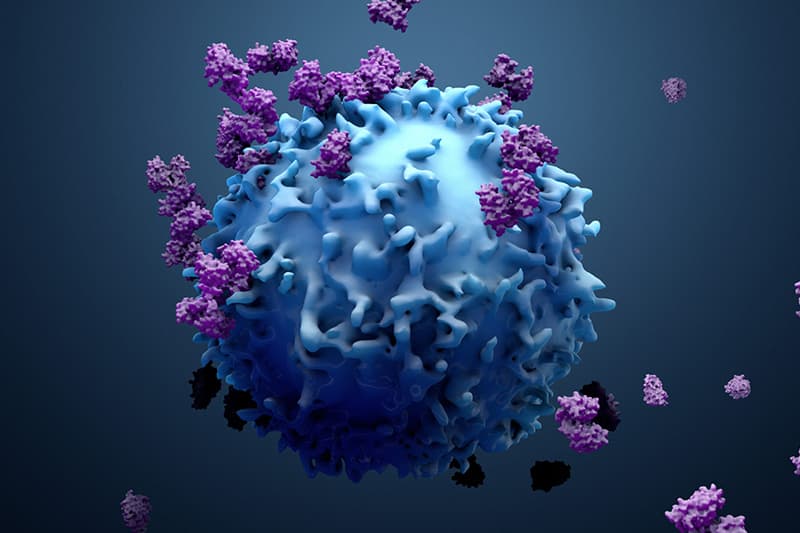
A breakthrough from researchers at IIT Bombay and Monash University promises to improve the effectiveness of T-cell-based cancer therapies. The team developed a simpler, gentler method for lab-grown immune cell harvesting. Consequently, this innovation addresses a critical challenge in treatments like CAR T-cell therapy: efficient **T-cell recovery** from culture scaffolds. T-cell recovery is an essential step for scaling up this advanced immunotherapy.
Immunotherapy involves boosting the body's own immune system to recognize and destroy cancer cells. For CAR T-cell treatment, doctors extract T-cells from a patient, modify them in the lab, and then grow them in large numbers. A key requirement for T-cell-based immunotherapy is an ample supply of healthy, active T-cells. Therefore, growing these cells outside the body must be done efficiently. Prof. Prakriti Tayalia's team at IIT Bombay used electrospun scaffolds. Earlier studies showed T-cells grown on such scaffolds become more active and multiply faster. However, cells move deep into the fibers, making their removal difficult. The challenge of cell recovery significantly impacts the process's overall efficiency.
To address this problem, the team tested three different collection methods on Jurkat T-cells grown in polycaprolactone electrospun scaffolds. The methods included simple manual flushing, using the enzyme TrypLE, and using the milder enzyme Accutase. Researchers observed that T-cells actively move into the scaffold, becoming tightly lodged. Consequently, even strong flushing with a pipette could not remove all the cells. Furthermore, collecting cells using harsher enzymes like TrypLE or trypsin can damage key surface proteins needed for immune signaling and activation. In contrast, cells recovered with Accutase survived in greater numbers and behaved more like healthy T-cells. For example, these cells formed clusters and continued to grow well after recovery, confirming their functional viability.
The findings could help laboratories worldwide better prepare cells for advanced therapies such as CAR T-cell treatment. The way scientists grow cells and how they retrieve them can make a real and meaningful difference in therapeutic outcomes. Furthermore, the team found that T-cells grown on the scaffolds can more effectively kill cancer cells. Researchers are now planning to test these novel findings in animal models and explore the possibility of placing T-cell-loaded scaffolds directly inside the body for in-situ treatment.
Q1: What is the main problem the IIT Bombay study addresses?
The core challenge is the gentle and efficient recovery of lab-grown T-cells from the dense fiber scaffolds used to culture them. Harsh retrieval methods, like using trypsin, can damage the T-cells, thus reducing their therapeutic value for treatments such as CAR T-cell therapy.
Q2: Why is Accutase a better recovery method than TrypLE/Trypsin?
Accutase is a milder enzyme compared to TrypLE or trypsin. Cells recovered using Accutase survived in much greater numbers, formed clusters, and retained key surface proteins needed for immune signaling. Conversely, harsher enzymes can damage these critical surface features.
References

Read summarized clinical updates, watch expert medical content, and earn CME certifications right from your smartphone.
Open your smartphone camera to scan and install.





A breakthrough from researchers at IIT Bombay and Monash University promises to improve the effectiveness of T-cell-based cancer therapies. The team develop...
8 months ago

A breakthrough study evaluated H5N1 transmission efficiency across mammalian isolates. Researchers discovered that human-derived D1.1 harboring the PB2 D701N mutation spread efficiently in ferrets, unlike strains carrying PB2 E627K. This finding highlights critical genetic markers for zoonotic surveillance.
Today

A comparative cohort study evaluates vNOTES vs TLH hysterectomy for benign conditions, demonstrating shorter operative duration, faster return to daily activities, and equivalent female sexual function scores without increased dyspareunia.
Today

Review how tailored exercise programs benefit frail older patients with heart failure. Explore pathophysiological mechanisms, individualized training prescriptions, and strategies to overcome adherence barriers in clinical practice.
Yesterday

This comparative study evaluates posterior labral tears with and without glenohumeral instability, highlighting distinct demographic patterns, MRI underestimation in stable shoulders, and successful arthroscopic repair outcomes.
Yesterday

A clinical study demonstrates that early intervention with tocilizumab, either as monotherapy or bridged with corticosteroids, achieves significant proptosis reduction and resolves active inflammation in treatment-naive thyroid eye disease.
Today
