.webp&w=384&q=75)

Loading, please wait...
Loading, please wait...

The French government recently announced a significant public health initiative. They will reimburse the cost of reusable period products for women under the age of 26. Furthermore, this policy extends to any woman experiencing poverty regardless of her age. This strategic move aims to combat period poverty while simultaneously encouraging sustainable living across the nation.
The new measure is expected to benefit approximately 6.7 million people. Consequently, this represents nearly a tenth of France's total population. From the start of the next academic year in autumn 2026, eligible individuals can claim these benefits. Specifically, women under 26 with a state health insurance card can participate. Additionally, those receiving special healthcare support due to limited income qualify for the program.
Parliament officially approved the measure as part of the 2024 social security budget. However, some feminist groups and manufacturers expressed frustration over implementation delays. Therefore, the recent government confirmation provides much-needed clarity for both consumers and sustainable sanitary item producers.
Advocates for menstrual health emphasize that reusable period products offer both economic and physical advantages. A survey conducted in France revealed that one in ten women previously used unsafe alternatives. For instance, some individuals used ripped clothes due to tight budgets. Moreover, high-quality menstrual cups and period underwear reduce exposure to potentially harmful chemicals found in some disposable items.
Promoting these sustainable alternatives also helps the environment by reducing landfill waste. Many medical professionals suggest that reusable options can be safer for long-term use when maintained with proper hygiene. Therefore, the transition to reusables supports individual health and ecological preservation.
France is not the only nation taking steps toward menstrual equity. Scotland became the first country to provide free universal access to period products in 2020. In 2016, France also reduced the sales tax on these essential items from 20 percent to 5.5 percent. These global shifts highlight a growing recognition of menstrual health as a fundamental human right. Public health experts believe that such policies significantly improve educational and professional attendance for women.
Q1: Who is eligible for the reimbursement in France?
Women under the age of 26 and women of all ages receiving special income-based healthcare support are eligible. They must possess a state health insurance card to claim the benefit.
Q2: How do eligible women obtain these free products?
Individuals can purchase menstrual cups or period underwear at a pharmacy. Subsequently, they will receive their money back through the French social security system.
Q3: When does this new policy take effect?
The government plans to implement the reimbursement program starting in the autumn of the next academic year. This follows the approval of the country's 2024 social security budget.
Disclaimer: This content is for informational and educational purposes only. It does not constitute medical advice or replace professional judgment. Refer to the latest local and national guidelines for clinical practice.
References

Read summarized clinical updates, watch expert medical content, and earn CME certifications right from your smartphone.
Open your smartphone camera to scan and install.





France will provide free reusable period products to women under 26 and those in poverty to combat period poverty and promote environmental sustainability....
5 months ago

The World Health Organization has launched a 10-year framework to address evidence gaps in traditional, complementary, and integrative medicine. Prioritizing conditions such as stroke, cancer, and depression, this global roadmap highlights rigorous clinical trials, pharmacovigilance, and safer patient care.
Today
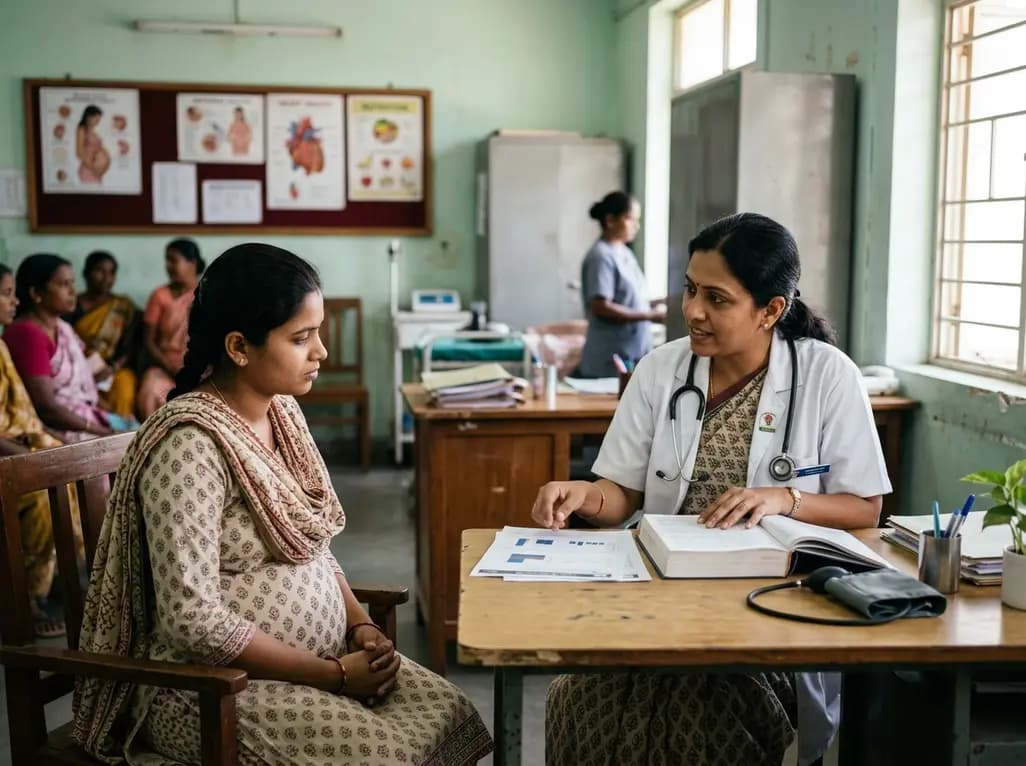
A recent longitudinal study evaluated the link between prenatal loss of control eating and cardiovascular health using Life's Essential 8 frameworks. While direct associations across pregnancy were non-significant, the high prevalence of dysregulated eating highlights critical implications for obstetric practice.
Today

Explore modern perioperative management protocols for clinical xenotransplantation. Learn how costimulation blockade, anti-inflammatory perfusion, and coagulopathy rescue overcome interspecies hurdles.
Today

A retrospective study evaluating a locally deployed vision language model (Qwen3-VL) reveals that smartphone-captured radiographs and retrieval-augmented generation can paradoxically reduce diagnostic accuracy in bone tumor referrals due to optical noise and textual hallucinations.
Today

At Homa CME 2026 at Hyderabad's T-Hub, healthcare leaders emphasized moving beyond routine metrics through digital calculators and precision stratification. Discover why characterizing individual insulin secretion, resistance patterns, and vascular risks transforms chronic metabolic care in India.
Today
