

Loading, please wait...
Loading, please wait...

Sudden sensorineural hearing loss (SSNHL) is a distressing otologic emergency that requires prompt medical intervention. Clinicians often use steroids as the standard of care, yet patient-specific factors like frailty might influence the choice of therapy. A recent study explored the link between patient frailty and SSNHL steroid treatment outcomes among 185 adults. The researchers utilized the 5-Factor Modified Frailty Index (mFI5) to categorize patients and track their hearing recovery over several years.
The analysis revealed significant differences in how clinicians managed frail patients versus healthier individuals. Generally, younger and female patients demonstrated lower frailty scores compared to older male patients. Notably, clinicians prescribed oral prednisone less frequently to patients with high frailty scores. Instead, these individuals often received intratympanic dexamethasone as their primary or salvage therapy. This choice likely aims to minimize the risk of metabolic complications, such as hyperglycemia, which are commonly associated with systemic steroids in older populations.
Despite the variations in treatment selection, audiometric results remained remarkably consistent across all frailty groups. The study evaluated changes in pure-tone average (PTA), speech reception threshold (SRT), and word recognition scores (WRS). Consequently, the data showed that frailty scores did not predict the final hearing recovery. Patients with multiple comorbidities, including metabolic syndrome, also demonstrated similar audiometric improvements compared to their healthier peers. This suggests that the physiological state of frailty does not inherently limit the cochlea's ability to respond to corticosteroid therapy.
These findings suggest that frailty should not discourage specialists from pursuing aggressive treatment. Since SSNHL steroid treatment outcomes appear independent of frailty index scores, doctors can safely tailor the delivery method to suit the patient's systemic health. For instance, intratympanic injections provide an effective alternative for patients who cannot tolerate the side effects of oral steroids. Therefore, maintaining the standard-of-care steroid therapy remains essential for all patients, regardless of their age or frailty status, to ensure the best possible chance of hearing preservation.
No, research indicates that frailty scores do not significantly impact hearing recovery outcomes. Patients classified as frail showed similar audiometric improvements to those with low frailty scores.
Clinicians often prefer intratympanic steroids for frail patients to avoid systemic side effects. This approach helps manage hearing loss effectively without worsening underlying conditions like diabetes or hypertension.
The study found that audiometric outcomes remained consistent even when the delivery route was modified based on the patient\'s frailty, indicating that individualized treatment plans do not compromise recovery.
Disclaimer: This content is for informational and educational purposes only. It does not constitute professional medical advice, diagnosis, or treatment. Always seek the advice of your physician or other qualified healthcare provider with any questions you may have regarding a medical condition. Refer to the latest local and national guidelines for clinical practice.
References
Adwer LM et al. Frailty and Steroid Treatment Outcomes in Patients with Sudden Sensorineural Hearing Loss. Ann Otol Rhinol Laryngol. 2026 Apr 19. doi: 10.1177/00034894261435264. PMID: 42001299.
Chandrasekhar SS et al. Clinical Practice Guideline: Sudden Hearing Loss (Update). Otolaryngol Head Neck Surg. 2019;161(1_suppl):S1-S45.
Stachler RJ et al. Clinical Practice Guideline: Sudden Hearing Loss. Otolaryngol Head Neck Surg. 2012;146(3_suppl):S1-S35.
"
Read summarized clinical updates, watch expert medical content, and earn CME certifications right from your smartphone.
Open your smartphone camera to scan and install.





Research on 185 SSNHL patients finds that frailty influences the route of steroid administration but does not impact final hearing recovery outcomes....
6 months ago

A retrospective cohort study reveals that frailty quadruples the odds of pressure injuries in hospitalized older adults. Integrating the Clinical Frailty Scale with comprehensive geriatric care is crucial for identifying vulnerability early and implementing targeted multidisciplinary prevention.
Today

Occult maternal malignancy accounts for 3.82% of persistent unreportable NIPT results with genomic noise. Multiple chromosomal aberrations, notably on chromosome 18, warrant thorough oncological evaluation and whole-body MRI to ensure timely maternal diagnosis while preserving fetal care.
Today

This article reviews the forensic and clinical complexities of acute myocarditis arising on left ventricular hypertrophy in children, highlighting early diagnostic red flags and multidisciplinary postmortem autopsy protocols.
Today
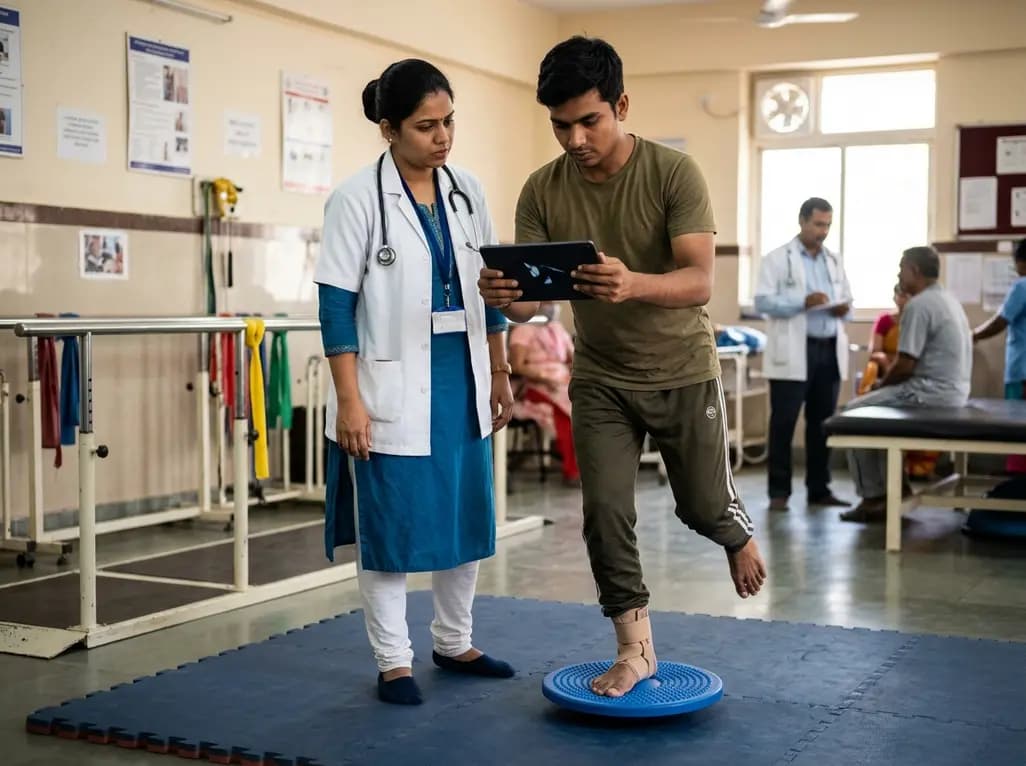
A randomized controlled trial demonstrates that an eight-week dual-task training intervention significantly improves static and dynamic postural control over standard balance exercises in individuals with chronic ankle instability, addressing critical neurocognitive deficits during athletic and daily activities.
Today

A retrospective cohort study of 7,716 ICU patients from the MIMIC-IV database demonstrates that Gradient Boosting Decision Trees significantly outperform traditional SOFA scores in predicting in-hospital mortality among patients with sepsis and diabetes, with SHAP analysis providing clinical interpretability.
Today
