.webp&w=384&q=75)

Loading, please wait...
Loading, please wait...

The development of flexible electronics in healthcare is currently undergoing a revolutionary shift. Researchers are moving away from rigid silicon-based components toward soft, polymer-based systems. These materials allow devices to conform perfectly to the human skin, which enhances diagnostic accuracy. Specifically, the integration of conductive and dielectric polymers provides a foundation for the next generation of medical sensors. Scientists value conductive polymers, such as PPy, PANI, and PEDOT:PSS, because they offer tunable electrical properties. Furthermore, these materials maintain the pliability required for long-term wearable use.
Creating high-performance devices requires a sophisticated balance between different material types. Dielectric polymers, including PVDF, PI, and PMMA, offer the necessary high permittivity and breakdown strength for capacitors. Conversely, conductive polymers serve as the active sensing elements. Therefore, engineers must optimize interface compatibility between these heterostructures to ensure reliability. Molecular design and doping techniques further refine how these materials interact with biological tissues. Consequently, this synergy enables the creation of complex circuits that can stretch and bend without losing functionality.
The clinical impact of these innovations is vast. Notably, flexible electronics in healthcare enable continuous monitoring of vital signs like heart rate, oxygen saturation, and glucose levels. For instance, electronic skin can now mimic human sensitivity, which aids in advanced prosthetics and soft robotics. Additionally, smart wound dressings can detect early signs of infection by monitoring pH and temperature changes in real-time. In India, research institutions like Shiv Nadar University and DST-funded projects are already exploring low-cost, flexible pressure sensors for arterial pulse monitoring. Ultimately, these advancements drive medical care from reactive hospital visits toward proactive, home-based health management.
While the field faces challenges regarding stability and mass production, the future remains promising. Current research emphasizes intrinsic stretchability and self-healing capabilities to prolong device lifespan. Moreover, AI-driven discovery is accelerating the identification of sustainable, bio-based materials. As a result, we expect to see highly intelligent, biointegrated systems that seamlessly connect with the human nervous system. These technologies will likely transform chronic disease management and personalized rehabilitation protocols globally.
Flexible electronics provide superior skin conformability compared to rigid devices. This leads to more accurate data collection, improved patient comfort, and the ability to monitor physiological signals continuously without interfering with daily activities.
Conductive polymers like PEDOT:PSS are frequently used for electrodes and sensors due to their high conductivity. Dielectric polymers such as PVDF and polyimide (PI) are essential for insulating layers and energy storage components within the device.
Disclaimer: This content is for informational and educational purposes only and does not constitute medical advice. It is not intended to be a substitute for professional medical judgment, diagnosis, or treatment. Refer to the latest local and national guidelines for clinical practice.
References
Luo J et al. Integrated Design of Conductive and Dielectric Polymers: Advancing Flexible Electronics from Materials Innovation to Applications. Macromol Rapid Commun. 2026 Apr 30. doi: 10.1002/marc.70296. PMID: 42060924.
Delloue P. Next-Generation Wearable Health Monitoring: Polymer Thick Film Electronics and Biosensor Patches. PICA blog. 2025 Nov 19.
Recent Progress in Flexible Wearable Sensors for Real-Time Health Monitoring: Materials, Devices, and System Integration. PMC. 2023 Mar.

Read summarized clinical updates, watch expert medical content, and earn CME certifications right from your smartphone.
Open your smartphone camera to scan and install.





A review of how integrated conductive and dielectric polymer designs are driving the evolution of wearable monitors and biointegrated systems in healthcare....
5 months ago
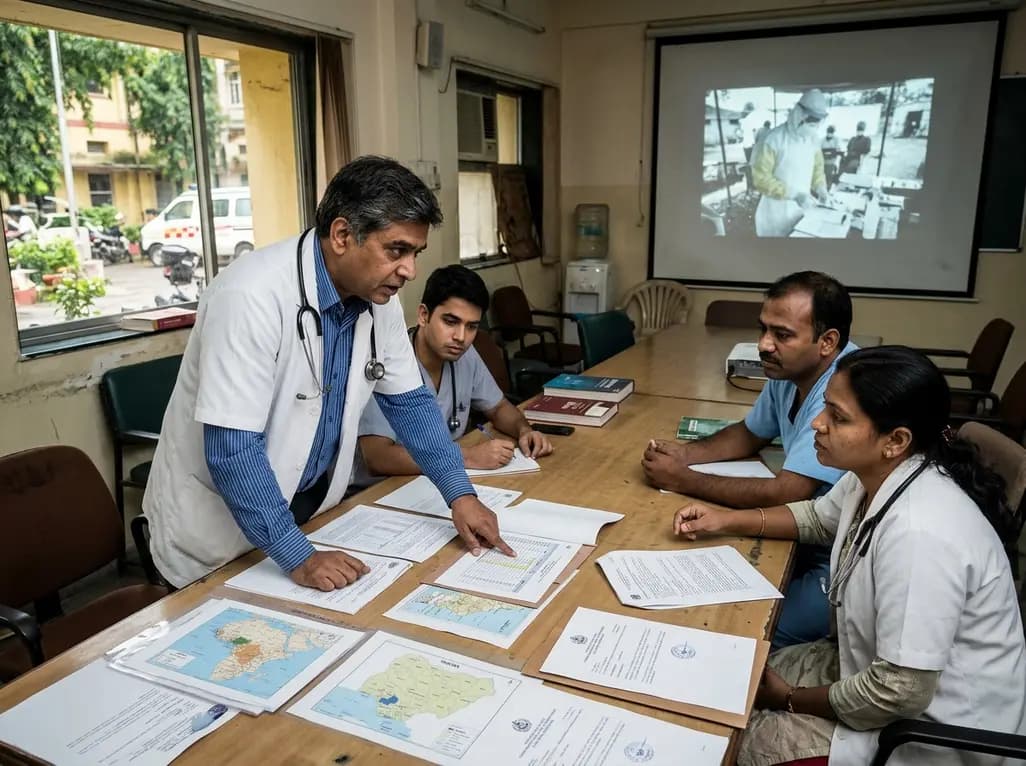
Following Nigeria's first recorded Ebola case linked to regional travel, the Africa CDC has convened an emergency ministerial summit. This alert underscores critical clinical priorities for healthcare professionals, including differentiating early viral infection from malaria, implementing barrier nursing, and triage.
Today

Leucine Rich Bio has introduced South Asia's first comprehensive vaginal microbiome test, BugSpeaks. By profiling microbial dysbiosis, pathogens, and antimicrobial resistance, this next-generation diagnostic platform provides clinicians with deeper insights into recurrent infections, fertility, and reproductive health.
Today

Review how tailored exercise programs benefit frail older patients with heart failure. Explore pathophysiological mechanisms, individualized training prescriptions, and strategies to overcome adherence barriers in clinical practice.
Today

This comparative study evaluates posterior labral tears with and without glenohumeral instability, highlighting distinct demographic patterns, MRI underestimation in stable shoulders, and successful arthroscopic repair outcomes.
Today

A clinical study demonstrates that early intervention with tocilizumab, either as monotherapy or bridged with corticosteroids, achieves significant proptosis reduction and resolves active inflammation in treatment-naive thyroid eye disease.
Today
