.webp&w=384&q=75)

Loading, please wait...
Loading, please wait...

The development of flexible conductive yarns is essential for creating durable wearable medical devices. Specifically, clinicians require monitors that maintain signal integrity during vigorous patient movement. However, traditional metal components often suffer from fatigue or signal loss at high frequencies. Fortunately, a recent study in Small Methods introduces a novel architecture using biscrolled copper and carbon nanotube (CNT) yarns. Notably, this breakthrough addresses the long-standing trade-off between mechanical flexibility and electrical performance.
Additionally, the researchers utilized a biscrolled architecture to distribute copper uniformly within a carbon nanotube framework. Following this, they applied self-incandescent heating (SIH) to reorganize the microstructural grain. Consequently, the conductivity increased by nearly 70%, reaching up to 3.63 × 10 S/cm. Moreover, this process creates a more densified conductive network. Therefore, the yarn achieves a metallic temperature coefficient of resistance similar to bulk copper. Ultimately, this allows for high-performance electronics in a flexible form factor.
Furthermore, these findings have profound implications for long-term physiological monitoring. Specifically, the yarns show weak frequency dependence of resistance up to 10 MHz. In contrast, standard copper wires often exhibit significant resistance increases at high frequencies due to the skin effect. Thus, these new materials can improve the accuracy of wireless medical sensors. For instance, cardiologists could benefit from more reliable ECG data collected via smart textiles. In conclusion, this technology represents a significant step toward robust, flexible healthcare solutions.
High-frequency signals, such as those in advanced ECG or wireless telemetry, require low AC resistance to prevent signal distortion. These yarns ensure that the data captured from the patient remains accurate, even during active movement.
This method provides a rapid way to consolidate the copper microstructure within the yarn. As a result, the yarns become more conductive and durable without the need for traditional, high-heat furnace treatments that could damage other flexible components.
Yes, the integration of carbon nanotubes provides exceptional mechanical resilience. Consequently, the yarns can endure extreme deformation and repeated stretching without losing their electrical properties, making them ideal for wearable sensors.
Disclaimer: This content is for informational and educational purposes only. It does not constitute medical advice, diagnosis, or treatment. Always seek the advice of your physician or other qualified health provider with any questions you may have regarding a medical condition. Refer to the latest local and national guidelines for clinical practice.
References
1. Wang F et al. Self-Incandescent Heating-Driven Microstructural Consolidation of Biscrolled Cu/CNT Yarns for Reduced Frequency-Dependent AC Resistance. Small Methods. 2026 Apr 04. doi: 10.1002/smtd.70645. PMID: 41934191.
2. He Z, et al. Carbon Nanotube Wearable Sensors for Health Diagnostics. Nanomaterials (Basel). 2022;12(11):1854.
3. Tadesse MG, et al. Smart Textiles for Healthcare: Materials, Fabrication and Applications. Sensors (Basel). 2022;22(23):9201.
"
Read summarized clinical updates, watch expert medical content, and earn CME certifications right from your smartphone.
Open your smartphone camera to scan and install.





Researchers have developed high-conductivity biscrolled Cu/CNT yarns using self-incandescent heating, enhancing the durability of wearable medical monitors....
6 months ago

A retrospective cohort study of 7,716 ICU patients from the MIMIC-IV database demonstrates that Gradient Boosting Decision Trees significantly outperform traditional SOFA scores in predicting in-hospital mortality among patients with sepsis and diabetes, with SHAP analysis providing clinical interpretability.
Today
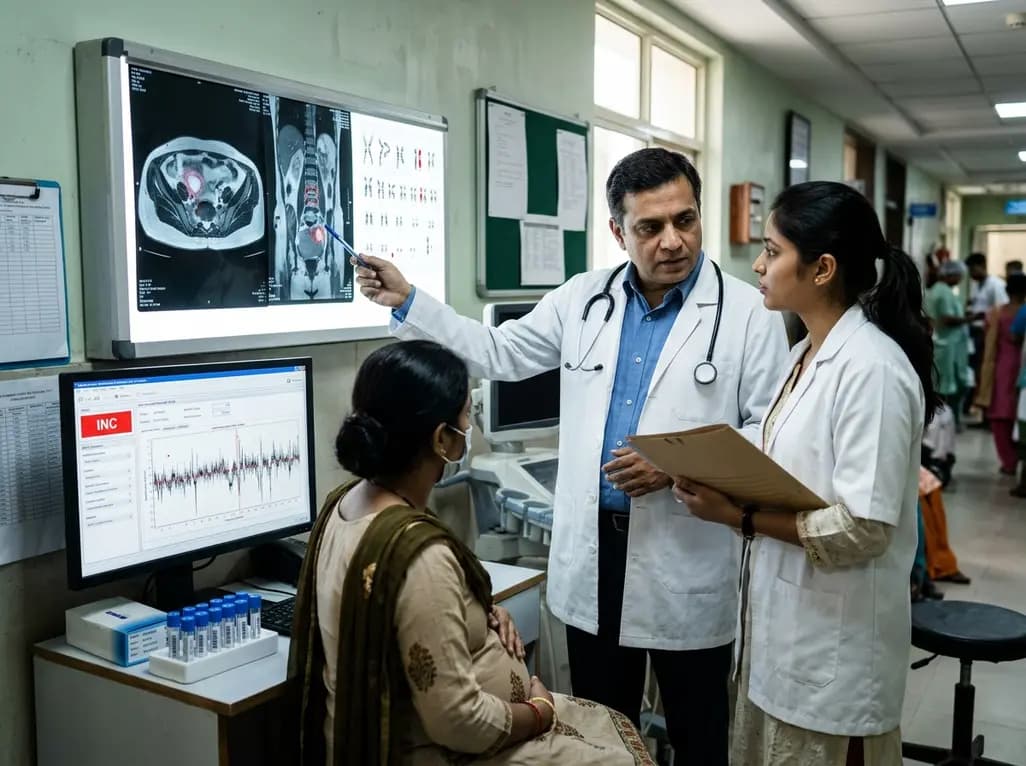
Occult maternal malignancy accounts for 3.82% of persistent unreportable NIPT results with genomic noise. Multiple chromosomal aberrations, notably on chromosome 18, warrant thorough oncological evaluation and whole-body MRI to ensure timely maternal diagnosis while preserving fetal care.
Today

This article reviews the forensic and clinical complexities of acute myocarditis arising on left ventricular hypertrophy in children, highlighting early diagnostic red flags and multidisciplinary postmortem autopsy protocols.
Today

This comparative study evaluates posterior labral tears with and without glenohumeral instability, highlighting distinct demographic patterns, MRI underestimation in stable shoulders, and successful arthroscopic repair outcomes.
Yesterday

A clinical study demonstrates that early intervention with tocilizumab, either as monotherapy or bridged with corticosteroids, achieves significant proptosis reduction and resolves active inflammation in treatment-naive thyroid eye disease.
Yesterday
